Sharing reincarnation
August 2024
Sharing
Unveiling the Mystery Of Reincarnation
Swami Mukundananda says that the belief in reincarnation motivates us to live a righteous life in this incarnation as well as changes our perspective on life
Since our childhood, we have heard many legendary stories about reincarnation or rebirth, like that of Mother Parvati reincarnating as Sati and Jay-Vijay reincarnating as Ravan and Kumbhkaran. Famous Western thinkers such as Pythagoras, Plato, and Socrates accepted reincarnation to be true, and investigations by the scientific community have also corroborated the same. Let us delve deeper into this puzzling mystery of reincarnation.
Rationale behind previous births
If a person who is born blind asks, “What did I do to be suffering like this?” what possible answer can you give him? Clearly, it cannot be the result of present-life actions. It cannot also be the will of God, who is supremely benevolent. Why would God want anyone to suffer? The only logical explanation for being born blind is negative karma created in previous lifetimes. Without accepting the existence of past lives, the above question has no plausible answer.
A Western philosopher had a son who suffered from progeria, causing premature ageing since infancy. At age 14, he displayed the symptoms of an 80-year-old, and then passed away. His traumatised father could not find any suitable answer as to why his son had endured such suffering. After all, the child had done nothing evil as an infant to be given such an affliction.
Without accepting theidea of rebirth, the world becomes an irrational place of existence. Only the concept of multiple births posits that suffering could be a consequence of past life
why one is born in a rich family while another is born poor. Someone receives a keen intellect to excel in life, while another is born dull and is unable to study. The difference is the result of karma from past incarnations.
Mozart, the great musician, wrote a sonata when he was only four years old. Teresa Milanollo was a violin-playing child prodigy who made her stage debut at the age of nine. When we study the characters and powers of geniuses and prodigies also, we cannot deny the pre-existence of the soul. Whatever the soul has mastered in a previous life or lives manifests in the present. This happens through the subconscious mind, which is the storehouse of all the impressions and experiences gathered over a continuum of lifetimes. And these impressions remain latent until favourable conditions rouse them and bring them out on the conscious plane.
Remembering past lives
On accepting the idea of rebirth, the question arises, Why do we not remember our past lives? The answer is that death is very painful for the soul. It erases most memories of the life gone by. Furthermore, birth is an even more painful experience, which wipes out the remaining recollections of the previous lives. Nevertheless, this rule does have exceptions.
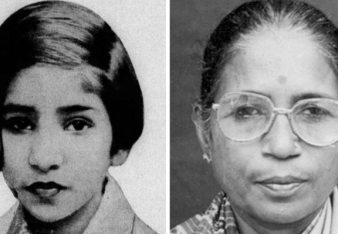
Lugdi Devi was reborn as Shanti Devi in 1926 Shanti Devi is one such famous example. She died as Lugdi Devi in 1925 in Mathura and was reborn in Delhi in 1926. When she was four years old, she had vivid recollections of her previous life. She kept pressing her parents in Delhi to let her get back to her previous family in Mathura. Her claims were found accurate when her current as well as previous family members made detailed enquiries. An external high-profile commission of eminent people also teamed up to validate the case, and the truth of reincarnation became self-evident.
More fruitful than getting awed by people who remember their previous lives, or trying various methods to figure out our own past lives, is to focus upon the significant lessons to learn from the concept of reincarnation.
How belief in reincarnation affects our lives What we term ‘death’ is merely the act of discarding the old dysfunctional body. And what is called ‘birth’ is the soul receiving a new body to continue its journey. So, the soul is eternal and imperishable. Under the veil of ignorance, it falsely accepts bodily relatives and gets attached to them in each life. However, after the body dies, the relationships are finished. Under these circumstances,
jubilation and lamentation arise only from misconceptions. Therefore, the Bhagavad Gita states, “dehino‘sminyathÄ dehe kaumÄraá¹ yauvanaá¹ jarÄ tathÄ dehÄntaraprÄptirdhÄ«rastatra na muhyati” (2.13)
“Just as the embodied soul continuously passes from childhood to youth to old age, similarly, at the time of death, the soul passes into another body. The wise are not deluded by this.”
Belief in reincarnation is the most important belief that dictates our life. It becomes a game changer with regard to the values we hold and, consequently, the big and small choices we make daily. For example, if we do not believe in an afterlife, then we will also not believe in the deep consequences of our actions in our present life. We would naturally be self indulgent in eating, drinking, and making merry. On the other hand, a believer will strive for pure actions and intentions since they are aware of the long-term consequences. When we understand that our soul is eternal, it shifts our perspective on life. We recognise ourselves as the builders of our own destiny because, after all, whatever we do stays with us.
One can gain timeless Vedic wisdom in the contemporary context as revealed by Swami Mukundananda in his latest book, Spiritual Secrets from Hinduism.
H H Swami Mukundananda —a yogi, a world-renowned spiritual teacher, an authori ty on mind managementt, an IIt and IIM alumnus, and a bhakti saint-is the founder of JKYog. He is the author of several books: Science of Mind Management | Bhagavad Gita: The Song of God.

Discussion (0)
No comments yet. Be the first to comment!
Leave a Comment
You need to login to post a comment.