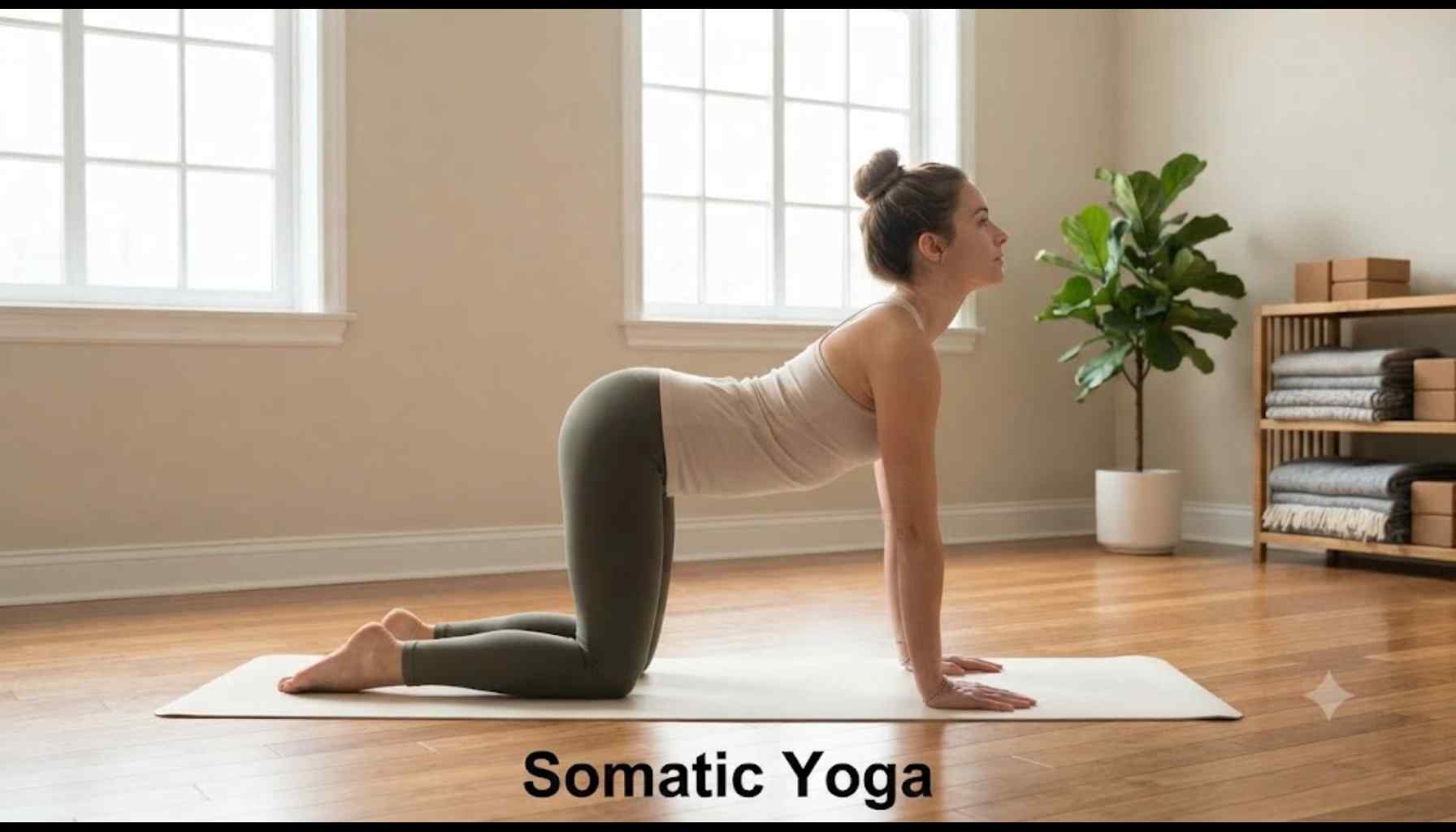
Somatic Yoga: Mindful Movement and Healing
Somatic yoga blends traditional yoga postures with somatics, a mindful movement approach that prioritizes internal sensation over achieving a "correct" shape. Rather than focusing on how a pose looks, practitioners move slowly and attentively, noticing tension, breath, and subtle shifts in the body as they go. The goal isn't athletic performance but a deeper connection between mind and body, making it especially useful for releasing chronic tension and stress.
Key Takeaways
- Sensation matters more than perfect alignment in Somatic Yoga.
- Slow, mindful movement releases chronic muscular tension.
- Supports both physical relief and emotional processing.
History of Somatic Yoga
Somatics as a discipline arose from 20th-century movement therapies that were centered on the mind-body relationship, and then integrated with yoga through postures and breathing exercises. Although based on decades of research, somatic yoga has only recently become more popular as a therapy-based technique.
Somatic Yoga Movements to Try
1. Pandiculation – Full-Body Stretch and Release
Lie down and stretch the entire body slowly. Gradually relax your muscles and observe the difference. It will help in reducing the stiffness of the muscles.
2. Marjaryasana–Bitilasana – Slow Cat-Cow Stretch
Come down to the table top pose position. Move your spine by alternating between its round and arch shape. Focus on the feelings rather than on how much you move. It will help to relax the spine.
3. Supta Pelvic Tilts – Reclined Pelvic Movement
Lie down on your back and bend your knees. Gently tilt your pelvis up and down. Observe each slight movement. It might relieve stiffness and tension in the lower back area.
4. Supta Tadasana – Constructive Rest
Lie down on your back, bend your knees and have your feet planted firmly. Try to relax and stay aware.
5. Skandha Chakra – Slow Shoulder Rolls
Sit or stand comfortably. Slowly roll the shoulders forward and backward. Keep the movement gentle. You can focus on the sensations around the shoulders, neck, and upper back.
Counter Poses
- Balasana – Child's Pose
After spinal movements such as Marjaryasana–Bitilasana, sit back toward the heels and relax forward. This provides a gentle resting position for the spine. - Supta Matsyendrasana – Reclined Twist
After pelvic or hip-focused movements, gently lower the knees to one side while lying on your back. This can help release residual tension around the lower back and hips.
What to Expect
Somatic yoga usually takes anywhere from 30 to 60 minutes, and doing it two to three times a week should be enough for feeling less stress and increased body awareness. One can expect the process to include slow and repetitive exercises, working with the eyes closed, and directing one’s attention to sensations rather than fast-paced exercises.
You can attend a guided class or watch a video instead of trying to create an exercise sequence by themselves since the somatics require precise instructions. Wear comfortable clothes, use a soft mat or a carpeted floor, and find a quiet place without any distractions.
Health Benefits of Somatic Yoga
- Increases body awareness and proprioception
- Decreases chronic muscle tension and stiffness
- Relieves stress, anxiety, and mental exhaustion
- Helps sleep due to nervous system regulation
- Enhances balance, coordination, and mobility
- Promotes trauma healing through gentle movements
- Enables emotional release along with physical relief
Conditions often managed: Chronic pain, muscle tension, stress-related disorders, and mild trauma responses are commonly supported through consistent somatics practice.
Somatic Yoga vs. Traditional Yoga
|
|
|
|
|
|
|
|
|
|
|
|
|
|
|
|
|
|
|
|
|
|
|
|
Precautions
- Move slowly and stop if any sharp pain occurs
- Practice under a trauma-informed instructor if dealing with trauma
- Do not try to make the shape right; sensations are more important than forms
- See a doctor before practicing if dealing with chronic pain
- Practice on a surface that protects your joints when performing floor practice
- Let your emotions show and do not force or hold them back
Common Errors
- Moving quickly instead of moving slowly
- Thinking about how the pose looks instead of how it feels
- Comparing somatic yoga to other kinds of yoga that are more athletic
- Not noticing the sensation of discomfort or tension
- Omitting the pause between the movements for reflection
Who Benefits Most From Somatics
- People with chronic pain or tension find relief through slow, tension-releasing movement patterns.
- Trauma survivors benefit from its gentle, body-led approach to nervous system regulation.
- Highly stressed individuals gain calm and clarity through mindful, sensation-focused practice.
Conclusion
Somatic yoga offers a refreshing shift away from performance-driven movement, inviting practitioners to slow down and truly listen to their bodies. By prioritizing sensation over form, it becomes a powerful tool for releasing chronic tension, easing stress, and supporting emotional healing, making it a valuable practice for almost anyone seeking a deeper mind-body connection.
FAQs
1. What makes somatic yoga different from regular yoga?
It focuses on internal sensation and awareness rather than achieving a specific pose or shape.
2. Can somatic yoga help with chronic pain?
Yes, its slow, mindful movements can help release chronic muscular tension linked to pain.
3. Is somatic yoga good for beginners?
Yes, it requires no difficult skills, making it accessible to nearly everyone.
4. How is somatic yoga linked to trauma recovery?
Its gentle, body-led movements can help regulate the nervous system and support emotional processing.
Also Read: Aerial Yoga
By Umesh Kumar Khiri


Discussion (0)
No comments yet. Be the first to comment!
Leave a Comment
You need to login to post a comment.