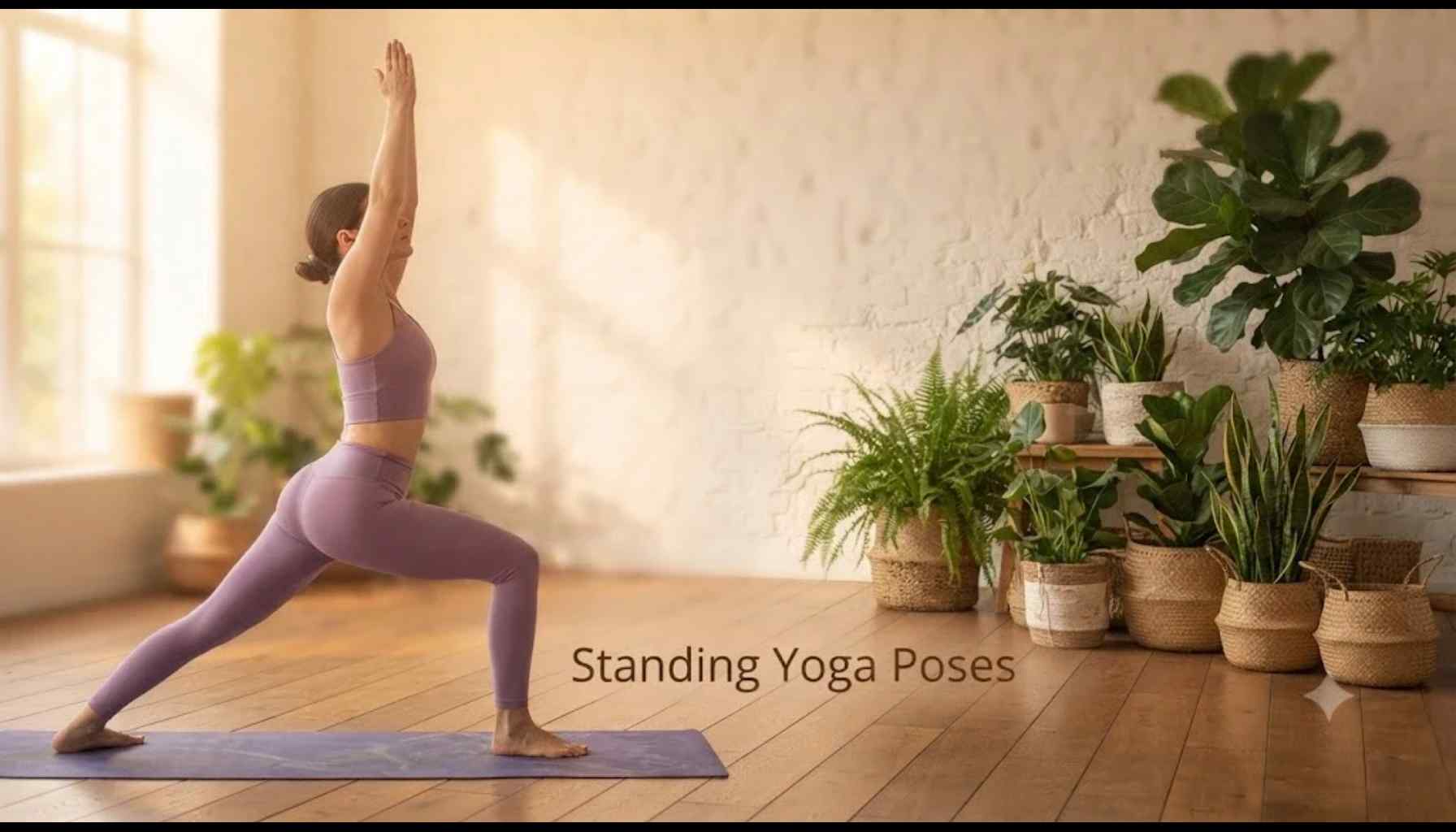
Standing Yoga Poses: Beginner's Guide
Standing yoga poses are postures in which most of your weight rests on your feet while your body stays upright, leaning or reaching. They build the strength, stability and body awareness that carry into almost every other kind of yoga. Because they are practised on your feet, they also feel familiar to beginners and fit easily into your short home sessions.
Key Takeaways
- Standing yoga poses build leg strength, balance and posture from the ground up.
- Good foot placement and hip alignment matter more than depth.
- Short, regular practice with props is safer and more effective than forcing difficult shapes.
Why Standing Yoga Poses Matter
Most modern yoga classes begin or build around standing postures. They relax the large muscles of the legs and hips, teach you to distribute weight evenly and encourage steady breathing under mild effort. Many of today's best-known standing shapes were popularised in the twentieth century, while Tree Pose is among the few documented in older hatha yoga texts.
If you practice regularly, standing poses can contribute to your leg and core strength. It is essential for everyday activities such as walking up and down the stairs. Additionally, they can improve your balance and posture. It also increases the flexibility of hips and hamstrings and improves your concentration through breathing.
Alignment Basics Before You Begin
Construct your poses starting from your feet. Spread your toes, press evenly through the heels and the base of the big and little toes, and keep your knees soft rather than locked. In forward-facing poses such as Mountain, your hips point to the front. In open-hip poses such as Warrior II, they turn toward the long side of the mat. Knowing which one you are aiming for prevents most alignment errors.
Essential Standing Yoga Poses
1. Mountain Pose (Tadasana): The basic stance is to have your feet together and hands relaxed. This is the base pose from which most others start.
2. Upward Salute (Urdhva Hastasana): Start with the mountain pose and then raise your arms up in the air with inhalation. It stretches the lateral part of the body.
3. Standing Forward Fold (Uttanasana): Bend forward from the hip joints. You can bend the knees as much as you want to avoid any strain to your lower back.
4. Chair Pose (Utkatasana): Sit back as though you were sitting on a chair. It gives strength to the muscles of the thighs and the buttocks.
5. Warrior I (Virabhadrasana I): Move one of the feet back, bend the front knee over the ankle joint and raise the arms.
6. Warrior II (Virabhadrasana II): Spread apart your arms and the hips sideways and bend the knee of the front leg.
7. Triangle Pose (Trikonasana): From a wide stance, hinge sideways and rest your lower hand on a shin or block. It lengthens the sides and hamstrings.
8. Tree Pose (Vrikshasana): Balance on one leg with the other foot resting on the calf or inner thigh, never on the knee. Use a wall for support if needed.
A Simple 15-Minute Sequence
Use this flow when you have limited time. Hold each pose for three to five breaths per side.
|
|
|
|
|
|
|
|
|
|
|
|
|
|
|
|
|
|
|
|
|
|
|
|
|
|
|
|
|
|
|
|
Practise three or four times a week and increase the holds as your legs grow stronger.
How to Modify the Poses
Props make standing poses available to nearly everyone. Place a block under your hand in Triangle if the floor feels far away. Practise Tree with your fingertips on a wall. Shorten your stance in Warrior poses to reduce strain.
To make poses more demanding, hold them longer, deepen the knee bend slightly or add an arm variation. You can try this once your alignment feels steady.
Common Mistakes
- Locking the knees: Always keep them slightly bent to avoid injury.
- Allowing the front knee to collapse inward: Monitor it above the middle toes.
- Holding the breath: Breathe in and out through your nose.
- Placing the foot on the knee in Tree pose: Put it on the calf or inner thigh.
- Curving the back in forward bends: Bend from the hips and knees.
- Overstretching: Stop at a point when you begin feeling any stretch.
Safety Notes
Speak with a doctor or teacher beforehand if you have hypertension or hypotension, joint issues, osteoporosis, vertigo, or balance problems. Do not wear socks if there is a slippery floor, practice next to a wall while learning new balances, and come out of any pose if there is a sharp or pinching pain. In case of dizziness, stand still and breathe first.
Wrapping Up
There are many reasons why standing yoga postures are one of the most efficient ways of beginning a practice. They teach proper standing technique, controlled movements, and breathing during a challenge. Start with the eight postures listed above, pay attention to foot and hip placement, and do not hesitate to use props. Within a month, you will definitely feel more balanced and stronger.
Frequently Asked Questions
1. What are standing yoga poses?
They are yoga postures performed with one or both feet on the floor and the body mostly upright, such as Mountain, Warrior and Tree Pose.
2. What are the benefits of standing yoga poses?
They may improve leg strength, balance, posture, flexibility and focus, especially when practised regularly with good alignment.
3. How long should you hold standing yoga poses?
Beginners can hold each pose for three to five breaths, building toward 30 to 60 seconds as strength and comfort improve.
4. What are the best standing yoga poses for beginners?
Mountain, Forward Fold, Chair, Warrior II, Triangle and Tree are popular starting points because they teach core alignment principles.
Also Read: 3 Person Yoga Poses
By Umesh Kumar Khiri

Discussion (0)
No comments yet. Be the first to comment!
Leave a Comment
You need to login to post a comment.