Stress Reduce Yoga: 6 Poses for Relief
Stress reduce yoga combine comfortable postures, slower movements, breathing, and relaxation techniques. These practices may help reduce muscle tension and encourage a calmer physiological state. Yoga brings positive changes in the body, including heart rate, brain activity, and muscle tension.
Key Takeaways
- Gentle yoga may support stress management.
- Slow breathing encourages relaxation.
- Consistency matters more than intense stretching.
What Is Stress Reduce Yoga?
Stress is the way in which the body reacts to difficult situations. It affects emotions, breathing, heart rate, sleep, muscles, and concentration.
Yoga may decrease stress in some individuals; however, research about the practice differs in terms of quality, length, and methods of yoga used.
The students could engage in yoga, breathing exercises, meditation, physical exercise, proper sleeping patterns, breaks from studying, and relaxation exercises.
Who Benefits Most From Stress Reducing Yoga?
Stress reducing yoga can benefit students, working professionals, older adults, caregivers, and people with busy lifestyles who experience everyday stress or mental tension. Beginners can choose gentle poses and breathing exercises without needing advanced flexibility.
Stress Reduce Yoga: 6 Helpful Poses
1. Child's Pose (Balasana)
Steps: Kneel with hips toward heels; inhale and lengthen your spine; exhale and fold forward gently.
Alignment: Keep your neck relaxed and hips moving toward your heels.
Benefits: May encourage relaxation while gently stretching the back and hips.
Modification: Place a cushion beneath your chest or forehead.
2. Standing Forward Bend (Uttanasana)
Steps: Stand with feet comfortable; inhale and lengthen upward; exhale and hinge forward from your hips.
Alignment: Keep knees softly bent and neck relaxed.
Benefits: Gently stretches the back body and may release physical tension.
Modification: Rest your hands on blocks or a chair.
3. Cat-Cow Pose (Marjaryasana-Bitilasana)
Steps: Start on hands and knees; inhale and lift your chest; exhale and gently round your spine.
Alignment: Keep wrists beneath shoulders and knees beneath hips.
Benefits: Encourages spinal mobility and coordinated breathing.
Modification: Perform the movement seated on a chair.
4. Legs-Up-the-Wall Pose (Viparita Karani)
Steps: Sit beside a wall and lie back; inhale as you extend your legs upward; exhale and relax your shoulders.
Alignment: Keep your head neutral and avoid forcing your legs straight.
Benefits: Provides a supported resting position and encourages relaxation.
Modification: Move farther from the wall and slightly bend your knees.
5. Seated Forward Bend (Paschimottanasana)
Steps: Sit with your legs straight; inhale and elongate your spine; exhale and lean forward with a slight bend.
Alignment: Maintain spinal length and do not force yourself to bring your chest down towards your knees.
Benefits: Helps stretch the back and the legs and promotes slow breathing.
Modification: Bend your knees or wrap a belt around your legs.
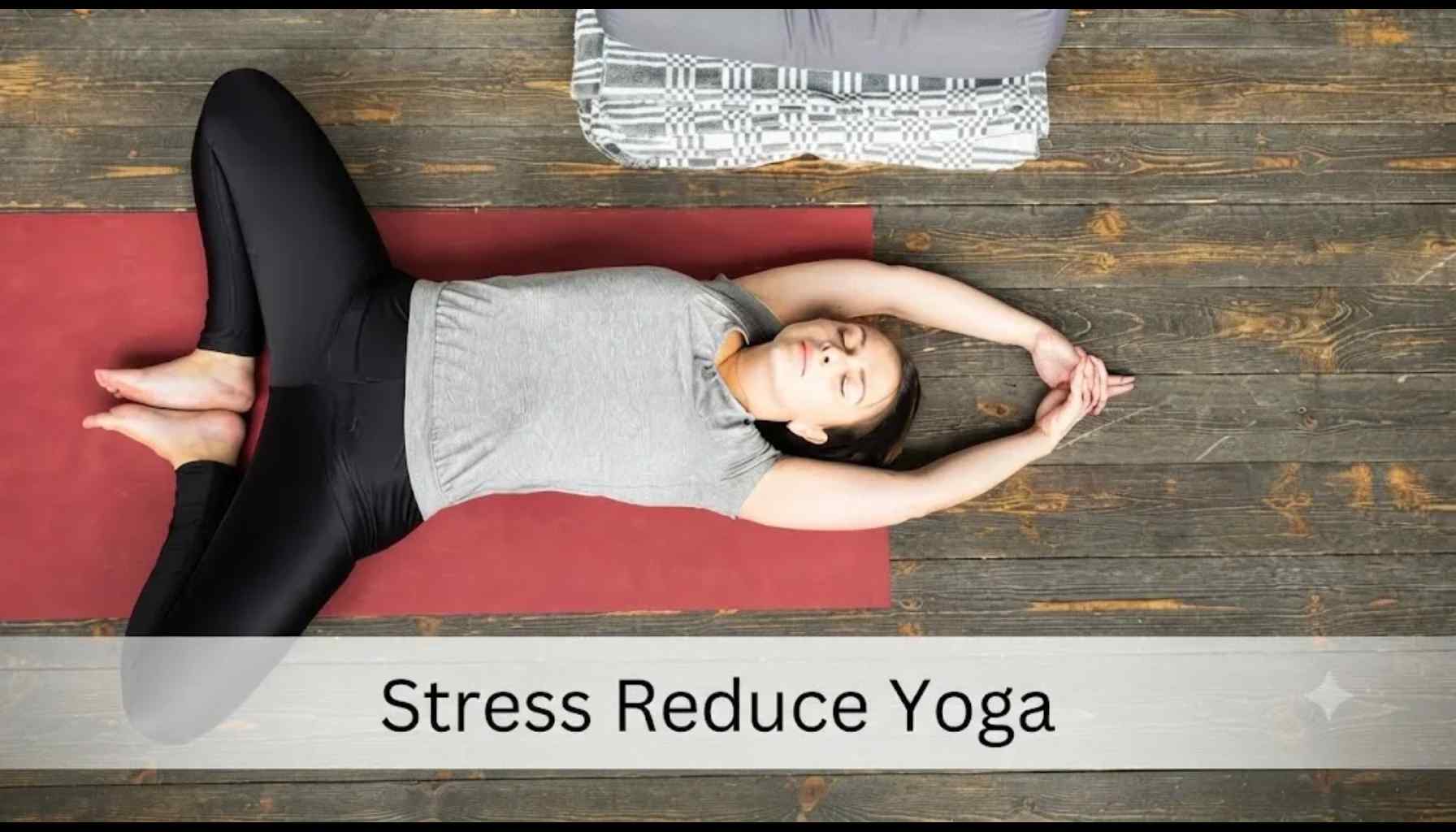
6. Reclining Bound Angle Pose (Supta Baddha Konasana)
Steps: Lie down comfortably on your back; inhale and relax your belly; exhale as you let your knees open up.
Alignment: Support your knees and maintain the neutrality of your neck.
Benefits: Gives support in a restful pose.
Modification: Place cushions under your knees
Stress reduce yoga poses emphasize gentle movement and relaxation rather than demanding flexibility. Similar practices are commonly recommended for calming and stress management.
Two Counter Poses
1. Knee to Chest Pose (Apanasana): Lie on your back; breathe in easily; breathe out and bend your knees into your chest.
2. Supine Twist Pose (Supta Matsyendrasana): Lie on your back; inhale deeply with your knees bent; exhale and lower your knees towards one side.
How to Prepare
Choose a quiet, comfortable space with a yoga mat or supportive surface. Wear flexible clothing and practise when you are not immediately after a heavy meal.
Start with two or three minutes of gentle breathing and joint movements. Keep a cushion, blanket, blocks, or chair nearby for modifications.
Duration and Frequency: A beginner can practise for 15–30 minutes, focusing on slow movements and comfortable breathing. Practising stress reducing yoga 3–5 times weekly can provide regularity in the process.
Health Benefits
Stress reducing yoga may provide several physical and mental benefits:
- May reduce perceived stress.
- Encourages slower, controlled breathing.
- Helps release muscular tension.
- Supports flexibility and mobility.
- May promote relaxation and emotional well-being.
- Can support mindfulness and body awareness.
Diseases and Conditions Managed
Stress reducing yoga may support people experiencing mild stress, anxiety symptoms, sleep difficulties, muscle tension, and stress-related fatigue.
It may also complement lifestyle approaches for people managing headaches or elevated blood pressure, but yoga should not replace prescribed medical treatment.
Yoga should complement, rather than replace, professional care when stress becomes persistent or significantly affects daily life.
Precautions
- Avoid painful or forceful movements
- Stop if you experience dizziness, numbness, or sharp pain.
- People with injuries, pregnancy, significant medical conditions, or balance concerns should seek appropriate professional guidance before starting a new yoga routine.
Wrapping Up
Stress reduce yoga can support your physical and mental well-being. Regular practice may help manage perceived stress, muscle tension, and relaxation needs. Start slowly, use suitable modifications, and choose poses that feel comfortable rather than forcing flexibility.
FAQs
1. Can yoga reduce stress immediately?
A gentle session may promote relaxation, but individual responses and long-term effects vary.
2. Which yoga is best for stress relief?
Restorative Yoga, Hatha Yoga, and mindfulness-focused practices can support relaxation.
3. How long should I practise yoga for stress?
Beginners can start with 15–30 minutes and gradually adjust according to comfort.
4. Can students practise yoga for stress?
Yes, simple yoga therapy, breathing exercises, and short relaxation sessions can fit student routines.
Also Read: Prana Yoga
By Umesh Kumar Khiri

Discussion (0)
No comments yet. Be the first to comment!
Leave a Comment
You need to login to post a comment.