
The Ins and Outs of a Lifestyle
April 2023
Health and wealth go hand in hand, says Sujatha Rao.
So try and find a balance between the two In the times we live in, ‘lifestyle’ has come to include a broad spectrum of tangible and intangible things, which can be narrowed down to two of the most important ones: health and wealth. Let’s zoom in on one important input and one important output for each of these two aspects for keeping it simple, though there are many more components, both in terms of input and output, that contribute to a balanced lifestyle.
I. Health
These days ‘lifestyle diseases’ is a term we en counter frequently. It includes a list of diseas es that one falls prey to, thanks to the lifestyle one maintains. Sadly, this list includes serious diseases such as heart ailments, COPD, diabe tes, hypertension, TB, and a variety of cancers.
A large number of these diseases progress very slowly and steadily. So, most of them do not spring onto us all of a sudden. The good news is that quite a few of them are preventable, with the power to do so lying within our control.
One of the primary inputs for maintaining good health is what we eat, and the output is what we burn, both measured in terms of calories. Keep ing these two somewhat in balance may help us keep the bulk of lifestyle diseases at bay.
Input
• Watch the calories: Nowadays, the pack aged foodstuff we buy, mandatorily men tions the calorific values. So let’s use this information to buy ourselves some healthy calories.
Heartspeak 15
• Eat for the heart: What we eat and how much we eat is at the heart (literally) of a healthy lifestyle. So let’s go easy on our hearts by eating healthy.
• Have fun cooking: With so many YouTube recipe videos at our fingertips, cooking can turn out to be a team activity and a family pastime. This way, we know what’s cooking in terms of calorific values too. While we are at it, let’s also get back to our granny’s recipes that are low on oil and high on fi
bre, with a good dose of probiotics thrown in for that healthy gut.
• Cheat a little: We can afford to have a few treat-ourselves days strewn in between. But we have to earn them through strict adherence to our regimen during the rest of the days.
Output
• Do the maths: When the calories we eat and the calories we burn are almost equal, our weight remains somewhat constant. So when I realise that I would need to walk about four km to burn that single ex
tra-large samosa, I say “No, thank you” to such lavish helpings. Ultimately, like many things in life, eating too is a trade-off.
• Don’t let the garbage pile up: “Unfortu nately, the garbage that we eat accumulates at odd places on our body, making it very difficult later on to shed that extra weight off. So avoid it.
• Reap what you sow: If I sit on the couch and eat those potato chips while binge-watching TV for hours, I sure can’t complain about ending up looking like a couch potato, can I?
• Keep your buttons on:I don’t know about 16 LifePositive | APRIL 2023
hips, but buttons definitely don’t lie. So you better take care not to burst them at the seams. No shortcuts here—you have to attempt to sweat those extra calories out.
In and out
Even with a perfect regimen on the input and output fronts, there’s no guarantee that one would live happily ever after. But the odds of living better and longer would definitely im
prove.
II. Wealth
Daniel Kahneman, the Nobel Prize–winning behavioural economist said, “Money does not buy you happiness, but lack of money certainly buys you misery.”
Money, or wealth, is the input we need to reach our goals, be it education, buying material things in life, or attaining independence of var ious kinds. It is the tool that defines our stand ard of living. By ignoring wealth, we would be
putting our health and fitness at peril. The origins of money go all the way back to the Mesopotamian temple and palace admin istrations in 3500 BC. Thus, money seems to have evolved as a bookkeeping and accounting process, progressing to coins and to what we presently know as currency.
It can be argued that since we are paid mon ey for our work or service, it itself is an out put. But that kind of viewpoint is somewhat short-sighted. Ultimately, it’s a commodity to get what we want in life.
Let’s now try to see whether we can demysti fy the financial aspects of life using the same simple concepts of input and output. Input
Work hard: Unless you are a person who is born into riches and can live off your inherited money, you have to work almost a lifetime to earn enough to live through your sunset years comfortably. So the majority of people can’t es
cape long hours of work during the prime of
their lives. In addition to the hard work, the knowledge to make that hard-earned money work harder will help us make enough to last our lifetime.
“A miser lacks what he has and what he hasn’t.”A case study.
Because of the way David’s family lived, the world viewed them as not-so-well-to-do. David worked hard round the clock and spent most of his time outside the house. Even his family members thought he was a loser, as they con
tinued to live in penury. However, when Da vid passed away due to a sudden heart attack, his family found more than 10 property docu ments stashed away in the locker. He never got to enjoy the fruits of his toil. For him, money became an end in itself, and he ended up dying with a hoard of money unspent and unenjoyed.
Unfortunately, the sorry state of affairs contin ued even after his death. David’s only son went berserk on seeing such riches all of a sudden. He squandered it away, and his life too was nipped in the bud, thanks to his unhealthy ad dictions.
Output
Go after your goals: Money is the tool to get that output we want, both tangible (house, car, furniture) and intangible (education, experi ences). The output, in this context, varies from person to person. However, it is worthwhile to remember that once we make more than enough, it’s time for us to give some of it to those who are less privileged than we are.
Aamdhani athanni, kharcha rupayya (In come, fifty paise; expenditure, one rupee). A case study.
Dheeraj and his family members gave the im pression of being very rich. They maintained a very high standard of living for decades. So when Dheeraj committed suicide one fine day by jumping into the reservoir of the dam in the town, citing financial troubles as the reason, it came as a rude shock to everyone. Immediately thereafter, the family had to file for bankrupt cy, and that’s when it became public knowl edge that they had been spending way beyond their means to keep up the façade of being a wealthy family. Keeping such a false social sta tus cost Dheeraj his life. His lifestyle became a terminal illness of sorts.
In and out
David and Dheeraj are outliers on the different ends of the same normalisation curve. One was not living the life he could easily afford, while the other went chasing a lifestyle he could ill afford. For both of them, their chosen lifestyle proved to be a fatal mistake.
Maintaining a healthy balance between the in puts and outputs of the multiple parameters of life is the foundation of having a healthy lifestyle as highlighted through a couple of ex amples.
We can have a ‘well-thy’ lifestyle when we work towards what we want out of our lives, by di recting the simple inputs towards our desired outputs through our hard work, creativity, and self-discipline.
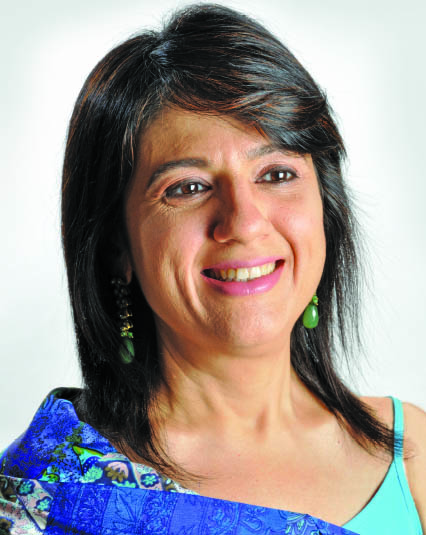
Sujatha Rao is a retired banker. She has been contributing articles to various newspapers and magazines over the last two decades. Two of her short stories were placed third in Times of India’s national level Write India contest (Seasons 1 and 2). Her first book titled In the Company of Stories was published recently. Her other interests include reading, traveling, practising yoga, and mindfulness.
We welcome your comments and suggestions on this article.
Mail us at editor@lifepositive.net

Discussion (0)
No comments yet. Be the first to comment!
Leave a Comment
You need to login to post a comment.