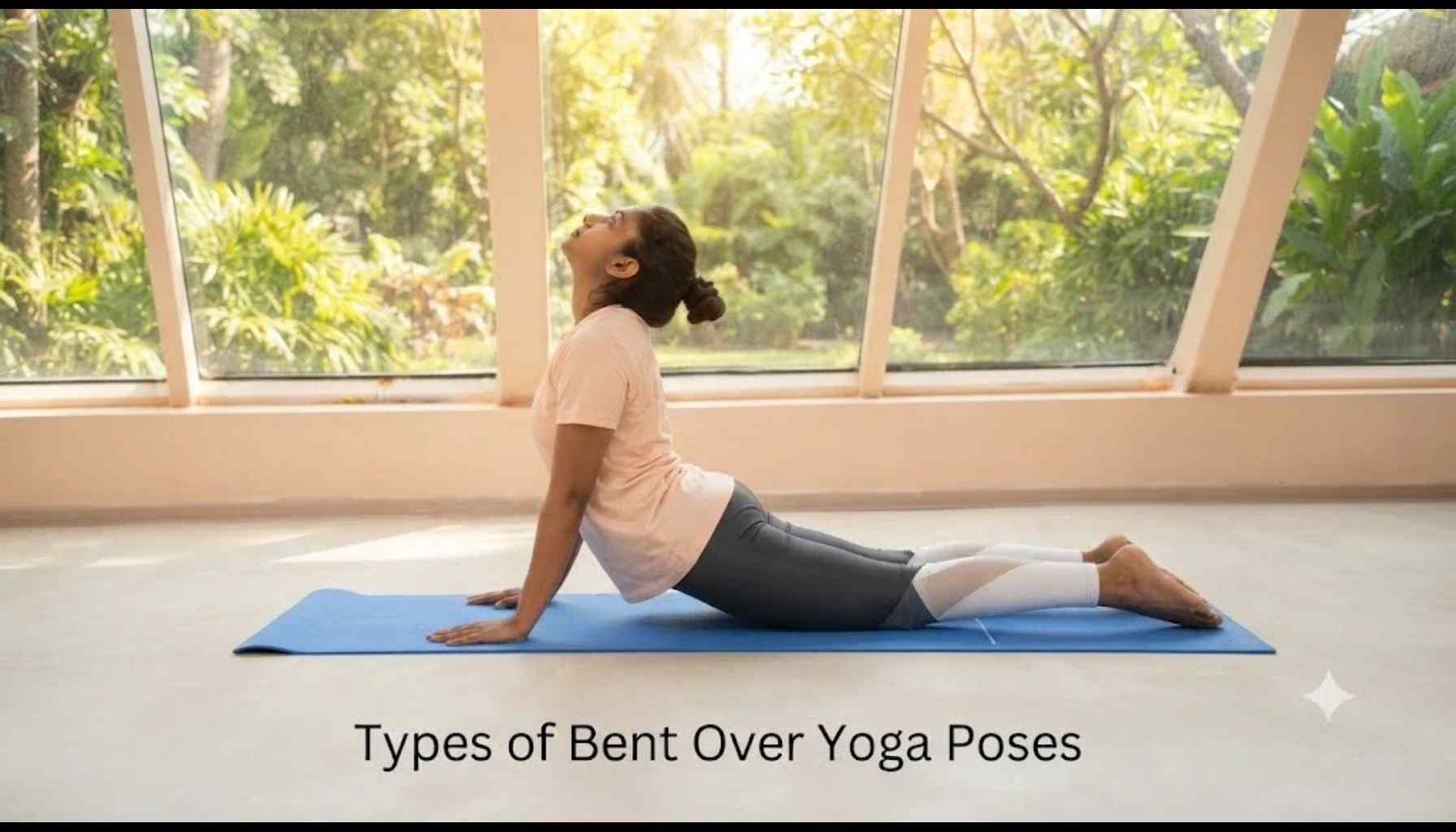
Types of Bent Over Yoga Poses
Types of bent over yoga poses fall into two broad families: forward bends, where the spine folds toward the legs, and backward bends, where the spine arches open. Together they stretch, strengthen and balance the entire back body.
Key Takeaways
- Forward bends calm; backward bends energise.
- Both types of bent over yoga improve spinal flexibility and strength.
- Warm up first; never force a bend.
What Are the Types of Bent Over Yoga Poses?
The bent forward and backward yoga poses are characterized by bending of the spine, either forward (flexion) or backward (extension). The bending forward makes the spine bend forward while bending backwards makes the spine bend backwards.
Examples of Forward Bends and Backward Bends
Forward bends involve folding the torso toward the legs. Examples include Uttanasana (Standing Forward Bend), Paschimottanasana (Seated Forward Bend), Balasana (Child's Pose), Janu Sirsasana (Head-to-Knee Pose) and Prasarita Padottanasana (Wide-Legged Forward Bend).
Backward bends involve extending the spine and opening the chest. Examples include Bhujangasana (Cobra Pose), Ustrasana (Camel Pose), Setu Bandhasana (Bridge Pose), Dhanurasana (Bow Pose) and Urdhva Dhanurasana (Wheel Pose).
Understanding Types of Bent Over Yoga Poses
1. Standing Forward Bend (Uttanasana)
- Stand tall, hinge at the hips, fold forward.
- Let your head hang, knees softly bent.
- Hold, breathe, then rise slowly.
Modification: Bend your knees generously or rest hands on blocks.
2. Seated Forward Bend (Paschimottanasana)
- Sitting position, with both legs extended outwards.
- Lengthen your spine with inhaling breath, and bend forward on exhaling.
- Try to touch your feet or shinbones.
Modification: Use a strap around your feet if you can't reach them.
3. Child's Pose (Balasana)
- Kneel, sit back on your heels.
- Fold forward, arms extended or by your sides.
- Rest your forehead on the mat.
Modification: Place a cushion between hips and heels for comfort.
4. Cobra Pose (Bhujangasana)
- Lie down face down, hands beneath shoulders.
- Inhale and lift your chest off the floor.
- Elbows should be slightly bent, shoulders relaxed.
Modification: If your back is feeling stiff, just lift a little.
5. Camel Pose (Ustrasana)
- Kneel, hips over knees, hands on lower back.
- Inhale, arch back, reach for your heels.
- Keep hips pushed forward, neck relaxed.
Modification: Keep hands on your lower back instead of reaching for the heels.
6. Bridge Pose (Setu Bandhasana)
- Lie on your back, knees bent, feet flat.
- Press feet down, lift your hips up.
- Clasp hands under your back if comfortable.
Modification: Place a block under the sacrum for a supported version.
Beginner-Friendly Bent Over Yoga Poses:
1. Bound Angle Forward Bend (Baddha Konasana)
- Sit with feet touching and knees wide.
- Inhale, extend your spine.
- Exhale, bend forward gently.
Modification: Cushions can be placed under the knees, keeping the torso straight.
2. Half Standing Forward Bend (Ardha Uttanasana)
- Stand with feet apart at hip width.
- Bend forward, place hands on thighs.
- Extend the spine and look down.
Modification: Rest your hands on a sturdy chair for support.
3. Baby Cobra Pose (Ardha Bhujangasana)
- Lie on your stomach, hands beneath shoulders.
- Inhale, gently lift your chest.
- Keep elbows bent and shoulders relaxed.
Modification: Lift your chest only slightly and keep your hands farther forward if needed.
Alignment: When practicing backbends and heart-opening yoga poses, ensure your neck remains a natural extension of your spine rather than dropping back forcefully. It allows for safe depth and proper alignment.
Health Benefits
- Flexibility of the spine and posture enhancement
- Strong back, core and leg muscles
- Digestion and stomach organ stimulation
- Relief from stress and calming effect on mind
- Open chest and enhanced breathing capability
- Promotes good circulation
Diseases and Conditions Often Managed
- Slight lower back pains
- Anxiety and stress related conditions
- Digestive problems
- Menstrual pains (forward bends)
These poses can support management of such conditions, but they aren't a substitute for medical treatment.
What to Expect?
Wear comfortable, stretchy clothing and practise on an empty or lightly full stomach. Warm up your spine with gentle cat-cow movements before deep bends. Expect a stretching sensation, not sharp pain, and know that flexibility builds gradually over weeks.
Precautions
- Avoid deep backbends with a recent spinal injury or severe back pain.
- Skip forward folds in early pregnancy without a teacher's guidance.
- Move slowly; never bounce into a stretch.
- Stop if you feel numbness, sharp pain or dizziness.
Forward Bends vs Backward Bends
|
|
|
|
|
|
|
|
|
|
|
|
|
|
|
|
|
|
|
|
|
|
|
|
|
|
|
|
Conclusion
Types of bent over yoga poses give your spine two complementary directions to move in. Balance forward folds with backbends, listen to your body, and progress patiently for a stronger, more flexible back.
FAQs
1. What are the different types of backbends?
Common types include Cobra, Camel, Bridge, Wheel and Bow pose.
2. Which yoga is best for everyday?
Hatha yoga is widely considered a gentle, sustainable choice for daily practice.
3. What is the most relaxing type of yoga?
Restorative or Yin yoga is generally considered the most relaxing.
4. What not to do after yoga?
Avoid eating a heavy meal, taking a very hot shower, or lying flat immediately after backbends.
5. How do types of bent over yoga poses benefit the body?
Different types of bent over yoga poses such as Uttanasana may improve spinal flexibility, strengthen muscles, improve posture and promote relaxation.
Also Read: Chakra Yoga
By Umesh Kumar Khiri


Discussion (0)
No comments yet. Be the first to comment!
Leave a Comment
You need to login to post a comment.