
Vaiaragya
February 2024
Cultivating Vairagya
Vanitha Vaidialingam talks about how the scriptures guide us in gaining mastery over our desires, to live life with equanimity
Who would not like to increase mental clarity, reduce stress, and enjoy calm and peace in their life? The Vedas, Upanishads, and Bhagavad Gita offer numerous tools for achieving this state of being. I am not referring to any exotic methods of meditation or elaborate ritualistic prayers but, rather, to the simple self-control tools presented by these scriptures for practical living.
The Buddha asserted that “desire is the root cause of all evil” and that desire should be eschewed. However, desire is linked to our instinct for survival and is a significant biological drive that can be controlled but not eliminated. Even monks, like householders, must use sensory inputs for survival. So, the cultivation of dispassion, or vairagya, does not mean complete withdrawal of the senses and their functioning. It refers to the practice of consciously controlling and redirecting the flow of the senses and the mind.
In this context, the Vedas, Upanishads, and Bhagavad Gita prescribe a ceiling on desire or redirection of desire into spiritual living such that desires can be evaluated, emotions can be regulated, and senses can be withdrawn from stimuli. As a consequence, the individual will experience emotional control, stress reduction, sensory regulation, and peace of mind.
It must be noted that these scriptures are not prescriptive but, rather, suggestive. They provide a wide range of techniques and methodologies for achieving dispassion. It is for the practitioners to choose a method that suits them best.
However, the process of acquiring impulse control or emotional reticence requires exercising viveka, or discernment. Viveka is a methodology by which the individual becomes aware of their emotional response to sensory stimuli. The individual can then work towards understanding the triggers that underpin the response. The result of this awareness and the subsequent effort at identifying the source of stimuli will produce vairagya within the individual. This dispassion, in turn, will help bring mental clarity, emotional stability, and peace of mind.
Let’s consider a scenario: You have created a wonderful painting, putting your heart and soul into it. Everyone around you is praising your talent, but there is one person (whose opinion you value) who is critical of the piece. They point out the defects in the painting and suggest improvements. Your immediate response is anger. If you let loose your anger, you may speak words that could sever your relationship with that person forever. If you
The offspring of viveka is vairagya, which is a compound word composed of ‘vai,’ which means ‘to dry up,’ and ‘raga,’ which means ‘passion.’ Together, the compounded word means to enter a state in which emotions dry up or cease to hold sway over you. This detachment results in renunciation (tyaga), enabling the person to pursue reality and give up falsities. control your anger and take time to calm down, you may even begin to see the truth behind their comments and appreciate their honesty and goodwill towards you.
In this scenario, viveka requires you to name the emotion and then proceed to analyse why you became angry. You may want to leave the room until you calm down or use one of the time-tested techniques, such as counting from 1 to 100, before responding. This will help you calm down and prevent the consequences of giving the reins to uncontrolled anger. As you dig deeper into the source of your emotion, you will find that the root cause of your anger is desire or expectation. You want everyone to unconditionally appreciate your work and recognise your talent. The one critical voice, however justified, made you unhappy and gave rise to anger as your expectation was not fulfilled. Having understood that, you will then be able to appreciate the criticism and the goodwill behind the response from the individual.
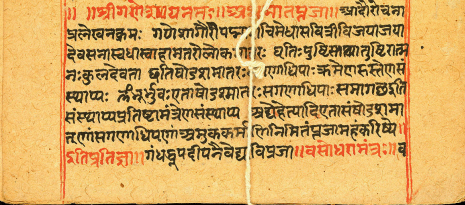
The offspring of viveka is vairagya, which is a compound word composed of ‘vai,’ which means ‘to dry up,’ and ‘raga,’ which means ‘passion.’ Together, the compounded word means to enter a state in which emotions dry up or cease to hold sway over you. This detachment results in renunciation (tyaga), enabling the person to pursue reality and give up falsities.
Patanjali Yoga Sutra 1:15 describes a dispassionate person or vairagi as one who is in a conscious and controlled state of being and does not hanker after objects that may be experienced through the senses, such as sight or hearing.
Lord Krishna in the Bhagavad Gita 6:35 says that vairagya is the key to controlling a fickle mind that is restless like the wind. The process is difficult but not impossible.
The Vairagya Satakam of Bhartrihari is an excellent treatise on the concept of vairagya. It narrates the story of a king who was mortified by a certain turn of events and is reactive. The king obtains a golden fruit that confers immortality. He wanted his queen to benefit from the fruit and gave it to her. The queen gave it to her lover.
The lover gave it to a prostitute, who in turn brought it to the king as her gift. On discovering the sequence of events, the king got angry and ordered the beheading of the queen. He then ate the fruit himself. However, appalled by the range of uncontrolled emotions he experienced, he analysed the cause of his suffering. He realised that it was his desires and expectations that were at the root of his misery. Renouncing his throne, he left the kingdom to gain mastery over his emotions. Bhartrihari advises his readers to beware of emotional responses and encourages them to gain control over passion by practising vairagya, or dispassion.
In the Thirukural, Thiruvalluvar, a renowned Tamil saint, has elaborated on the practice of vairagya (verse numbers 341–350 of Chapter 35) in some detail. He points out that those who can control sensory desire can get rid of it. This freedom from desires reduces suffering. Until this happens, there is a constant pendulum-like oscillation between happiness and sadness. It is only by vairagya or willpower that the sixth sense can gain mastery over the five senses. However, vairagya cannot be obtained without rigorous practice. Practice is referred to as ‘abhyasa.’
What is abhyasa? It is inseparable from vairagya. The practice has to be constant, repeated, and conscious. The endeavour must be to focus attention on our habits and patterns (vasanas) and to get us out of the rut or groove that has been formed by their repetition. Abhyasa will become firmly established when it is pursued without interruption over a long period.
Involvement and Intensity in the Practice of Vairagya
Individual involvement in the practice of vairagya will determine the intensity of the practice and the progress of the effort. The effort can vary in intensity:
Mild: The individual is conscious of the sensory forces at play and makes some effort to control their outcome.
Medium: The individual is extremely conscious of the power of the mind in impulsive action and makes a constant conscious effort to control actions arising from impulses.

Concentrated: The individual is intensely conscious of the causes of sense-driven impulse actions and makes an all-out effort to be non reactive.
Stages in the Practice of Vairagya
The practice of dispassion is divided into two stages—Apara Vairagya and Para Vairagya. Apara Vairagya is divided into four steps, whereas Para Vairagya has one step.
The four steps of Apara Vairagya
Yetamana (Naming or acknowledging the emotion): The vairagi acknowledges that their senses dictate their actions and reactions. The senses go out into the world in predefined grooves and stimulate desires and emotions in the person. The vairagi
identifies the dominant processes by which sensory input translates into desire. They then identify each dominant sensory input and gradually avoid going down that sensory route. This practice of identifying the sensory input is called Yetamana. Repetitive practices like mantra japa, and meditation, are recommended adjuncts to the practice of Yetamana. It is considered necessary to keep the sensory inputs to a minimum so that the vairagi can progress with this practice.
Vyatirka (Enquiry into the action of the senses): The vairagi who has successfully named the emotion is ready for step two, the practice of gradually detaching the sense from the sensory input. Let us understand this with the example we used earlier. A person may experience anger when they or their work is criticised. A practising vairagi will immediately recognise and name the emotion that is surging up and set out to control the emotion by leaving the room or counting from 1–100 to allow the emotion to
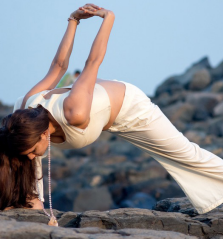
Self-control requires practice and discipline subside. Thereafter, they may inquire into the reason for their emotional response. They may find that they have a deep seated desire or expectation that everyone should appreciate their work or agree that they have talent. Once that desire has been identified and labelled, they will set out to ascertain the truth of or understand the point of view of the person criticising their work. As a result, they will be able to see the defects in their work and set them right. In other words, the dispassion will bring clarity and reduce stress.
Pratyahara (withdrawal of senses), described in the Patanjali Yoga Sutra, refers to this stage of Vairagya. You withdraw your attention from the sense organs, like a turtle pulling its limbs into its shell. Mindfulness exercises that ask you to withdraw the senses from external stimuli and focus inwards are recommended as part of this practice.
• Ekendirya (Examining the mind): The Vairagi realises that controlling the senses does not result in complete non-attachment. The mind remains active. The desires dormant in the mind surface and may derail the achievements of step one unless one remains vigilant. The vairagi must examine the desires that arise in the mind and gain mastery over them to practice the third step called Ekendirya. For instance, in Karma Yoga, the practice of Ekendriya requires the practitioner to let go of the vritis (waves of sensations or tendencies) of the mind in three stages:
i. Non-attachment to the fruits of action (Phala tyaga).
ii.Non-attachment to the nature (pleasurable or non-pleasurable) of action (Karma tyaga). iii. Non-attachment to the authorship of action (Kartha tyaga).
Ekendirya, therefore, can be transliterated as a ‘controlled mental state’ wherein the mind is brought to a standstill and there are no reactive highs and lows. The vairagi begins to view the world with equanimity, with constant practice. This is equivalent to Patanjali Yoga Sutra’s ‘dharana.’
Vasikara (Equanimity): This is the point at which the vairagi’s equanimity is stable and spontaneous. It is known as vasikara or dhyana (Patanjali’s Yoga Sutra). With the senses and the mind under control, the vairagi is not tempted by external or internal stimuli. The senses and the mind become still, and the Vairagi is ready for the next stage—Para Vairagya.
Para Vairagya (Liberation)—The Last Step Para Vairagya is the final stage in which the aspirant moves beyond the natural tendencies, or gunas. He will try to get rid of Rajas (indulgence), Tamas (laziness), and even Satva (calmness). His practice of dispassion will take him beyond these tendencies and ease him into a state of transcendence, or Samadhi, wherein he realises the truth of the statement “Aham Brahmasmi (I am Brahman).”
Conclusion
Vairagya or dispassion is the method of reorienting desire. The practice begins with the observation of the self and the impact of sense inputs on the body and mind. The practitioner identifies the vritis (tendencies) and names them. Thereafter, they set out to identify the source of the tendency, consciously avoid going down that path, and attempt to develop non attachment to the action, the actor, and the fruits of action. Constant practice results in the steady refinement of the mind and body.
The initial phase of the practice may be slow, with the aspirant slipping down to the earlier stages repeatedly. However, devoted and constant practice of Apara Vairagya will gradually result in a shift in the momentum of the practice, and the progression toward complete non-attachment, or Para Vairagya, will become more and more apparent.
Dr. Vanitha Vaidialingam is a retired Commissioner of Income tax, management consultant, published author and a devoted yoga practitioner. She is the winner of the Golden Book Award 2024, for her book Close-Encounters of the Mystical Kind.

Discussion (0)
No comments yet. Be the first to comment!
Leave a Comment
You need to login to post a comment.