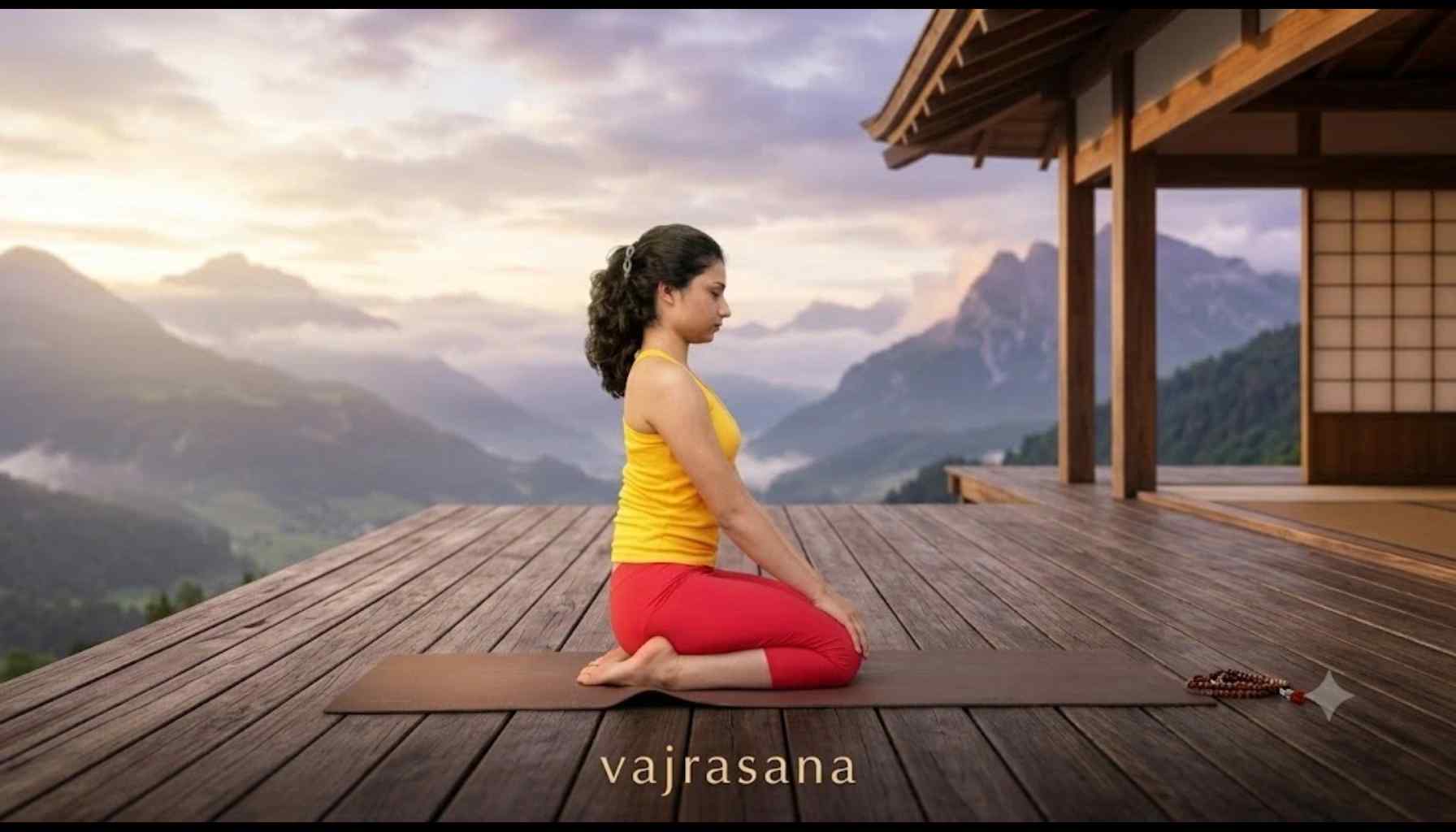
Vajrasana (Thunderbolt Pose)
Vajrasana is a simple kneeling yoga posture also known as Thunderbolt Pose. Unlike many seated postures, it places the body in a kneeling position with the hips resting on the heels while the spine remains upright. It is commonly used for breathing exercises, meditation, and as a resting posture between other yoga practices.
The pose is beginner-friendly, but comfort and correct alignment are important because the knees, ankles, and lower legs remain flexed.
Key Takeaways
- Vajrasana supports posture, digestion, flexibility, and meditation.
- Regular practice should always remain comfortable and controlled.
- Knee or ankle problems require appropriate professional guidance.
What Is Vajrasana (Thunderbolt Pose)?
The word Vajra refers to a diamond or thunderbolt, while Asana means posture or pose. In Vajrasana, the practitioner kneels and sits on the heels while maintaining an upright spine.
The posture provides a stable base for pranayama and meditation because the head, neck, and spine can remain aligned. Some yoga traditions also recommend sitting in Vajrasana after meals, although claims about improved digestion should not be considered a substitute for medical treatment.
How to Do Vajrasana
Follow these steps slowly to perform the Thunderbolt Pose and avoid forcing the knees or ankles.
1. Kneeling posture: Sit on the yoga mat and straighten your legs out first. Then, take both legs under you.
2. Placing of the feet: Make sure that the toes are facing backwards and bring the big toes together.
3. Sitting on your heels: Bring your hips down on your heels gently.
4. Aligning your spine: Make sure that your back and neck are erect.
5. Placing your hands: Place the hands gently on the thighs or knees.
6. Relax your shoulders: Your shoulders should be relaxed and not lifted up or tense.
7. Breathing normally: Just breathe comfortably and maintain the gaze straight ahead or shut your eyes.
8. Come out slowly: Unbend the legs one by one and come out from the posture.
Benefits of Vajrasana
Vajrasana can be incorporated into a regular yoga routine for several physical and mental purposes.
|
|
|
|
|
|
|
|
|
|
|
|
|
|
|
|
|
|
|
|
|
|
|
|
Vajrasana after meals: Sitting in Vajrasana for a few minutes after eating is traditionally practised to encourage comfortable digestion and mindful breathing. Keep the posture gentle and stop if you experience knee, ankle, or abdominal discomfort.
Variations of Vajrasana
The Thunderbolt Pose can be modified according to flexibility and comfort.
1. Supported Vajrasana
Use the folded blanket or yoga block or bolster to place it between the hips and heels, as it provides comfort to knees and ankles.
2. Cushioned Feet Vajrasana
If ankle flexibility causes discomfort while doing the traditional posture, then the feet can be placed on cushioning or something soft under the ankles or around the feet.
3. Toe Flexing Vajrasana
For an intense practice, you can try toe flexing vajrasana while sitting back; it stretches toes and feet further. You must do this when the traditional posture is comfortable enough for you.
4. Vajrasana for Meditation and Pranayama
Once you become comfortable with the posture, then you may close your eyes and meditate or perform pranayama.
Diseases and Health Conditions Vajrasana May Support
Vajrasana should not be described as curing diseases. It may be used as a complementary wellness practice for certain aspects of health.
|
|
|
|
|
|
|
|
|
|
|
|
|
|
|
|
|
|
|
|
|
How Long Should You Sit in Vajrasana?
For beginners, the duration can range between 30 seconds and 2 minutes, while for the more experienced individuals, the duration could be between 10 minutes to even 15 minutes.
However, there is no pressure to attain that particular duration as when you feel that your body has started to feel numb, uncomfortable, or there is no proper circulation of blood, get out of the posture.
Precautions for Vajrasana
Although Vajrasana is relatively simple, it places the knees and ankles in a flexed position. Check with your doctor if you are suffering from a disease. Take particular care if you have:
- A current knee injury or significant knee pain
- Recent knee surgery
- Acute ankle or foot stiffness
- Significant calf or joint pain
- A slipped disc or relevant spinal condition
- Difficulty moving the lower limbs
Conclusion
Vajrasana is an easy-to-do and multi-functional yoga pose which can be incorporated into daily practice of health and well-being. The erectness of the posture makes it suitable for meditation, pranayama, mindful breathing and sitting relaxation, whereas kneeling makes it effective for working the lower part of the body.
The key element of practicing Vajrasana does not lie in staying in it as long as you can but in the right position, smooth breath and adaptation. A cushion will help in doing this exercise easily.
Vajrasana, when practiced correctly, can be an effective element of a yoga practice, but it should not replace medical care in any way.
Frequently Asked Questions
1. How long should I sit in Vajrasana?
Beginners can start with 30 seconds to 2 minutes and gradually increase the duration according to comfort; experienced practitioners may practise for longer.
2. What is Vajrasana and its benefits?
Vajrasana is a kneeling seated posture that may support digestion, posture, lower-body flexibility, mindful breathing, and meditation.
3. Is Vajrasana better than walking?
Neither is universally better; walking provides active movement and cardiovascular benefits, while Vajrasana is mainly a seated posture used for relaxation, digestion-focused routines, breathing, and meditation.
4. Which disease is cured by Vajrasana?
Vajrasana does not cure any disease; it may complement healthy routines and should not replace appropriate medical diagnosis or treatment.
Disclaimer: The content on LifePositive.com, including articles/blogs on yoga, acupuncture, naturopathy, and other alternative healing modalities for holistic wellness, is for informational and educational purposes only. It is not a substitute for professional medical advice, diagnosis, or treatment. Always consult a qualified healthcare provider before starting any new health protocol or making changes to an existing treatment plan.
Also Read: Kriya yoga
By Umesh Kumar Khiri



Discussion (0)
No comments yet. Be the first to comment!
Leave a Comment
You need to login to post a comment.