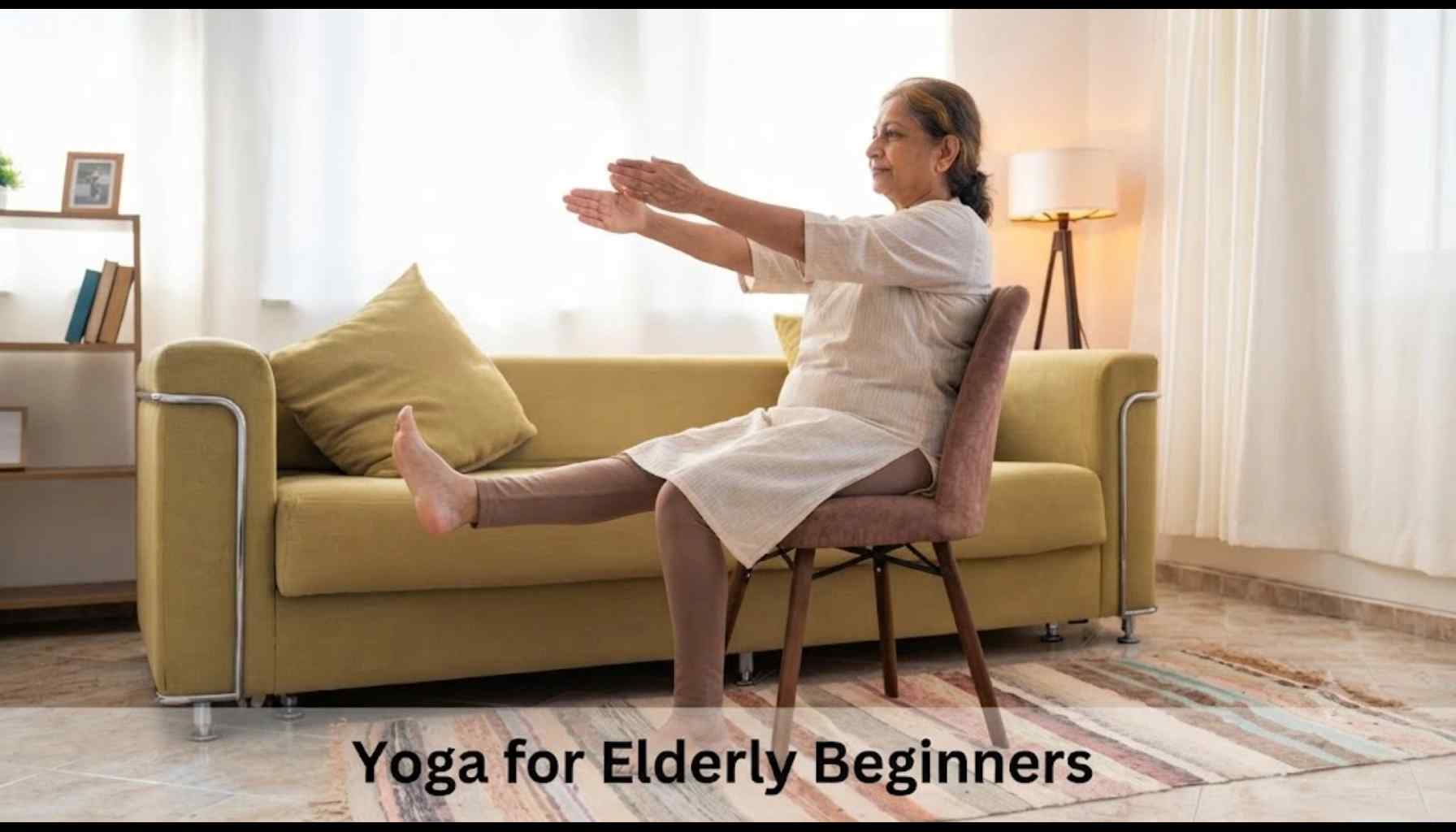
Yoga for Elderly Beginners: Routine and Benefits
Yoga for elderly beginners offers a gentle way to improve mobility, balance and flexibility. It combines simple movements, breathing exercises and relaxation. Seniors can practise modified poses while sitting on a chair or standing with support. Regular practice may also improve sleep and support emotional well-being.
Key Takeaways
- Gentle yoga supports mobility and balance.
- Chair yoga offers accessible modifications.
- Regular practice promotes relaxation and flexibility.
What Is Yoga for Elderly Beginners?
Yoga for elderly beginners focuses on gentle movements, controlled breathing and comfortable stretches. It accommodates age-related changes in flexibility, strength and balance. Seniors can practise at their own pace using chairs, cushions or yoga blocks. The exercises can be adapted to different mobility levels and physical abilities.
Alignment: Keep the spine comfortably long, shoulders relaxed, and neck neutral; avoid forcing joints or rounding the lower back excessively.
Starting Movement and Breathing: Begin each pose slowly from a stable position; inhale during lengthening or opening movements and exhale during folding or relaxing movements.
Benefits of Yoga for Seniors
- Flexibility is increased: The gentle stretches keep joints flexible.
- Balance is improved: Through standing positions.
- Increases strength: Through simple yoga exercises that strengthen the body parts such as legs, arms and core.
- Helps relieve stress: Breathing and relaxing techniques help relax and relieve stress.
- Improves posture: Gentle strengthening helps support spinal alignment.
- Promotes better sleep: Relaxation techniques may help improve sleep quality.
6 Easy Yoga Poses for Elderly Beginners
1. Seated Mountain Pose (Tadasana)
- Sit up straight with your feet placed firmly on the ground.
- Relax your shoulders and elongate your spine.
- Breathe slowly and keep your body relaxed.
Benefits: Helps with posture, spinal alignment, and body awareness.
Modification: Sit on a chair that provides back support.
2. Seated Cat-Cow Pose (Marjaryasana-Bitilasana)
- Sit tall with feet grounded and hands on thighs
- Inhale, gently lift your chest and arch your spine
- Exhale and round your back. Keep your neck relaxed and avoid dropping your head sharply.
Benefits: Increases spinal flexibility and helps ease back stiffness.
3. Seated Forward Bend (Paschimottanasana variation)
- Sit tall with feet flat on the floor and gently hold the sides of the chair
- Inhale, elongate your spine.
- Exhale, fold forward slightly from your hips.
Benefits: Provides a gentle hamstring, hip, and lower-back release, while also helping to relieve tension along the spine.
Modification: Fold only slightly or reduce your range of motion to prevent discomfort and protect your lower back.
4. Supported Tree Pose (Vrikshasana)
- Stand beside a stable chair.
- Grasp the chair and place your weight on one leg.
- Put your other heel next to your ankle bone.
Benefits: Helps improve balance, strength and coordination of legs.
Modifications: Hold the chair with both hands and extend your heel if required.
5. Seated Leg Extension
- Sit upright with both feet flat on the floor.
- Straighten one knee slowly without locking it.
- Keep for some time and then lower the leg.
Benefits: Builds up quadriceps muscles and helps increase knee mobility.
Modifications: Straighten the leg as much as possible.
6. Seated Side Stretch
- Sit with straight posture and both feet planted.
- Lift one arm up toward the ceiling.
- Lean sideways into that position.
Benefits: Stretching of side body and flexibility of the upper body.
Modifications: Place your lifted arm back on your shoulder if lifting is challenging.
|
|
|
|
What Is a Good 30-Minute Yoga Routine for Seniors?
A gentle 30-minute routine can combine warm-ups, simple yoga poses, breathing and relaxation. Beginners can use a sturdy chair for additional support.
A 30-Minute Yoga Routine for Seniors
- Seated breathing exercise – 3 minutes
- Cat/Cow in a seated position – 3 minutes
- Neck and shoulder exercises – 3 minutes
- Tadasana pose – 2 minutes
- Vrikshasana pose (both sides) – 4 minutes
- Virabhadrasana 1 pose (both sides) – 4 minutes
- Standing knee-to-chest pose (both sides) – 3 minutes
- Seated forward bend – 3 minutes
- Seated twisting pose (both sides) – 3 minutes
- Savasana or rest pose – 2 minutes
Do all the poses slowly and take rest whenever you feel tired.
How to Practise Yoga Safely After 60
- Select a stable chair that does not have wheels to perform the exercises while sitting down.
- Begin with gradual exercises and avoid abrupt changes in posture.
- Ensure that water is close at hand and practice in a comfortable setting.
- Do not strain yourself nor hold your breath.
It is recommended to first consult a healthcare professional before practicing if you have serious medical problems or recent surgical operations. Individuals with balance problems should learn standing exercises in a supervised setting.
Practical Tips: For seniors, the goal should be stable, comfortable movement rather than testing capability. Standing poses can be performed near a wall or sturdy chair when balance support is needed.
Final Thoughts
Yoga for elderly beginners may help in developing flexibility, balance, strength, and relaxation. Chair and adapted standing yoga poses will make practice easier. An established routine that takes into consideration each person’s capabilities will be helpful in maintaining mobility and regular physical exercise.
FAQs
1. What is the best yoga for senior beginners?
Gentle Hatha yoga, chair yoga and restorative yoga offer accessible options for beginners.
2. Is yoga good for a 70-year-old?
Yes, appropriately modified yoga can support flexibility, balance, strength and relaxation at 70.
3. How many times a week should a senior do yoga?
Beginners can start with two or sessions weekly. They can gradually increase the number of sessions as comfortable.
4. What are some good morning yoga exercises for seniors?
Seated Mountain, Cat-Cow, gentle side stretches and ankle rotations are suitable morning exercises for many seniors.
Also Read: Tantra Yoga
By Umesh Kumar Khiri


Discussion (0)
No comments yet. Be the first to comment!
Leave a Comment
You need to login to post a comment.