Mastering Subtle Energy: A Complete Guide to Energy Healing
Introduction: The Foundations of Biofield Therapy
Stress has become a familiar part of modern life. Reiki traditions describe this process in terms of ki, or life energy, and suggest that supporting the flow or balance of this energy may promote relaxation and well-being. The National Center for Complementary and Integrative Health (NCCIH), however, notes that Reiki has not been clearly demonstrated to be effective for any specific health-related purpose.
This distinction is important. Reiki can be discussed respectfully as a traditional or complementary wellness practice without presenting its underlying energy concepts as established medical facts. Research into Reiki has produced mixed findings. Some reviews and clinical studies report improvements in measures such as anxiety, stress, pain, or subjective well-being, while limitations in study quality and differences between studies make firm conclusions difficult. A 2022 systematic review, for example, found evidence suggesting benefits for some mental-health symptoms but also rated the certainty differently depending on the outcome being examined.
The most useful way to approach Reiki and stress, therefore, is as a possible relaxation-oriented complement to a broader self-care routine.
The term “biofield therapy” is often used to group practices that propose working with fields or forms of energy associated with living organisms. The existence and therapeutic role of the specific energy mechanisms proposed by Reiki have not been established by mainstream biomedical research. Consequently, concepts such as energy channels and chakra balancing are best understood as elements of traditional or spiritual frameworks rather than anatomical structures equivalent to nerves, blood vessels, or organs.
Reiki and Stress Relief Core Principles
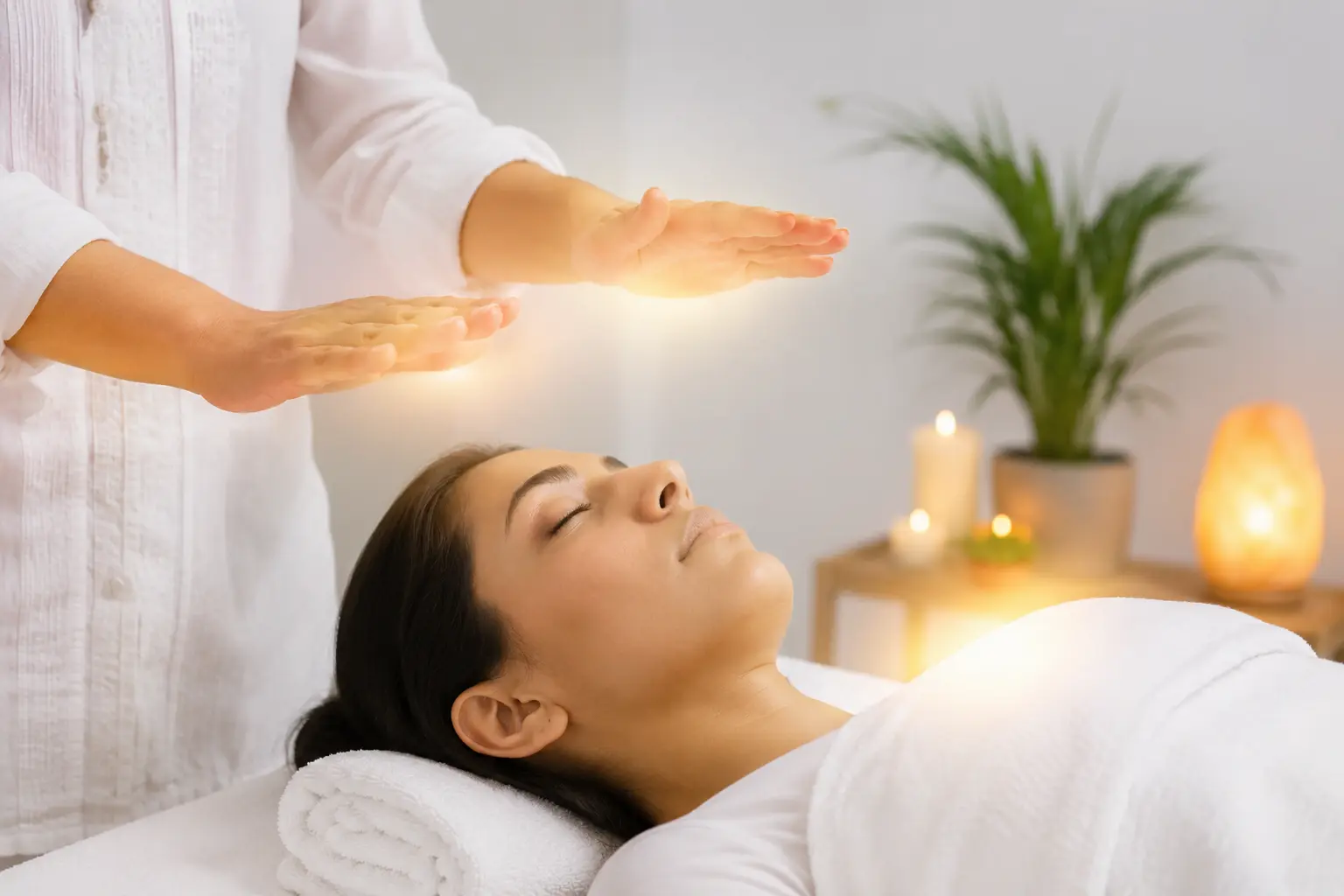
Reiki sessions are generally quiet and noninvasive. A person usually remains fully clothed while sitting or lying comfortably. The practitioner places their hands in a sequence of positions, either directly on the body with permission or slightly above it.
For someone experiencing everyday stress, the value of the session may come partly from creating a deliberate pause. Instead of responding to notifications, deadlines, and competing thoughts, the individual spends time resting, breathing, and directing attention toward bodily sensations.
Research specifically examining Reiki has produced encouraging but inconsistent findings. A systematic review of randomized clinical trials found evidence that Reiki could have effects on pain and anxiety, although the authors emphasized the need to interpret the evidence carefully. The broader scientific position remains cautious, with NCCIH stating that Reiki has not been clearly shown to treat health conditions.
Activating Energy Channels through Hands-On Placement
In traditional Reiki teaching, practitioners use specific hand positions with the intention of supporting the movement or balance of subtle energy. These positions may cover the head, chest, abdomen, and other areas of the body.
From a scientific perspective, there is no established anatomical system of “Reiki energy channels” that has been demonstrated to function as described by Reiki traditions. Nevertheless, the physical experience of resting comfortably while receiving gentle touch may be relaxing for some individuals.
The psychological context can also matter. When a person knows that they are entering a period devoted specifically to relaxation, they may naturally slow their breathing and reduce mental activity. The session can become a form of intentional rest rather than another task to complete.
Anyone practicing hands-on Reiki should respect bodily autonomy. Touch should always be consensual, and clients should be able to request hands-off positioning if that feels more comfortable.
Balancing Chakras for Daily Emotional Stability
Chakras are another concept associated with several traditional Indian spiritual systems and have subsequently become incorporated into many modern energy-healing practices. In contemporary Reiki settings, practitioners may discuss chakras as centers associated with different aspects of physical, emotional, or spiritual experience.
Chakra balancing can provide a useful reflective framework for some people. For example, someone might use a meditation focused on the heart area while reflecting on compassion, relationships, or emotional openness. Another person might focus on the abdomen while considering confidence, boundaries, or personal agency.
These associations should not be confused with established medical anatomy. There is no scientific consensus that chakras are physical structures responsible for emotional or physiological functions.
For stress management, the practical benefit may instead come from the reflective process itself. Sitting quietly, breathing slowly, identifying emotions, and giving oneself permission to pause can support emotional awareness. Meditation and other mind-body practices have a stronger evidence base for some aspects of anxiety and emotional well-being than Reiki itself.
Cleansing the Energy Field during Distance Healing
Distance Reiki is a practice in which a practitioner performs a Reiki session for someone who is not physically present. Practitioners may describe this as directing Reiki energy across distance.
There is currently no established scientific mechanism demonstrating that a measurable healing energy can be transmitted from one person to another at a distance. Claims that distance Reiki physically cleanses an energy field should therefore be regarded as spiritual or traditional beliefs rather than established medical effects.
Nevertheless, a distance session may still function as a meaningful relaxation ritual. A person can set aside time, reduce distractions, meditate, breathe slowly, and focus attention on their well-being. These activities may create a sense of calm independent of whether a proposed energy transfer occurs.
People should also be cautious of anyone claiming that distance Reiki can diagnose disease, eliminate serious medical conditions, or replace medical treatment.
Key Health and Anxiety Reduction Benefits
The strongest reason to explore Reiki for stress is generally not the promise of curing disease but the possibility of creating a calm, supportive experience.
Some studies have reported reductions in anxiety or improvements in subjective well-being following Reiki. For example, a controlled pilot study involving people undergoing knee replacement reported reductions in several measures, including state anxiety, among participants receiving Reiki. However, pilot studies do not establish that Reiki is an effective treatment for anxiety generally.
Promoting Parasympathetic Activation for Deep Relaxation
The parasympathetic nervous system is involved in functions associated with rest and recovery. Activities such as slow breathing, meditation, and relaxation can encourage a shift away from the heightened physiological arousal associated with stress.
It would be too strong, however, to claim that Reiki has been definitively proven to “activate the parasympathetic nervous system.” Evidence for Reiki-specific physiological mechanisms remains limited. A more accurate description is that a Reiki session may provide conditions conducive to relaxation: a quiet setting, comfortable positioning, reduced stimulation, focused attention, and gentle touch.
For someone who finds Reiki calming, these elements may be valuable. The same principle explains why a regular relaxation ritual can become part of a stress-management routine even when its benefits do not depend on a specific energy mechanism.
Accelerating Physical Recovery and Immune Response
Energy-healing literature sometimes suggests that Reiki can accelerate physical recovery, strengthen immunity, or help the body heal more efficiently. Such claims should be treated cautiously.
There is not sufficient evidence to conclude that Reiki directly accelerates tissue repair or enhances the immune response in a clinically meaningful way. NCCIH's current assessment is that Reiki has not been clearly demonstrated to be effective for health-related purposes.
This does not mean that relaxation is irrelevant to health. Chronic stress can affect sleep, mood, behavior, and overall quality of life. A calming activity may indirectly support healthier routines by helping someone rest, reflect, or maintain emotional resilience. But that is different from demonstrating that Reiki directly changes immune function or speeds biological healing.
People recovering from surgery, illness, injury, or chronic disease should therefore continue evidence-based treatment and follow their healthcare professional's recommendations.
Restoring Mental Clarity and Emotional Well-Being
Stress often creates a cycle of mental overactivity. The mind repeatedly revisits unfinished tasks, possible problems, and imagined future scenarios. A quiet session can interrupt that cycle.
Reiki may help some people create a psychological boundary around their stress. For 30 to 60 minutes, attention is directed toward breathing, bodily sensations, and stillness rather than external demands. Some individuals describe this as feeling grounded, peaceful, or emotionally supported.
These experiences can be meaningful even when they are not evidence of a specific energy-healing mechanism. A 2022 review found that Reiki research suggested effects on certain mental-health symptoms, including clinically relevant stress and anxiety, while also showing that the strength of evidence varies by outcome.
Anyone experiencing persistent anxiety, depression, panic attacks, trauma symptoms, or significant impairment should seek appropriate professional support rather than relying on Reiki alone.
Step-by-Step Self-Care Practice Method
A simple self-care practice can incorporate elements commonly associated with Reiki without requiring the practitioner to make medical claims. The goal is to create a predictable period of quiet attention and relaxation.
Preparing Your Sacred Space for Daily Meditation
Begin by selecting a comfortable, quiet location where you are unlikely to be interrupted. The space does not have to be elaborate. A chair, cushion, yoga mat, or bed can work.
Dim the lighting if you find that soothing. Put your phone on silent and remove unnecessary distractions. Some people enjoy soft music, natural sounds, or a candle, although none of these is required.
Sit comfortably and take several slow breaths. Rather than forcing a particular breathing pattern, allow your breathing to become steady and comfortable. Notice the physical sensations of sitting or lying down.
You can establish a simple intention such as:
“For the next few minutes, I am giving myself permission to rest.”
This approach turns the practice into an intentional pause rather than a test of whether you can achieve a particular sensation.
Executing Core Hand Positions for Self-Healing
Traditional Reiki self-practice commonly involves placing the hands gently over different areas of the body. You can begin by resting your hands over the upper chest, abdomen, or thighs—whichever feels comfortable and appropriate.
Remain in each position for several minutes while observing your breathing and bodily sensations. There is no need to force yourself to feel warmth, tingling, vibrations, or energy. Some people may notice sensations; others may notice nothing unusual.
A simple sequence might include:
- Hands resting gently over the chest.
- Hands resting over the upper abdomen.
- Hands resting over the lower abdomen.
- Hands resting on the thighs or knees.
- Hands resting loosely at the sides while you take several final breaths.
The purpose of this sequence is not to manipulate an established physiological energy system. Instead, it can provide a structured form of mindful attention.
If touching a particular area causes discomfort, simply move your hands elsewhere or practice without physical contact.
Integrating Mindful Grounding Techniques Post-Session
Do not immediately rush back into a busy schedule. Spend one or two minutes noticing your surroundings.
Feel your feet against the floor. Notice the temperature of the room. Listen for nearby sounds. Take a comfortable breath and identify a few things you can see.
You can then reflect briefly:
- What am I feeling right now?
- Does my body feel more relaxed, unchanged, or tense?
- What thought has been occupying my attention?
- What is one supportive action I can take today?
Keeping a short journal can help you determine whether the practice is genuinely useful to you. Look for practical outcomes such as feeling calmer, sleeping better, or becoming more aware of stress patterns rather than searching for dramatic energy sensations.
Selecting Qualified Energy Therapy Practitioners
If you decide to work with a Reiki practitioner, selection should focus on professionalism, transparency, consent, and appropriate boundaries.
Because Reiki is not a regulated medical treatment in the same way as licensed healthcare professions, titles such as “Reiki Master” or “energy healer” do not by themselves guarantee clinical qualifications. Ask what training the practitioner has completed and what their practice involves.
A responsible practitioner should be comfortable explaining that Reiki is complementary and should not discourage you from seeking medical or mental-health care.
Verifying Credentials of Certified Reiki Masters
Different Reiki organizations use different training systems and certification terminology. Some distinguish among levels such as Reiki practitioner, teacher, and master/teacher.
Before booking, ask:
- Where did you complete your Reiki training?
- How long was your training?
- What does a typical session involve?
- Is touch used, and can I request hands-off treatment?
- What do you believe Reiki can and cannot do?
- Do you make medical or disease-treatment claims?
- What are your fees and cancellation policies?
Be particularly cautious about practitioners who promise to cure cancer, eliminate serious psychiatric disorders, replace medication, or guarantee specific medical outcomes.
A trustworthy complementary practitioner should respect your right to ask questions and should never pressure you to purchase large packages of sessions.
Combining Complementary Medicine with Standard Medical Care
Reiki is best approached as complementary rather than alternative to appropriate medical care.
If you have a diagnosed condition, continue prescribed treatment unless your healthcare professional advises otherwise. Reiki should not be used as a reason to stop medication, delay an investigation, avoid vaccination, or replace psychological or psychiatric treatment when those interventions are needed.
The broader field of integrative health recognizes that complementary practices can sometimes be used alongside conventional care, but the evidence differs substantially from one practice to another.
Tell your healthcare professional about complementary practices you are using, particularly when you are receiving treatment for a significant illness. Good integrative care is based on communication rather than choosing one health system against another.
Beginning Your Holistic Recovery Journey
A holistic approach to stress management begins with recognizing that well-being involves multiple dimensions: sleep, movement, nutrition, relationships, emotional health, work-life balance, and access to appropriate healthcare.
Reiki may have a place within that larger picture if you find it relaxing and meaningful. The goal should be realistic: creating opportunities for rest and self-awareness rather than expecting a single practice to solve every health problem.
Preparing for Your Initial Energy Session
Before your first session, decide what you want from the experience. Perhaps you simply want 45 minutes of quiet. Maybe you want to explore whether a relaxation ritual helps you manage everyday stress.
Wear comfortable clothing and avoid arriving with the expectation that you must experience a particular sensation. Reiki sessions vary considerably between practitioners.
At the beginning, communicate your preferences clearly. If you do not want physical contact, say so. You can also ask the practitioner to explain where they intend to place their hands.
During the session, simply notice your breathing and bodily sensations. If your mind wanders, gently return your attention to the present moment.
Afterward, assess the experience realistically. Did you feel calmer? Did you enjoy having uninterrupted time to rest? Did you feel comfortable with the practitioner? These questions are more useful than trying to determine whether an invisible energy was transferred.
Booking Your Personal Energy Assessment
When choosing a session, consider starting with a single appointment rather than committing to a large package. This gives you an opportunity to evaluate the practitioner, the environment, and your own response.
Remember that an “energy assessment” is not a substitute for a medical examination or diagnostic test.
Ultimately, mastering “subtle energy” can be understood less as controlling an invisible medical force and more as developing greater awareness of your own need for rest, emotional balance, and intentional self-care.
Wish you all the best on your Reiki journey
By Jamuna Rangachari

Discussion (0)
No comments yet. Be the first to comment!
Leave a Comment
You need to login to post a comment.