Yoga for Exhaustion: Poses to Restore Energy
Yoga for exhaustion offers a gentle, non-stimulating path to rebuild depleted energy reserves and overcome persistent physical and mental fatigue. Unlike intense workouts that expend energy, restorative movement practices activate the parasympathetic nervous system, allowing the adrenal glands to rest and the body to repair itself. Integrating targeted yoga postures helps release chronic muscle tension, lower elevated cortisol levels, and cultivate lasting vitality.
Key Takeaways
- Adrenal Recovery: Gentle resting postures soothe the nervous system to prevent chronic burnout and adrenal fatigue.
- Cellular Oxygenation: Controlled breathing paired with mild inversions boosts oxygen flow to vital organs and brain tissue.
- Energy Conservation: Focuses on passive stretches supported by gravity or props to restore energy without causing physical strain.
Yoga for Exhaustion: Nervous System Science
Deep cellular exhaustion is usually caused by stress and exertion. Restorative yoga helps address the underlying factors that cause fatigue through:
- Optimal Venous Return: Elevated poses help with returning blood to the heart without the metabolic cost.
- Quieting of the Sympathetic Nervous System: Slow, mindful breathing allows the brain to know it is safe to relax and restore itself.
- Decompression of the Spine: Relieving tension in the vertebral column alleviates nerve compression and reduces overall physical tension.
Yoga for Exhaustion - Key Asanas
Engaging in yoga for exhaustion regularly helps clear mental brain fog while restoring muscle vitality.
The following table details six restorative postures selected to alleviate deep-seated fatigue and rebuild daily stamina:
|
|
|
|
|
|
|
|
|
|
|
|
|
|
|
|
|
|
|
|
|
|
|
|
|
|
|
|
|
|
|
|
|
|
|
Step-by-Step Instructions
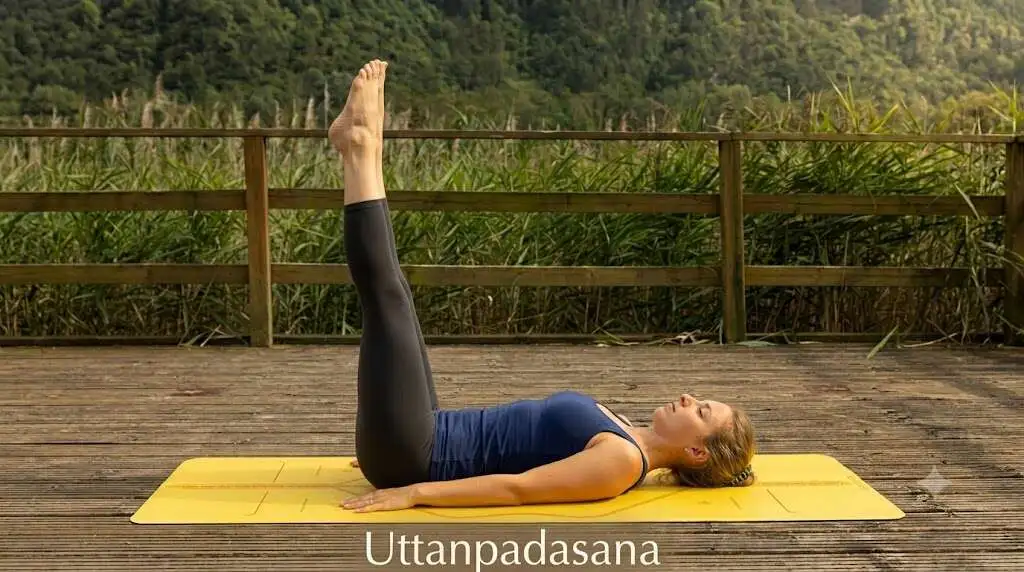
- Raised Legs Posture (Uttanpadasana): Lie down on your back, have your arms lie down at your sides, inhale and slowly raise your legs in an upward direction to an angle of 45° or 90°, engage your core and breathe while holding your pose.
- Supta Baddha Konasana (Reclined Bound Angle): Recline on your back (you can have a bolster supporting your spine), bring your feet close to each other by keeping your soles together, and allow your knees to open towards your side gently.
- Legs Up the Wall Pose (Viparita Karani): Place your hips near a wall, keep your legs lifted upwards along with the wall, place your back on the floor, and keep your arms lying down in the wide position near your side.
- Bridge Pose (Setu Bandha Sarvangasana): Lie down in supine position with your knees bent and feet on the ground, lift your hips, and support your sacrum with the help of a yoga block placed below it, while having your arms lying down at your sides.
- Child’s Pose (Balasana): Kneel down on your mat, sit back on your heels, bend your torso forward and touch your forehead to the floor.
- Corpse Pose (Savasana): Lie completely flat on your back with feet shoulder-width apart, arms resting by your sides with palms facing up, close your eyes, and surrender all muscular effort.
Health Risks Prevented by Yoga
Many practitioners turn to yoga for exhaustion when recovery from chronic stress and adrenal fatigue becomes essential.
- Adrenal Burnout: Prevents chronic elevated cortisol levels from completely depleting daily energy reserves.
- Chronic Muscle Soreness: Releases stored physical tension and metabolic waste from overused muscles.
- Stress-Induced Brain Fog: Increases cranial blood supply to restore mental clarity and cognitive sharpness.
- Immune System Weakness: Lowering physiological stress supports healthy immune system response and recovery.
Precautions
Spending fifteen minutes on yoga for exhaustion helps calm an overactive nervous system and reduce fatigue.
- Uttanpadasana Adaptation for Sore Lower Back: If extending the legs causes soreness to the lower back, try extending each leg individually or bend the knees a little.
- No Extreme Exertion: Never force yourself into difficult stretches while feeling extremely tired physically.
- Use Support Items: Bolsters, folded blankets, and blocks can be used under the knees and hips to prevent muscular strain.
- Do Not Perform Inversions with Hypertension: Be careful while performing any leg elevation techniques if you have high blood pressure.
Wrapping Up
Incorporating yoga for exhaustion into your daily routine offers a safe, evidence-based approach to recovering from physical and mental burnout. By focusing on passive, supported postures like Uttanpadasana and Viparita Karani, you allow your nervous system to reset without expending vital energy. Consistent restorative practice provides your body with the deep, uninterrupted rest needed to restore lasting vitality and balance.
Frequently Asked Questions (FAQs)
1. What is the difference between yoga for exhaustion and regular fitness yoga?
Fitness yoga practices include those that strengthen the body and increase its cardiovascular endurance, which means expending physical energy. The yoga for exhaustion practices focus on relaxing poses, where the practitioner conserves physical and nervous energy.
2. Can an absolute beginner practice the pose like Uttanpadasana when having fatigue?
Certainly, an absolute beginner can practice this pose comfortably with either his/her hands supporting the lower part of his/her spine, legs against the wall, or single-leg lifts until the core gets stronger.
3. How often can I do the yoga for exhaustion?
You may practice yoga for exhaustion every day, especially in the evening and mid-afternoons when you feel tired due to stress.
4. Does yoga for exhaustion replace proper sleep?
Although the practice relaxes the nervous system, helps the cells to recover, and generally rejuvenates the body, it complements the 7-9 hours of nighttime sleep.
5. How can I cure exhaustion quickly?
You can quickly boost your energy levels by drinking a cold glass of water, taking a 15-to-20-minute power nap, and stepping outside for fresh air and natural sunlight.
Disclaimer: The content on LifePositive.com, including articles/blogs on yoga, acupuncture, naturopathy, and other alternative healing modalities for holistic wellness, is for informational and educational purposes only. It is not a substitute for professional medical advice, diagnosis, or treatment. Always consult a qualified healthcare provider before starting any new health protocol or making changes to an existing treatment plan.
Also Read: Yoga for arthritis
By Umesh Kumar Khiri


Discussion (0)
No comments yet. Be the first to comment!
Leave a Comment
You need to login to post a comment.