Yoga for Mobility: Move Better Today
Dynamic yoga for mobility is an exercise modality that helps you improve your active range of motion along with the strength necessary for controlling these movements. This modality differs from regular static stretching exercises because dynamic yoga not only works on increasing flexibility, but also involves joint stabilization and mind-body connection.
With proper breathing techniques and movement exercises, gentle yoga for mobility will enable you to move more freely.
Key Takeaways
-
Active vs. Passive Movement: Dynamic mobility builds functional strength through active control across your full range of motion.
-
Injury Prevention & Balance: Targeted joint stability reduces stiffness, protects connective tissues, and corrects muscular imbalances.
-
Enhanced Performance: Daily mobility practice improves athletic agility, eases posture strain, and makes everyday movement effortless.
Why Yoga for Mobility Matters for Everyday Movement
Functional mobility is a link between pure flexibility and physical strength. The more joints rotate actively within their full range of motion, the stronger the connective tissue around them becomes. Practicing yoga for mobility helps restore joint health while building the strength necessary to support dynamic daily movement.
Benefits of Mobility Training:
-
Increased Joint Lifespan: Active rotation helps to lubricate joints with synovial fluid.
-
Improved Posture: Activation of stabilizer muscles eliminates muscle imbalance due to a sedentary lifestyle.
-
Lower Chance of Injuries: Active control of body parts in extreme positions safeguards ligaments and tendons from injuries.
Gentle Yoga for Mobility
Integrating gentle yoga for mobility into your weekly routine can alleviate chronic tightness caused by long hours of sitting. Some of the common yoga poses are as follows:
|
|
|
|
|
|
|
|
|
|
|
|
|
|
|
|
|
|
|
|
|
|
|
|
|
|
|
|
|
|
|
|
|
|
|
Here are the step-by-step instructions for each pose condensed into quick, one-liner steps:
1. Cat-Cow Stretch (Marjaryasana-Bitilasana)
-
Step 1 (Setup): Start on hands and knees with wrists under shoulders and knees under hips.
-
Step 2 (Cow): Inhale, drop your belly toward the mat, tilt your tailbone up, and look forward.
-
Step 3 (Cat): Exhale, arch your spine up toward the ceiling, draw your navel in, and tuck your chin.
-
Step 4 (Flow): Move fluidly between Cow on inhales and Cat on exhales for 5–10 breaths.
2. Thread the Needle (Parsva Balasana)
-
Step 1 (Setup): Begin in a neutral tabletop position on your hands and knees.
-
Step 2 (Lift): Inhale and reach your right arm straight up toward the ceiling to open your chest.
-
Step 3 (Thread): Exhale and slide your right arm underneath your chest until your right shoulder and cheek rest on the floor.
-
Step 4 (Hold & Switch): Hold for 5 deep breaths, press back up to tabletop, and repeat on the left side.
3. Dynamic Low Lunge (Anjaneyasana)
-
Step 1 (Setup): Step your right foot forward between your hands and lower your left knee to the mat.
-
Step 2 (Align): Lift your torso upright, place your hands on your front thigh, and tuck your pelvis slightly.
-
Step 3 (Pulse): Inhale as you back off slightly, then exhale as you gently press your hips forward and down.
-
Step 4 (Switch): Repeat 5–8 slow pulses, hold statically for 3 breaths, then switch sides.
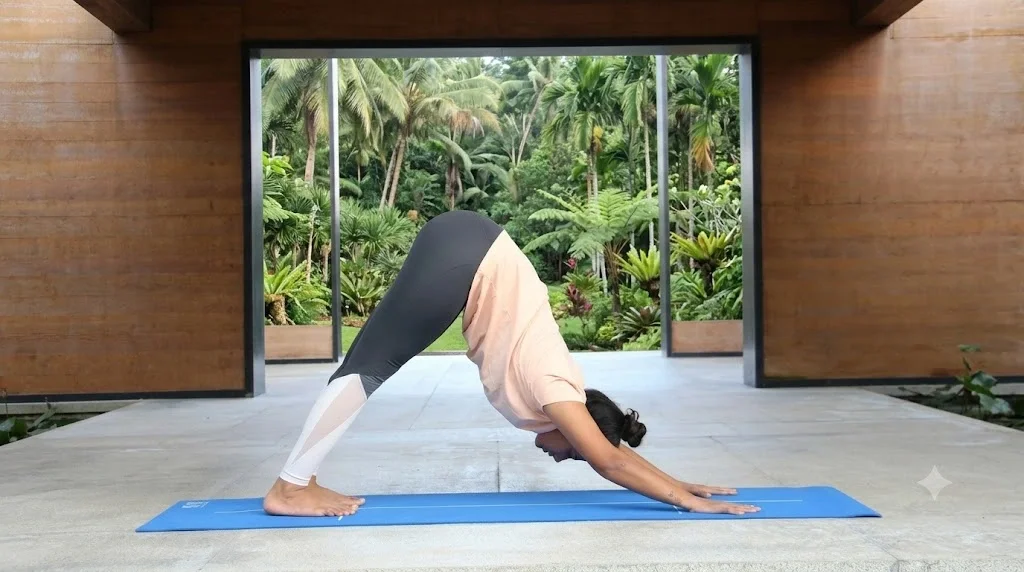
4. Downward-Facing Dog (Adho Mukha Svanasana)
-
Step 1 (Setup): Start in tabletop, plant hands slightly ahead of shoulders, and tuck your toes.
-
Step 2 (Lift): Exhale and lift your hips high toward the ceiling to form an inverted V-shape.
-
Step 3 (Pedal): Keep your spine long and gently pedal your heels down one at a time.
-
Step 4 (Hold): Settle into stillness with heels reaching toward the floor and hold for 5 deep breaths.
5. Malasana (Garland Pose / Deep Squat)
-
Step 1 (Setup): Stand with feet wider than hip-width, turning your toes outward at 45 degrees.
-
Step 2 (Squat): Exhale and lower your hips all the way down into a deep squat.
-
Step 3 (Align): Press your palms together at your chest and use your elbows to gently push your knees open.
-
Step 4 (Hold): Lengthen your spine upward, relax your shoulders, and take 5–8 deep belly breaths.
Precautions & Guidelines for Safe Practice
Athletes often turn to gentle yoga for mobility to enhance their athletic performance and accelerate active recovery between intense training sessions. Some of the precautions are as follows:
-
Give Preference to Controlled Movement: Use muscle strength in order to get into a pose, rather than momentum or gravity.
-
Do Not Overlook Your Body's Pain Signals: Do not force yourself to move if you experience sharp or pinching pain in joints; reduce the range of movement in a comfortable way.
-
Warming Up Gradually: Start with small and slow movements before going deep into joint movements and balancing postures.
-
Breathe Correctly: Breathe in to open up and breathe out to move deeper.
-
Adjustment is Allowed: Use props such as yoga blocks, straps, and folded blankets when necessary.
Move With Purpose, Live With Agility
Physical fitness is more than just the ability to lift certain weights or stretch a certain distance. Rather, it is determined by your ease, comfort, and confidence when moving about in your everyday life. The inclusion of dynamic yoga for mobility in your practice ensures that your body is receiving just the right combination of flexibility, strength, and stability.
Respect for movement principles and attention to your body's signals ensure your joint protection from unnecessary stress, decrease the chances of injury, and help you regain agility. Take one breath and one step at a time. Dedicating just fifteen minutes a day to yoga for mobility will noticeably improve your posture, balance, and overall agility.
Frequently Asked Questions
1. What is the distinction between flexibility and mobility in yoga?
Flexibility is defined as the passive stretching capacity of a muscle. Mobility is an active process that is defined as the capability of a joint to move through a full range of motion with voluntary muscle control.
2. How frequently do I need to practice yoga for mobility to get results?
Frequent training is crucial. Sessions of only 10 to 20 minutes of yoga for mobility each day will be more beneficial for your joints than one session of 45 to 60 minutes once a week.
3. Is it possible to practice mobility yoga for beginners?
Absolutely. Mobility yoga focuses on controlled movement that can be adapted to any condition and any person.
4. Which is better for mobility, yoga or Pilates?
Both are effective; yoga excels at restoring full joint range of motion and flexibility, while Pilates focuses heavily on core stability and controlled strength within movement.
Disclaimer: The content on LifePositive.com; including articles/blogs on yoga, acupuncture, naturopathy, and other alternative healing modalities for holistic wellness, is for informational and educational purposes only. It is not a substitute for professional medical advice, diagnosis, or treatment. Always consult a qualified healthcare provider before starting any new health protocol or making changes to an existing treatment plan.
Also Read: Fasting Therapy in Naturopathy
By Umesh Kumar Khiri

.png)
Discussion (0)
No comments yet. Be the first to comment!
Leave a Comment
You need to login to post a comment.