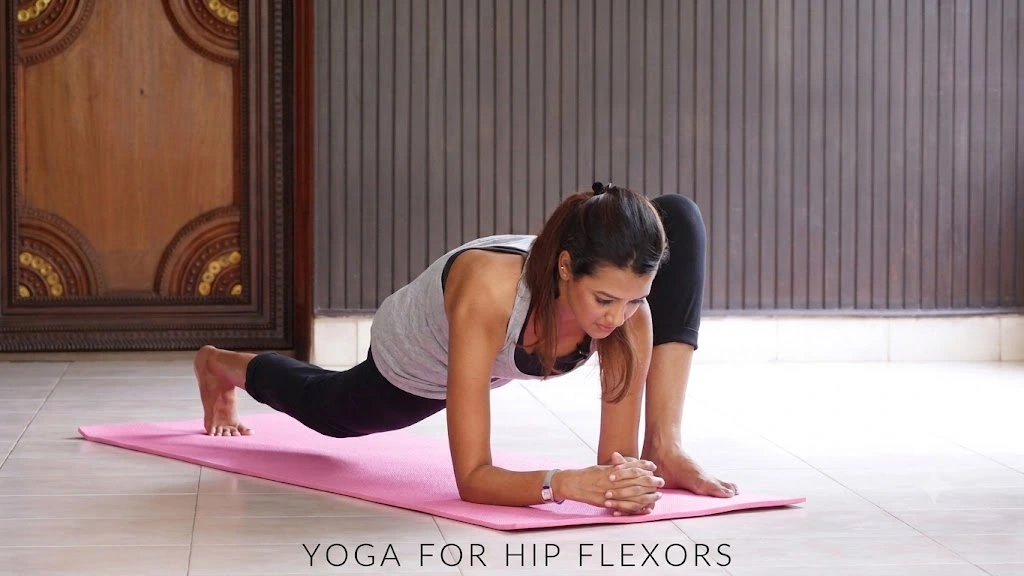
Yoga for Hip Flexors: Opening Poses
Releasing Tightness & Restoring Lower Body Mobility
Doing yoga for hip flexors offers a very efficient way of addressing the physical tension that has built up from excessive sitting, desk-bound jobs, and repetitive motions in athletics. The muscle group that constitutes the hip flexors mainly consists of the iliopsoas, the rectus femoris, and the tensor fasciae latae. This particular muscle group forms the essential link between the spine and the legs. If these muscles are tense and tight, they cause the pelvis to move forward, stress the lower back, and hinder hip mobility.
Key Takeaways
- Posture & Pelvic Realignment: Releases shortened iliopsoas muscles, correcting anterior pelvic tilt and relieving chronic lower back compression.
- Functional Mobility & Athletic Performance: Expands range of motion across the hip joint, improving stride length, agility, and squat depth.
- Stress & Tension Relief: Dissolves physical tension stored in the pelvic region, promoting relaxation and smoother fluid circulation.
Yoga for Hip Flexors: Neuromuscular Benefits
Targeted yoga sequences lengthen tight hip flexors through foundational anatomical and physiological mechanisms:
- Reciprocal Inhibition: Active contraction of the glutes and hamstrings during standing hip openers signals the opposing hip flexor muscles to reflexively relax.
- Iliopsoas Lengthening & Lumbar Decompression: Extension of the hip joint stretches the deep psoas muscle, mitigating low back ache.
- Fascial Hydration & Mobility: Sustained static holds glide dense connective tissue (fascia) surrounding the hip capsule, improving joint lubricity and freedom of movement.
Powerful Asanas to Open Tight Hip Flexors
The following table details six deep opening asanas, including the high-intensity squatting posture Devyasana, designed to release tight hip flexors, strengthen the lower body, and expand hip mobility:
|
|
|
|
|
|
|
|
|
|
|
|
|
|
|
|
|
|
|
|
|
|
|
|
|
Utthan Pristhasana |
|
|
|
|
|
|
|
|
How to Perform the 6 Hip Flexor Poses
Incorporating yoga for hip flexors into an athletic recovery routine improves hip mobility and running stride length. Follow these steps:
- Anjaneyasana (Low Lunge): Step your right foot between your hands, lower your left knee down to the floor, and slowly sink into your hips while lifting your chest and arms up towards the ceiling in order to create an elongation of the front of your left hip.
- Utkata Konasana (Goddess Pose): Stand with feet wider than shoulder-width apart with toes pointing outwards at 45 degrees. Now bend your knees deeply to where they are almost parallel to the floor while keeping your back straight and your core engaged.
- Eka Pada Rajakapotasana (One-Legged King Pigeon Pose): Place your right shin perpendicular to the ground in line with your wrists and extend your left leg back behind you, then slowly fold forward over your front leg in order to stretch your hip rotators and flexors.
- Kapotasana (Pigeon Pose): Sit on your knees with legs hip-width distance apart, put your hands on your back for support, push your hips forward over your knees, and begin to arch backwards to open up your entire front side from your quads to shoulders.
- Lizard Pose (Utthan Pristhasana): From a Low Lunge position, bring both hands to the inside of your front foot; heel-toe your front foot slightly outward and drop down onto your forearms or yoga blocks to target the deep hip joint capsule.
- Supta Baddha Konasana (Reclining Bound Angle Pose): Lie comfortably on your back, press the soles of your feet together, and allow your knees to fall open to the sides, using pillows or blocks under the outer knees for supportive, restorative hip opening.
Postural Complications Prevented
A consistent sequence of yoga for hip flexors restores natural pelvic alignment and improves overall posture.
- Anterior Pelvic Tilt (APT): Prevents the forward pulling of the pelvis caused by short, hypertonic psoas muscles.
- Chronic Lower Back Compression: Eliminates excess pressure on the lumbar spine by allowing the hips to extend naturally during standing and walking.
- Gluteal Amnesia (Inactive Glutes): Restores neuromuscular connection to the glutes by relieving tight opposing flexors that inhibit glute activation.
- Knee and Hip Joint Impingement: Maintains proper alignment of the femur inside the acetabulum (hip socket), guarding against joint wear and soft tissue impingement.
Precautions
Follow these measures:
- Protect the Knees in Deep Opening: Always keep ankles aligned under knees in lunges and maintain active foot flexion in Pigeon Pose to protect the knee ligaments from torsional stress.
- Support Tight Hips with Props: Use yoga blocks under hands in Lizard Pose to avoid overstraining tight ligaments.
- Avoid Excessive Lumbar Arching: Keep your core gently drawn inward during extension poses like Low Lunge to ensure the stretch remains in the hip flexor rather than dumping into the lower back.
- Warm Up Prior to Deep Stretching: Never dive into advanced hip openers cold; perform gentle leg swings beforehand.
Unlock Flexibility and Move Free of Pain
Adding yoga exercises for hip flexors to your daily regimen is vital for keeping your posture good, athletic strength and mobility, as well as flexibility and freedom of movement. By using yoga poses that are strengthening and dynamic, such as Devyasana, along with restorative stretches, such as Anjaneyasana and Pigeon Pose, you free your restricted hip area from tension. Spend some time every day opening your hips up.
Frequently Asked Questions (FAQs)
1. Does yoga help your hip flexors?
Yes, yoga stretches, lengthens, and strengthens the hip flexors, relieving chronic tightness caused by prolonged sitting while improving pelvic alignment and overall mobility.
2. How do I loosen tight hip flexors?
You can loosen tight hip flexors by practicing consistent static lunges (like Low Lunge), dynamic hip openers, glute-strengthening exercises, and self-myofascial release like foam rolling.
3. What yoga poses work the hip flexors?
Key poses that stretch and strengthen the hip flexors include Low Lunge (Anjaneyasana), Goddess Pose (Utkata Konasana), Pigeon Pose (Eka Pada Rajakapotasana), Lizard Pose (Utthan Pristhasana), and Bridge Pose (Setu Bandhasana).
4. What are the symptoms of weak hip flexors?
Common symptoms include lower back pain, knee discomfort, tight or pulling sensations in the front of the hip, reduced stride length, poor standing posture, and difficulty lifting the knees toward the chest.
Disclaimer: The content on LifePositive.com, including articles/blogs on yoga, acupuncture, naturopathy, and other alternative healing modalities for holistic wellness, is for informational and educational purposes only. It is not a substitute for professional medical advice, diagnosis, or treatment. Always consult a qualified healthcare provider before starting any new health protocol or making changes to an existing treatment plan.
Also Read
By Umesh Kumar



Discussion (0)
No comments yet. Be the first to comment!
Leave a Comment
You need to login to post a comment.