
Celluloid Guru
October 1998
By Anupama Bhattacharya
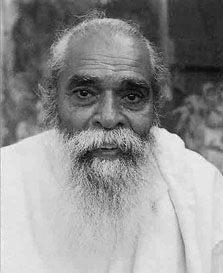
G.V. Iyer, the Indian director with a penchant for the spiritual, has created some exemplary films based on Hindu mythology and the lives of Indian sages
 |
A cynic, in answer to his queries on divinity, gets kicked by his master and falls down. On cue, the vision of a whirling universe spins through his mind’s eye. Panic-stricken, he cries out: ‘Master, what are you doing to me?’
The impact is stunning. The fear, awe and attraction experienced by Naren (later Swami Vivekananda, founder of Ramakrishna Missions in India) are directly transmitted to the audience. That in essence, is the magic touch of G.V. Iyer, guru of cinema in southern India. With a career spanning over six decades, Iyer has worked with both mainstream and offbeat films, though his commitment has remained to spiritual themes.
Iyer’s Adi Shankaracharya, the first ever film made in Sanskrit, the classical Indian language in which the Vedas were written, brought a sea change in his perspective. It was in this film that the play of symbols, which had always been an important facet of Iyer’s films, matured into a palpable trademark. There is a constant interplay between the human and the symbolic where the perspective merges into a state closely reminiscent of ‘maya‘, an important aspect of ancient Hindu sage and scholar Shankaracharya’s philosophy of advaita (monism).
Iyer later experimented with similar metaphors in his trilogy on Hindu philosophy with his films on Madhavacharya (Indian saint who propounded the theory of dvaita or dualism) and Ramanujacharya (creator of the vishishtadvaita or qualified monism school of thought).
Jaded themes are transformed through Iyer’s lens. Thus, in Bhagavad Gita, a film based on Krishna’s teachings to Arjuna in the Indian epic Mahabharata, juxtaposition of imagery creates paradigm shifts. Arjuna becomes Everyman, and the war is an internal battle he must win to reach the godhead within. The entire film is taken out of its mythological setting and turned into a surreal journey through the awakening consciousness of man.
Swami Vivekananda, on the other hand, is more realistic. ‘I wanted to make Vivekananda-the-person understood by the common man,’ says Dr T. Subbarami Reddy, producer of the film. Thus, Iyer follows a simple narrative structure with a strict chronological sequence. The unique Iyer touch, however, is not apparent in Swami Vivekananda, except in some special shots such as when Ramakrishna compares his love for Vivekananda with Radha’s love for Krishna. The canvas is vast. Most of the shots convey a sense of space, be it the Dakshineshwar temple in the eastern Indian town of Calcutta lit up at night, a raging storm when Ramakrishna rushes to help an old lady or the sprawling mountains Vivekananda crosses on his way to Amarnath.
It is not easy to string together Iyer’s films, unless you take into account their underlying spirituality. From the somber and ascetic notes of Adi Shankaracharya to a largely mainstream Swami Vivekananda, Iyer has experimented with many genres and has left his trademark insight with each. And with each film, he has given a bit more of wisdom to a world striving to understand the meaning of life.


Discussion (0)
No comments yet. Be the first to comment!
Leave a Comment
You need to login to post a comment.