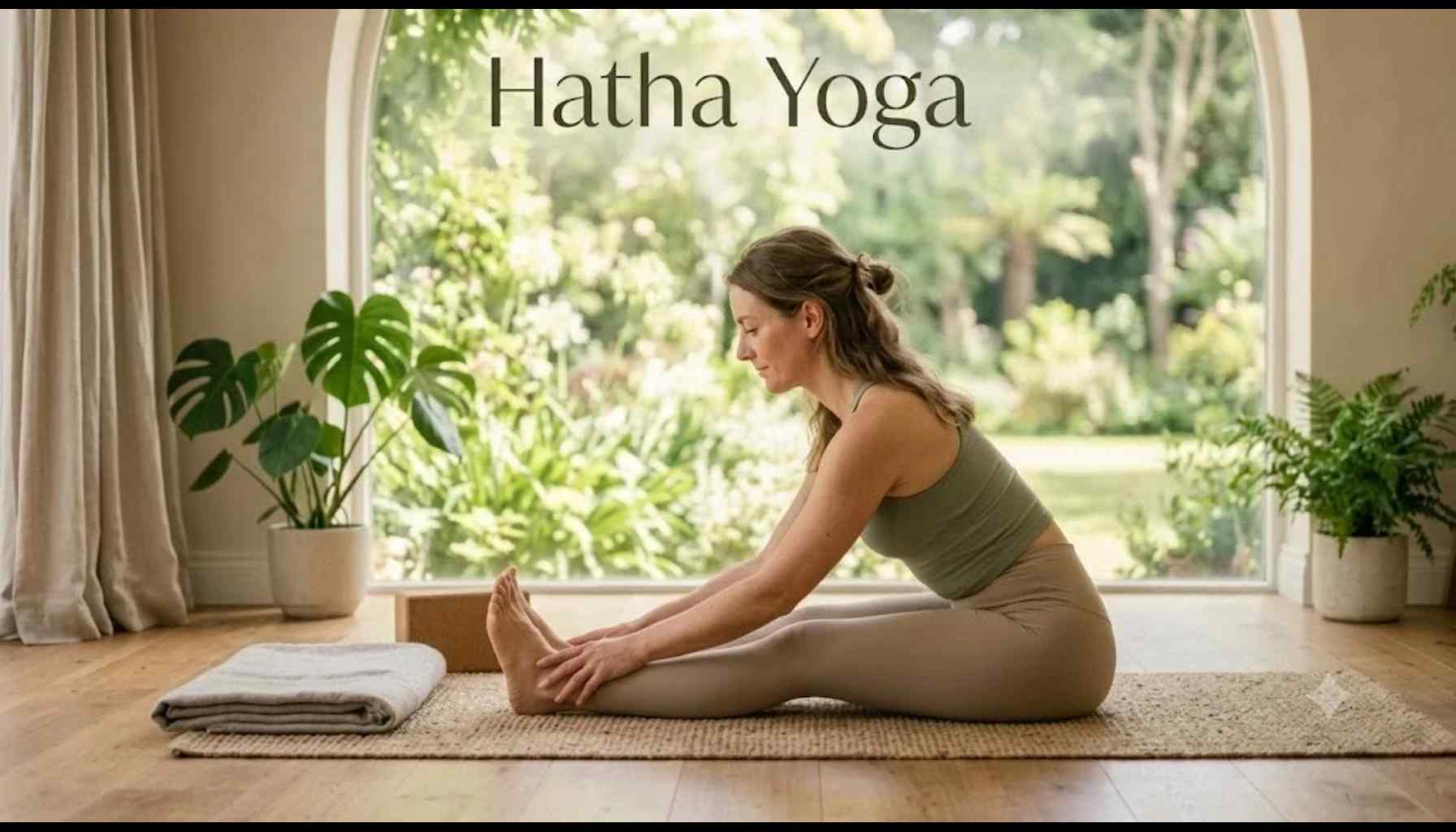
Hatha Yoga: Wellness Benefits
Hatha Yoga is one of the traditional branches of yoga that works through the body, breath, concentration and other practices to prepare the practitioner for greater physical and mental steadiness. In modern classes, Hatha Yoga commonly emphasizes physical postures held for several breaths, breathing practices and relaxation.
Unlike fast-paced yoga styles, Hatha Yoga is often practiced at a slower pace, giving practitioners time to focus on alignment, breathing and awareness.
Key Takeaways
- Hatha Yoga combines postures, breathing, awareness and relaxation.
- Its roots extend through centuries of Indian traditions.
- Regular practice may support physical and mental wellbeing.
What Is Hatha Yoga?
The Sanskrit word Hatha is traditionally associated with “force,” referring to a system that uses physical practices. A popular interpretation divides the word into Ha or sun and Tha or moon, representing complementary energies that are brought into balance.
Modern Hatha Yoga can include several practices rather than only physical poses. Its traditional framework incorporates the body, breath, energy, concentration and mental awareness.
Origins and History of Hatha Yoga
Hatha Yoga developed in India during the medieval period, particularly among ascetic traditions around the beginning of the second millennium. Historical research identifies the Amritasiddhi, dating to the 11th century, as the earliest Sanskrit text teaching distinctive Hatha techniques. Hindu Hatha texts appeared subsequently, and the tradition developed through several centuries.
The practice of Hatha Yoga of the earlier period was much wider in scope than what is usually found in yoga classes today. Great importance was placed on breath work and energetic exercises. Asana practice gained more popularity gradually.
Hatha Yoga Through the Centuries
|
|
|
|
|
|
|
|
|
|
|
|
|
|
|
|
|
|
|
|
|
What Does Hatha Yoga Involve?
A Hatha Yoga practice may include several components:
|
|
|
|
|
|
|
|
|
|
|
|
|
|
|
|
|
|
|
|
|
|
|
|
6 Hatha Yoga Poses and Their Steps
1. Tadasana – Mountain Pose
Steps: a. Stand straight with the feet in a convenient position.
b. Elongate the spine and relax the shoulders.
c. Slightly tighten the legs.
d. Breathe normally while fixing your eyesight ahead.
2. Adho Mukha Svanasana – Downward-Facing Dog
Steps: a. Start on your hands and knees.
b. Lift up your hips and push them behind you.
c. Stretch your legs comfortably.
d. Lengthen your spine.
e. Relax your head between your hands
3. Bhujangasana – Cobra Pose
Steps: a. Lie down on your stomach.
b. Put your palms next to your chest.
c. Raise your chest using your back muscles and hands, taking care not to stress your lower back.
4. Virabhadrasana II – Warrior II
Steps: a. Take a wide stance and turn one foot outwards.
b. Bend front knee above the ankle joint.
c. Stretch arms outwards.
d. Keep your body straight.
5. Trikonasana – Triangle Pose
Steps: a. Take a wide stance and turn one foot outwards.
b. Stretch arms outwards and move forwards.
c. Lower one hand onto shin or ground.
d. Raise the other hand upwards.
6. Ardha Matsyendrasana – Half Lord of the Fishes
Steps: a. Sit with legs extended.
b. Bend one knee and cross over opposite leg.
c. Rotate torso toward bent knee.
d. Maintain a tall spine.
These poses represent common physical movements used in Hatha-oriented practice; traditional Hatha Yoga itself encompasses considerably more than asana.
Health Benefits of Hatha Yoga
Regular yoga participation could be beneficial for both the physical and psychological aspects of health. The possible advantages are:
- Enhanced flexibility: Regular stretching could help keep joints flexible.
- Increased balance: Poses requiring standing and balancing could enhance body coordination.
- Strength and endurance: Practice of maintaining yoga positions could involve muscle strength.
- Stress management: Yoga techniques could contribute to managing stress.
- Improved sleep: Studies have shown that yoga could positively affect sleep quality in different populations.
- Increased body awareness: Slow movements promote body awareness.
- Mental relaxation: Techniques of breathing and concentration could help relax mentally.
- Mobility: Gentle yoga practice could help keep mobility.
Wrapping Up
Hatha Yoga has developed through centuries of Indian yogic traditions and is much broader than a collection of physical poses. Its techniques may include asanas, pranayama, mudra, mantra, concentration, and relaxation. Today's Hatha classes allow practitioners to create the conditions to build their strength, flexibility, balance, and body awareness with the breathing techniques.
FAQs
1. How is Hatha Yoga different from regular yoga?
Hatha Yoga is a specific branch or style of yoga, usually emphasizing slower physical postures, breathing and mindful holds, while “regular yoga” is a broad term covering many different approaches.
2. What is the hardest yoga style?
There is no universally hardest yoga style because difficulty depends on the poses, pace, experience level, strength, flexibility and individual practitioner.
3. Who is the father of Hatha Yoga?
Yogi Swami Swatmarama is traditionally associated with the Hatha Yoga Pradipika, while Gorakhnath is also regarded as a major early figure in the Hatha tradition; therefore, “father” is not a historically unambiguous title.
4. Is Hatha Yoga harder than yoga?
Hatha Yoga is not inherently harder than yoga because Hatha itself is a branch of yoga and its difficulty depends on the particular sequence and level of practice.
Also Read: Vinyasa Yoga
By Umesh Kumar Khiri

Discussion (0)
No comments yet. Be the first to comment!
Leave a Comment
You need to login to post a comment.