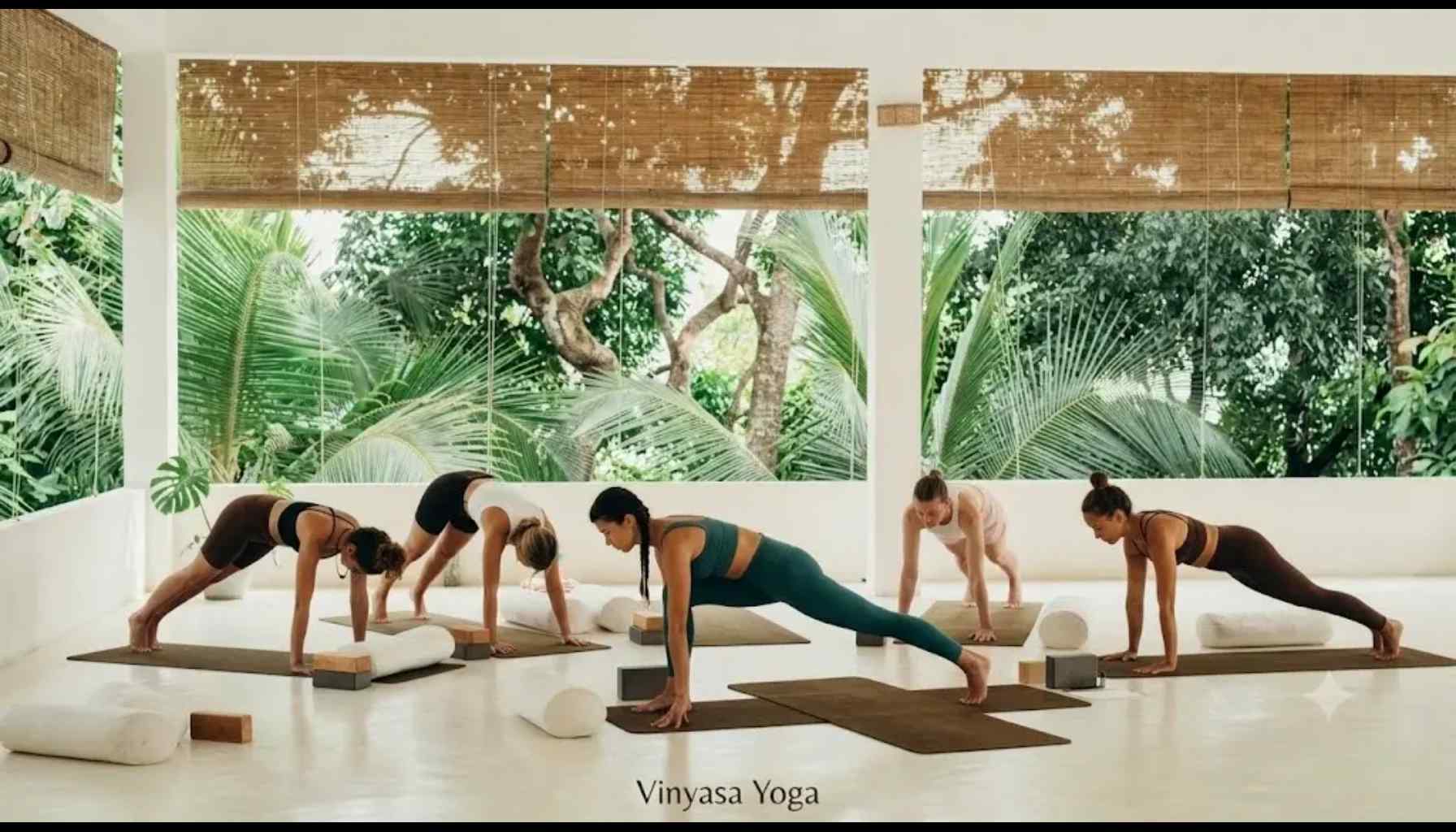
Vinyasa Yoga: Guide
Vinyasa yoga is the synchronization between the breath and flow. Vinyasa yoga integrates poses seamlessly. This yoga style increases your stamina. The yoga generates warmth within your body. The yoga calms your racing mind. It helps you to maintain balance.
Movements are guided by the breathing rhythm. The inhales stretch your body forwards, while exhales provide deep folds in your body. Each class presents new patterns. All classes are different from one another. This makes your practice exciting. Awareness develops through the physical movements.
Key Takeaways
- Cardiovascular Conditioning: The fast pace elevates your heart rate. It boosts stamina.
- Enhanced Flexibility: Continuous movements open tight muscles. They improve range of motion.
- Stress Reduction: Deep breathing lowers stress. It calms your nervous system.
Exploring the Power of Vinyasa Yoga
Vinyasa yoga is synchronized yoga that involves movement and breathing together. People move into poses rhythmically. There is an inhale or exhale for each pose.
The flow increases your heart rate. It makes your major muscles stronger. It makes all the joints flexible. Dynamic activities make your body energised. The internal heat removes toxins from your body. The sweat detoxifies your skin.
Strong muscles keep your joints safe. Your core strength helps your lower back. Also, your strong shoulders keep you injury-free. The best part is, your concentration level increases after every class. When you breathe rhythmically, it decreases your anxiety level. Many practitioners prefer vinyasa flow yoga because the dynamic transitions keep the mind fully engaged.
History and Origins of Vinyasa Yoga
The origins of Vinyasa yoga can be traced to the time of the Vedic era when physical postures were combined with recitations and breathing. The current form of Vinyasa is derived from Ashtanga Vinyasa Yoga, which was created by T. Krishnamacharya and promoted by his disciple K. Pattabhi Jois in Mysore, India, in the middle of the 20th century. Through the removal of rigid posture systems and retaining the concept of breath synchronization, the current form of Vinyasa was born.
Vinyasa Yoga vs Static Hatha Yoga
Some of the common features of Vinyasa Yoga and static Hatha Yoga are as follows:
|
|
|
|
|
|
|
|
|
|
|
|
|
|
|
|
|
|
|
|
|
|
|
|
Biomechanical Mechanics of Vinyasa Yoga
Incorporating vinyasa flow yoga into your morning routine boosts cardiovascular endurance and wakes up stiff muscles.
- Flowing movements require precise neuromuscular control. Muscles contract eccentrically and concentrically continuously. This dual action builds functional athletic strength.
- Stabilizer muscles work constantly during transitions. Small ankle muscles maintain standing balance. Deep shoulder stabilizers protect your joint sockets.
- Your core remains active throughout every movement. It connects upper and lower body actions. A strong center prevents lumbar arching.
- Spinal extension alternates with forward flexion. This movement hydrates intervertebral disc tissues. It keeps your backbone supple and youthful.
- Deep diaphragmatic breathing fuels muscle tissue. Oxygen flows efficiently to active muscles. Carbon dioxide exits with every exhale.
How to Perform a Basic Vinyasa Yoga
Beginners can easily adapt vinyasa flow yoga by taking slower transitions and using yoga blocks for support. Follow these steps to perform Vinyasa Yoga:
- Plank Pose: Start in a strong upper push-up position. Keep your core firm.
- Chaturanga: Exhale while lowering your body halfway down. Keep your elbows tucked close.
- Upward Dog: Inhale to roll over your toes. Lift your chest proud.
- Downward Dog: Exhale to press your hips high up. Form an inverted V shape.
- Reset and Repeat: Hold Downward Dog for five breaths. Prepare for the next sequence.
Detailed Breakdown of Core Sun Salutations
Follow these steps to perform core sun salutations:
1. Sun Salutations form the core of Vinyasa. They warm up the entire body. Practice them at the start.
2. Begin in Tadasana at the front of your mat. Ground all four corners of feet. Stand tall with active legs.
3. Inhale to sweep arms up high. Look up toward your thumbs. Keep your neck relaxed throughout.
4. Exhale to fold forward completely over legs. Touch fingertips to the mat. Drop your head down fully.
5. Inhale to lift halfway with flat back. Lengthen your spine forward out long. Look slightly ahead of mat.
6. Step or hop back into Plank. Lower through Chaturanga with control. Keep your body straight like board.
7. Transition smoothly into your backbend position. Open your heart space wide open. Breathe deeply into your chest.
8. Push back into Downward Facing Dog. Press your hands firmly down. Lengthen your hamstrings out completely.
9. Step forward to repeat the sequence. Rise up to standing with breath. Finish back in mountain posture.
Essential Breath Techniques for Vinyasa Yoga
The internal heat generated during a vinyasa flow yoga session encourages detoxification and releases stored tension. Follow these breathing techniques for flow practice:
- Ujjayi Pranayama drives your Vinyasa practice. You breathe exclusively through your nose. Gently constrict the back of your throat.
- This creates an ocean-like sound inside. The sound provides an auditory anchor. It keeps your mind focused inward.
- Ocean breath warms incoming air naturally. Warm air relaxes your lung tissues. It improves oxygen absorption efficiency.
- Match movement duration to your breath length. Do not rush through physical steps. Let the breath guide movement speed.
- If breath becomes shallow or rapid, rest. Child's Pose offers instant breath recovery. Return to flow when ready.
Health Conditions Managed by Vinyasa Yoga
Regular practice of Vinyasa Yoga can provide relief from the following conditions:
- High Stress Levels: Deep breathing reduces cortisol levels. It releases physical tension.
- Sluggish Metabolism: Dynamic movements generate internal body heat. This process burns calories efficiently.
- Poor Spinal Posture: Core-focused flows strengthen back muscles. They keep the spine aligned.
- Joint Stiffness: Continuous fluid motion lubricates cartilage. It eases everyday stiffness.
- Mild Anxiety: Rhythmic movement calms an overactive mind. It grounds your awareness rapidly.
- Poor Circulation: Inverted poses encourage healthy blood flow. They assist natural venous return.
Key Precautions
Follow these measures while practising Vinyasa Yoga:
- Avoid Overexertion: Rest in Child's Pose whenever you feel fatigued.
- Protect Your Wrists: Distribute weight evenly across all fingers in Plank Pose.
- Watch Your Lower Back: Avoid over-arching your spine in Upward Facing Dog.
- Stay Hydrated: Drink water before and after every energetic practice session.
- Modify for Shoulder Pain: Drop your knees down during Chaturanga transitions.
Guidance on Injury Prevention
Always maintain micro-bends in your elbows and knees during continuous transitions to prevent hyperextension and joint strain. Listen closely to your body by lowering to your knees during Chaturanga or resting in Child's Pose whenever fatigue compromises your form.
Integrating Vinyasa Yoga into Daily Life
Consistency matters more than session duration. Practice for twenty minutes every day. Short sessions yield strong results. Morning flows wake up tired muscles. They prepare your body for movement. You feel energized all day.
Evening flows release stored workday stress. They unwind tight shoulder and neck muscles. Better sleep follows relaxed practice. Create a dedicated quiet space at home. Keep your yoga mat unrolled nearby. Eliminate unnecessary digital distractions first.
Listen closely to your body daily signals. Energy levels shift from day to day. Adapt your flow pace accordingly.
Final Thoughts
Vinyasa yoga unites body movement with intentional breath. Regular flow practice enhances cardiovascular endurance and builds functional strength. It clears mental clutter while increasing flexibility throughout your entire body.
Dynamic flows challenge your focus and balance. Consistent practice builds lasting physical stamina over time. Your breath becomes your inner steady anchor.
Respect your personal energy levels and honor your physical limits during every sequence. Use props whenever your body requires support. Enjoy the graceful journey of movement. Transform your daily health by starting your journey with Vinyasa Yoga.
Frequently Asked Questions
1. What type of yoga is Vinyasa?
Vinyasa is a dynamic style of yoga that connects breath with continuous movement. Postures transition fluidly from one pose into the next.
2. Is Vinyasa Yoga ok for beginners?
Yes, beginners can practice Vinyasa yoga safely by taking slower variations. Beginners should use props and rest whenever needed.
3. What are the 7 doorways of Vinyasa Yoga?
The seven doorways are Sacred Space, Ignite the Spirit, Light the Fire, Stoke the Fire, Utilize the Fire, Integration/Conscious Surrender, and Gratitude/Metta. They sequence the class energy.
4. Is Vinyasa good for weight loss?
Yes, Vinyasa yoga burns calories effectively through continuous movement. It builds lean muscle and boosts your overall metabolic rate.
Disclaimer: The content on LifePositive.com, including articles/blogs on yoga, acupuncture, naturopathy, and other alternative healing modalities for holistic wellness, is for informational and educational purposes only. It is not a substitute for professional medical advice, diagnosis, or treatment. Always consult a qualified healthcare provider before starting any new health protocol or making changes to an existing treatment plan.
Also Read: Sarvangasana
By Umesh Kumar Khiri
Discussion (0)
No comments yet. Be the first to comment!
Leave a Comment
You need to login to post a comment.