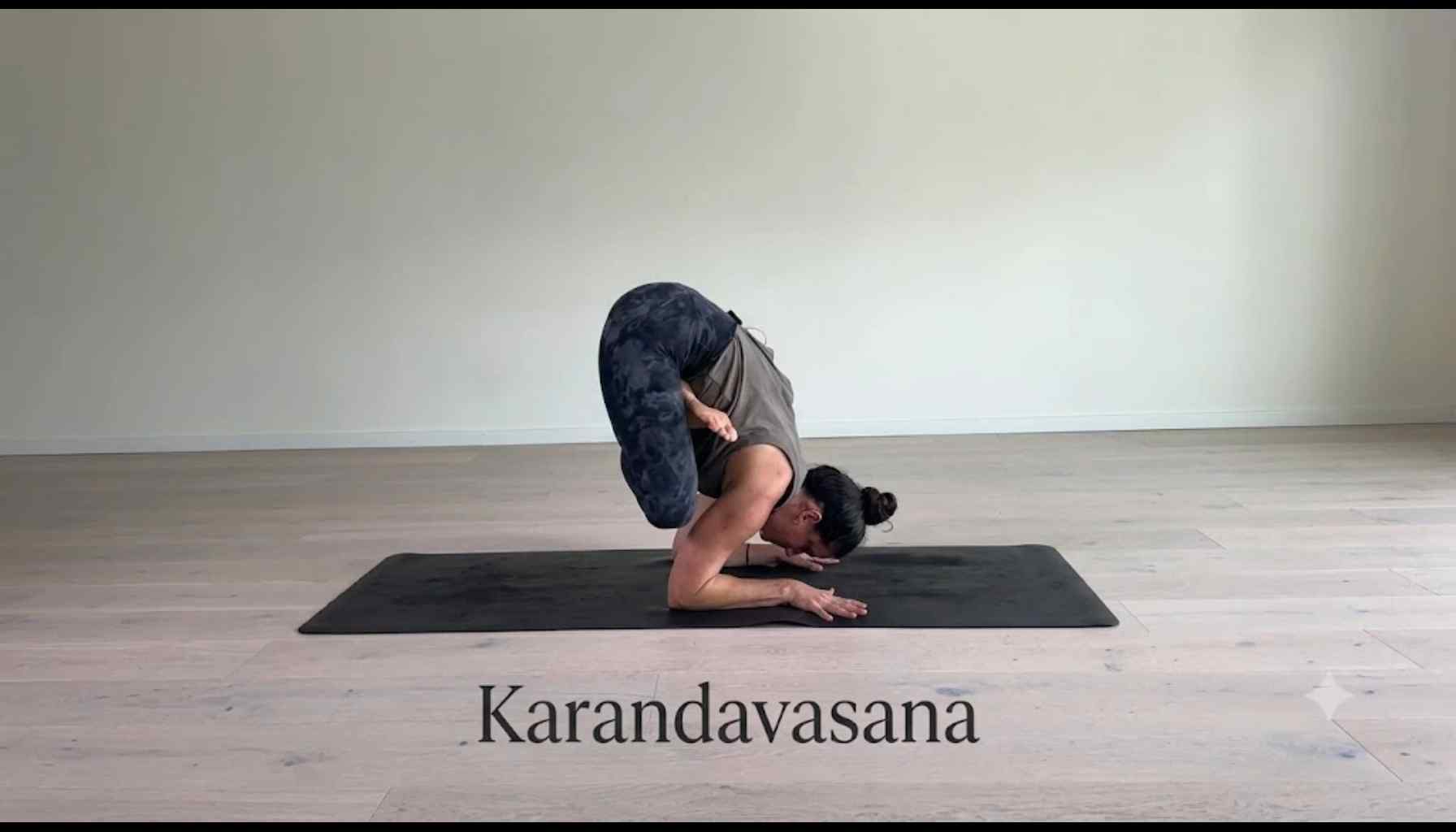
Karandavasana: Health Benefits
Karandavasana, commonly referred to as the Duck Pose, is a peak advanced posture featured in the Intermediate Series (Nadi Shodhana) of Ashtanga Vinyasa Yoga. The name originates from the Sanskrit Karandava, meaning a duck or water bird, and Asana, meaning posture. This intricate pose combines the vertical inversion of Pincha Mayurasana (Forearm Stand) with the hip flexibility of Padmasana (Lotus Pose), requiring practitioners to slowly lower their lotus legs onto their upper arms before lifting back up into forearm balance.
Key Takeaways
- Peak Core Strength: Demands extraordinary control from the deep abdominal wall and hip flexors to lower and lift the legs without losing balance.
- Shoulder Stability & Endurance: Tones the deltoids, serratus anterior, and triceps as the shoulder girdle bears the full weight of the inverted body.
- Advanced Hip Mobility: Requires open hips and knee joints to bind securely into Padmasana while upside down.
Mastering Karandavasana: Technique & Mechanics
Karandavasana tests a yogi’s ability to control gravity through controlled eccentric and concentric muscular contractions. Maintaining stability in the forearms while lowering the folded legs onto the triceps requires unwavering concentration and shoulder protraction.
Variations and Preparatory Steps for Karandavasana
Some of the common variations of Karandavasana include the following:
|
|
|
|
|
|
|
|
|
|
|
|
|
|
|
|
|
|
|
|
|
|
|
|
|
How to Perform Karandavasana
Follow these steps to perform Karandavasana:
- Forearm Stand Step-In: Start by kicking or pressing into a Pincha Mayurasana position that creates an established forearm-on-the-ground foundation.
- Crossing into Lotus: Cross your legs while inverted into the Padmasana (Lotus) position with the feet placed on the upper thighs.
- Core Activation: Breathe in deeply, then breathe out as you pull your navel towards your spine while tilting the pelvis.
- Lower to Arm Level: Start folding at the hip joints to bring down the Lotus legs until your knees are gently placed onto your upper triceps.
- Holding Position: Keep looking slightly forward (Drishti), keeping your forearms pressed and balanced for some time.
- Pushing Back Up: Breathe out and push yourself back up from the forearms.
Health Conditions Managed by Karandavasana
Regular sessions of Karandavasana help manage the following conditions:
- Core & Upper Body Weakness: Builds exceptional functional strength throughout the rectus abdominis, obliques, and shoulder complex.
- Sluggish Digestion: Deeply compresses the abdominal region during the folded lowering phase, massaging internal digestive organs.
- Poor Proprioception & Focus: Demands complete mental integration, helping calm racing thoughts and sharpening spatial awareness.
- Hip & Pelvic Stagnation: Promotes deep circulation throughout the pelvic basin and hip flexor complexes.
Key Precautions
Follow these measures while practising Karandavasana:
- Avoid Knee Strain: Do not force legs into Lotus Pose if knees are tight; injury to the meniscus can occur if forced.
- Protect the Cervical Spine: Keep head off the floor entirely to ensure weight remains distributed across the forearms and shoulders.
- Avoid During Wrist or Shoulder Injuries: Skip this pose if recovering from rotator cuff tears, shoulder impingement, or wrist inflammation.
- Skip for High Blood Pressure: Avoid holding prolonged inverted compression postures if you have uncontrolled hypertension or eye conditions.
Final Thoughts
Karandavasana, a part of Ashtanga Yoga, stands as a testament to the union of strength, flexibility, and refined mental focus. By mastering preparatory poses and prioritizing safe hip opening, practitioners can gradually work toward this challenging posture. The process of learning this pose requires patience, proper body position, and breathing control. The results are rewarding and can be beneficial for your well-being.
Frequently Asked Questions
1. What makes Karandavasana so difficult?
Karandavasana requires combining an inverted forearm balance with a full Lotus fold. It then demands immense core and shoulder strength to lower and lift the legs without falling.
2. Which posture is a prerequisite for Karandavasana?
Mastery of both Pincha Mayurasana (Forearm Stand) and Padmasana (Lotus Pose) is essential. Without stability in forearm balance and open hips, attempting Karandavasana is unsafe.
3. How do I protect my knees in Karandavasana?
Ensure your hip joint rotation allows a natural Lotus bind without twisting the knee joints. If your hips feel tight, practice hip-opening preparatory poses before attempting the leg bind inverted.
4. Is Karandavasana featured in the Ashtanga Primary Series?
No, Karandavasana belongs to the Ashtanga Intermediate Series (Second Series). It serves as one of the key strength and balance benchmarks in the sequence.
Disclaimer: The content on LifePositive.com, including articles/blogs on yoga, acupuncture, naturopathy, and other alternative healing modalities for holistic wellness, is for informational and educational purposes only. It is not a substitute for professional medical advice, diagnosis, or treatment. Always consult a qualified healthcare provider before starting any new health protocol or making changes to an existing treatment plan.
Also Read
By Umesh Kumar


Discussion (0)
No comments yet. Be the first to comment!
Leave a Comment
You need to login to post a comment.