
Run for your life
Rishi Rathod gives new meaning to the idiom ‘run for your life.’ With the help of fascinating examples, he shows how running can have a positive impact on your life. It not only boosts your physical fitness levels but also does wonders for your mental and spiritual well-being. So when you get back from your run this evening, settle into your favourite armchair and read this article to find out what more you can get out of your regimen.
Growing up, I was unaware of how much I was running, along with the other kids. At that time, playing for me and my pals meant always dashing about. It continued till we entered adulthood and started juggling jobs and professions. Fortunately, I maintained running purely for enjoyment, but most of my buddies stopped running after taking up cricket. Now, none of them can run for more than three to five kilometres. Some people have problems with their knees, some have more body fat than muscle, and others can’t handle the stress of running. I don’t want to imply that everyone should run to stay active. Health awareness has enthused many people into participating in sports or fitness regimens. In this article, I
investigate how running,
which is usually c o n s i d e r e d ‘ c h i l d ’ s p l a y , ’ e n d s u p b e i n g such a d i f f i c u l t activity for many people and how it has spiritual benefits in addition to its physical advantages.
There are two groups of runners: The first group, which makes up the majority, comprises those who want to take advantage of the physical gains that running offers, while the second group is made up of those who run for enjoyment and have life-changing experiences. For me, the purpose of running was to test my mettle, see how far I could go, and enjoy the after-run feeling. But with time, things began to change. I began to pay attention to my breathing, posture, and surroundings, and learned a lot about self-awareness and mindfulness.
Running is one of the oldest and most basic types of exercise. It may be done anywhere, by anybody, at any time. However, the advantages of running go beyond merely enhancing one’s health. With the correct training, you may even convert running into a form of self-expression. And there are exceptional advantages associated with significant health issues such as heart disease, diabetes, and obesity. Running can also help to boost your mood and mental well-being. Studies show that running regularly alleviates symptoms of sadness and anxiety.
Running to overcome depression Radhakrishnan GN, a 30-year-old IT professional, took up running on the streets of London four years ago, after which his life changed drastically. Radhakrishnan, who currently resides in Hosur, Tamil Nadu, says, “After the breakup, I was unable to emerge from reveries of my prior relationship and was going through a kind of depression. I developed a workaholic personality and relied excessively on smoking and alcohol to deal with the grief. One day, I couldn’t recognise myself when I looked in the mirror.” He adds, “It utterly baffled me. I sat down and began to contemplate at that juncture. I told myself this cannot continue.”
L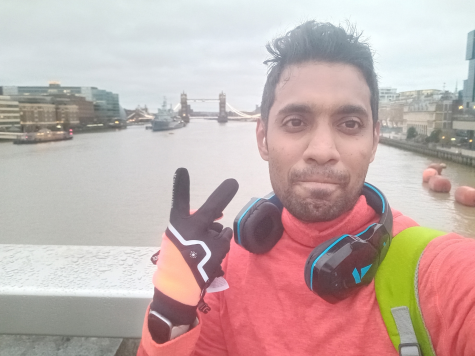
broken heart lead Radhakishnan G N to explore running as a way to heal himself
Radhakrishnan immersed himself in reading to change his life. He subsequently took up cycling and then progressed to running. “I listened to the audiobooks of psychologists and excellent instructors, and learned that either you sit down and meditate to gain back your control or you work on your physical body and influence your mind; both have identical consequences. And I chose to run,” he says. Although he initially ran to avoid sadness, he ultimately discovered something that few people understand. “I never ran for fitness or to look nice,” Radhakrishnan adds. “I feel that fitness occurs when your mind and body are in sync. I now run between five to ten kilometres every day. I never ran any marathon, but physically I am confident to run any of those races.” He took it one step further—from running being merely an exercise to it being something fascinating. He shares his inner experience: “Running is like meditation for me now. I feel aligned physically, mentally, and emotionally. It brings me back to my centre and gives me profound tranquillity.” He shares an interesting observation about running in his local area: “Subconsciously, I’ve started encouraging neighbourhood kids, young adults, and the elderly to get outside and run. They witness me jogging every day, feel some sort of connection with me, and are inspired to jog. This is quite satisfying.”
Running for divine experiences Many runners cite a spiritual reason for run ning, describing it as a meditative experience. Runners claim that the repetitive motion of the legs helps them to clear their minds and that the time they spend in nature enables them to connect with the Earth’s energy. People fre quently invest more time in the safeguarding of nature as a result of this spiritual connec tion.
Running is more than simply a physical work out for the spiritual runner. It’s a feeling that promotes well-being and can help you get in touch with your higher Self. A small subset of Buddhists elevates running to an art form, making it a technique for Self-realisation. A Zen Buddhist order known as the Marathon
Monks (gyoja) of Mt. Hiei, Japan, partici pates in Kaihogyo, a spiritual endurance test in quest of enlightenment. The 1000-day run ning challenge lasts for more than seven years. It must be the world’s most daunting physi cal and mental challenge. The monks run 40 km each day for 100 days straight for the first 300 days of basic training. Then they run 40 km every day for 200 days straight in their fourth and fifth years. That is about equivalent to running a complete marathon every day for almost a year. The final two years of the 1000- day challenge are considerably more intimi dating. They run 60 km per day for 100 days straight in the sixth year and 84 km per day for 100 days straight in the seventh year. This is the same as running two consecutive Olym
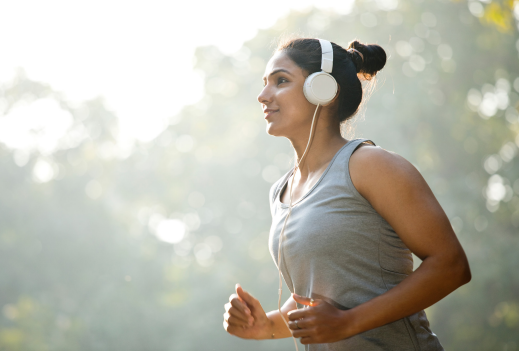
Jogging and running help people clear their minds and ground them to The Earth’s energy
Running is more than simply a physical workout for the spiritual runner. It’s a feel ing that promotes well-being and can help you get in touch with your higher Self.
pic marathons every day for 100 days. (https:// howtobefit.com/tendai-marathon-monks.htm)
The monks are required to do Hara-Kiri (hon ourable suicide) if they fail. Rakusu, a ritual act that involves binding a piece of fabric around the body—typically around the waist—is an associated practice. Physically and figurative ly, this action denotes the elimination of the ego and the surrender of material ownership. It also symbolises liberation and letting go of past burdens. They become living saints if they make it through. Since 1885, only 46 monks have successfully completed the 1,000- day test. Many have tried and failed, and their remains are buried under unmarked graves on the slope of Mount Hiei.
It is noteworthy that despite the huge chal lenge and goal, the monks are made to prac tise not focussing on the goal but, rather, on the process and practice here and now. The monks are discouraged from rushing to the finish lines each day. They must meditate and ground themselves in the present. Husai Sakai is an extraordinary athlete who miraculously completed the Kaihogyo twice, from the ages of 41 to 61. He says, “Live each day as if it is your entire life. If you start something today, finish it today. Tomorrow is another world.” Focussing on the now is something we can all do more of. Taking the emphasis off race day and putting it on the training is a good place to start. It entails that when we are open and agile to take on the day, we become flexible and ready to move forward on an unknown path. We are better prepared for whatever life throws at us. This increases mindfulness and reduces the anxiety attached to any big event or target, or in this case, the race.
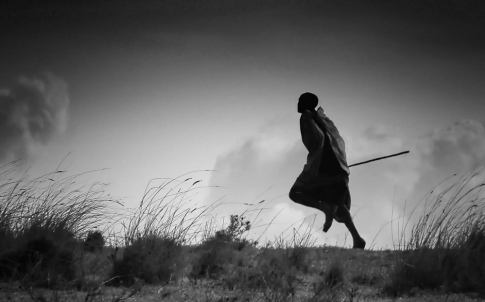
In the article The Spiritual Athlete’s Path to Enlightenment, author Holly A. Schmid states that the Marathon Monks of Japan are quite similar to the Lung-gom-pa runners of old Tibet. There have been many records kept of these amazing running monks who appear to fly when they run. Across grassy plains, they seem to float apparently in a trance. They are said to travel non-stop for 48 hours or more and can cover more than 200 miles a day. Many are said to be faster than horses, and at times, they were used to convey messages across the country.
The disciples would first have to master
sitting meditation to become Lung-gom-pa runners. The use of breathing exercises and visualisation methods was heavily emphasised. They needed to be able to picture their own bodies as feather-light. Another skill required them to focus on a single star in the sky for days on end, never allowing themselves to be distracted. They could glide like the wind after they had mastered this moving meditation.
True Lung-gom-pa runners are very rare, for it is very difficult to master their skills. Author Alexandra David Neel explains how she discovered her first Lung-gom-pa runner in Northern Tibet, in her book Magic and Mystery in Tibet. She described Northern Tibet as a wild, grassy region where a few tribes live in tents. There are few people in this area, and when they (along with her) spotted the Lung gom-pa runner, he was alone and was the first person they had spotted in more than ten days.
Thinking the man was lost and wandering on the plain, they thought of offering help. As they grew closer, they realised he was travelling at a remarkably swift speed and was one of the Lung-gom-pa runners. She was told not to speak to the runner because they were not allowed to break their meditation while running. The god that lived within him would then escape and the runner would die. After witnessing this, she describes her amazement: “By that time he had nearly reached us; I could clearly see his perfectly calm impassive face and wide-open eyes with their gaze fixed on some invisible far distant object situated somewhere high up in space. The man did not run. He seemed to lift himself from the ground, proceeding by leaps. It looked as if he had been endowed with the elasticity of a ball and rebounded each time his feet touched the ground.”
To achieve speed and lightness of weight while
Lead story 35
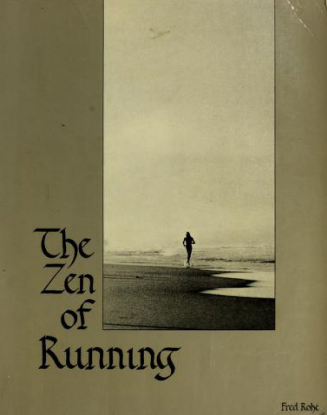
Fred Rohe wrote the book, The Zen of Running
cultivate in the disciple the psychological states that enable these amazing feats, rather than train the disciple by building up his muscles.
Fred Rohe makes a pertinent remark in his book The Zen of Running. He says, “Whatever you do with your running, you only cheat yourself by pushing, pressing, competing. There are no standards and no possible victories except the joy you are living while dancing your run.” This statement is a perfect way to describe the Lung-gom-pa runners of Tibet and the Marathon Monks of Mount Hiei. They do not run to simply be quick or to win. They are, in a way, dancing when they run. They are totally focussed on running and let the running take them away. Their trance-like movements show that they
running, Lung-gom-pa runners undergo years of different types of breathing exercises, after which they are permitted to attempt the racing performance itself. On a large cushion, the pupil must sit cross-legged. He takes a breath and enables air to enter his body. He then jumps up while still having his legs crossed without needing any hands to support himself. He keeps doing this while remaining in the same place. They can become so light with this technique that they are practically weightless. The Lung-gom technique aims to are completely focussing and at peace. Rohe goes on to say “Our spirit is not separate from our body any more than the water is separate from the stream. The water is the stream.” The runners’ spirit is with them when they are moving.
Author Holly Schmid beautifully describes the end of the journey in her aforementioned article. she says that after completing the run, the monk becomes one with the mountain, floating down a path devoid of obstacles.
Finally, he discovers inner joy and can see that everything is new each day. The trees and the plants, the vast sky and the glittering stars, and the stones have become the monk’s close friends. He can forecast the weather for the week based on the shape of the clouds, the direction of the wind, and the smell of the air. He knows when each species of bird and insect begins to sing, and he revels in the magical moment of the day when the moon sets and the sun rises, poised in the centre of Creation.
The most amazing and unrivalled thing would be to go through this and feel these emotions. Anyone would want to see these monks alive. It’s incredible that they toiled hard for a thousand days to reach this point.
For years, these incredible runners have dazzled others with their abilities. It’s amazing that someone goes through all of this to receive enlightenment. Ultramarathon runners are given beverages, food, and other items to assist them to run and stay energised. The marathon monks eat only a few tiny meals a day, which include rice, soup, and other vegetarian dishes.
My experiences with running
I am in my 40s and have been running on and off for the past 15 years now. In the beginning, it was about finishing the target within a stipulated time. Later, as I grew in body awareness, I started noticing my breathing pattern, body posture, and surroundings. While running, I felt mysteriously different when I kept my spine straight and shoulders steady, and breathed from the belly, despite a strong temptation to breathe from the upper chest. In those moments, I experienced little glimpses of stillness while running and lightness when my body was being carried from one bounce to another. Something would open up within me. I would automatically feel more aware and present after this running experience. Post this, I would be able to think more clearly and sleep like a baby. Those little moments of stillness and blissfulness undoubtedly altered my outlook on running. For me, it is more of a sacred activity.
Now whenever I run (once or twice a week), I prepare mentally and physically to keep myself light, going out for my run without my mobile or headphones and just wearing light clothes.
Perhaps all our troubles—all the violence, obesity, illness, depression, and greed we can’t overcome—began when we stopped living as Running People. Deny your nature, and it will erupt in some other, uglier way.
I feel light in my body and ready to run; it’s a great feeling. When I look at my friends and colleagues, who have numerous physical issues with running even a mile or two, it reminds me of what Christopher McDougall says in his book Born to Run: “Perhaps all our troubles— all the violence, obesity, illness, depression, and greed we can’t overcome—began when we stopped living as Running People. Deny your nature, and it will erupt in some other, uglier way.”
Social media addiction and running There is no denying that the number of marathon races has expanded across the country. Many individuals have joined the movement and taken up running, but the majority of them are in their late 30s, 40s, and above. Many people start only when a doctor suggests it. In our schooldays, while we regularly took part in sports that involved running, in our college days, we abandoned these activities to focus on academics and professions. And now social media—Instagram, Twitter, Snapchat, TikTok—have fully diverted our minds and attention to another bizarre world. Most kids spend more than four to five hours sitting in one location, addicted to their devices.
Tishita Pal, 19, was one such student who spent more time on Instagram and Snapchat, as well as with gaming, than she did with her family. She is a student at Amrita University, Mysore, and discusses her running experience. She admits that she was a social media junkie who spent hours and hours on the sites, just like many other teenagers. She would simply sit in her room, her gaze fixed on the displays on her phone and laptop. She wasn’t alone, since she had a lot of buddies in the same situation. She once went on a pilgrimage with her family and had to walk a couple of miles. It was a challenging task for her, although it was second nature to her parents and other senior
Running helps Trishita clear her mind. She told me that because of her pious family background, good sense prevailed. Concerned about her incapacity, she reduced her social media usage significantly and began running as a workout to cleanse her mind. After six months, she runs three to four times a week for five kilometres. She explains, “I am not aware of the spiritual elements of running, but I surely feel like a totally different person from within. Apart from having boundless energy throughout the day, I don’t feel any fogginess in my head; it feels clearer now. I am relaxed and focussed on my academics and preparation for an MBA. She adds, “There are no words to explain how running has helped me come out of the vicious circle of social media addiction. I feel more in control and balanced. It’s like I awoke from a deep sleep.”
Running for survival
Mexican Indians of the Tarahumara tribe are renowned for their agility on the ground. They have been running vast distances for millennia and are among the world’s best runners. Studying them can help us improve our running skills because of their long history of running, which has had a significant impact on the evolution of running in general.
To avoid persecution at the hands of Spanish invaders and Mexican land grabbers, the members of the Tarahumara tribe, who were living at the edge of the Copper Canyon region of Mexico, were forced to move and run for their lives. For more than a century, they were attacked and persecuted for their lands. They ran into the forests and mountains to save their lives and families. They have run so much for the sake of survival that learning how to run and how far to run has now become part of their heritage. Originally known for sprinting over the mountains on two long poles, the Tarahumara were forced to escape in the 1970s while resisting the Mexican government. This has resulted in their developing extreme endurance and the capacity to run vast distances. They can run up to 200 miles (320 kilometres) in a single session across several days. Many Tarahumara tribal members claim the Guinness World Record for the most marathon runs completed in one day.
The Tarahumara runners continue to serve as an inspiration for runners and organisations today. The remarkable thing is that they lack pricey, sophisticated footwear, clothes, and equipment. Before entering any race, ultramarathon runners train for months, yet the Tarahumara don’t do this. They just leave their village and take part in the competition, wearing cotton clothing and simple sandals that they make themselves. Their superhuman speed leaves the long-distance running community astounded.Author Christopher McDougall talks about Tarahumara runners in his a fore mentioned book. He says, “That was the real secret of the Tarahumara: they’d never forgotten what it felt like to love running. They remembered that running was mankind’s first fine art, our original act of inspired creation. Way before we were scratching pictures on caves or beating rhythms on hollow trees, we were perfecting the art of combining our breath and mind and muscles into fluid self propulsion over wild terrain.”
McDougall makes a very profound observation. He says, “Distance running was revered because it was indispensable; it was the way we survived and thrived and spread across the planet. You ran to eat and to avoid being eaten; you ran to find a mate and impress her, and with her, you ran off to start a new life together. You had to love running, or you wouldn’t live to love anything else. And like everything else we have, everything we sentimentally call our ‘passions’ and ‘desires,’ it’s really an encoded ancestral necessity. We were born to run; we were born because we run. We’re all ‘Running People’ as the Tarahumara have always known.
Running, in my opinion, has a universal quality. Running is the most common feature that connects both animals and humans. A deer awakens in the forest, knowing it must flee the quickest tiger or be eaten. Every morning, a tiger awakens in the wild. It understands that it must outrun the slowest deer or perish. It doesn’t matter if you’re a tiger or a deer—when the light comes up, you’d better be running. Running connects our two most primitive impulses: fear and pleasure. We run when we’re terrified, we run when we’re happy, we run away from our issues, and we run about for fun. The question is, What do you want to run for?
Rishi Rathod gives new meaning to the idiom ‘run for your life.’ With the help of fascinating examples, he shows how running can have a positive impact on your life. It not only boosts your physical fitness levels but also does wonders for your mental and spiritual well-being. So when you get back from your run this evening, settle into your favourite armchair and read this article to find out what more you can get out of your regimen.
Gowing up, I was unaware of how
much I was running, along with the other kids. At that time, playing for me and my pals meant always dashing about. It continued till we entered adulthood and started juggling jobs and professions. Fortunately, I maintained running purely for enjoyment, but most of my buddies stopped running after taking up cricket. Now, none of them can run for more than three to five kilometres. Some people have problems with their knees, some have more body fat than muscle, and others can’t handle the stress of running. I don’t want to imply that everyone should run to stay active. Health awareness has enthused many people into participating in sports or fitness regimens. In this article, I
investigate how running, which is usually c o n s i d e r e d ‘ c h i l d ’ s p l a y , ’ e n d s up b e i n g such a d i f f i c u lt activity for many people and how it has spiritual benefits in addition to its physical advantages.
There are two groups of runners: The first group, which makes up the majority, comprises those who want to take advantage of the physical gains that running offers, while the second group is made up of those who run for enjoyment and have life-changing experiences. For me, the purpose of running was to test my mettle, see how far I could go, and enjoy the after-run feeling. But with time, things began to change. I began to pay attention to my breathing, posture, and surroundings, and learned a lot about self-awareness and mindfulness.
Running is one of the oldest and most basic types of exercise. It may be done anywhere, by anybody, at any time. However, the advantages of running go beyond merely enhancing one’s health. With the correct training, you may even convert running into a form of self-expression. And there are exceptional advantages associated with significant health issues such as heart disease, diabetes, and obesity. Running can also help to boost your mood and mental well-being. Studies show that running regularly alleviates symptoms of sadness and anxiety.
Running to overcome depression Radhakrishnan GN, a 30-year-old IT professional, took up running on the streets of London four years ago, after which his life changed drastically. Radhakrishnan, who currently resides in Hosur, Tamil Nadu, says, “After the breakup, I was unable to emerge from reveries of my prior relationship and was going through a kind of depression. I developed a workaholic personality and relied excessively on smoking and alcohol to deal with the grief. One day, I couldn’t recognise myself when I looked in the mirror.” He adds, “It utterly baffled me. I sat down and began to contemplate at that juncture. I told myself this cannot continue.”
Radhakrishnan immersed himself in reading to change his life. He subsequently took up cycling and then progressed to running. “I listened to the audiobooks of psychologists and excellent instructors, and learned that either you sit down and meditate to gain back your control or you work on your physical body and influence your mind; both have identical consequences. And I chose to run,” he says. Although he initially ran to avoid sadness, he ultimately discovered something that few people understand. “I never ran for fitness or to look nice,” Radhakrishnan adds. “I feel that fitness occurs when your mind and body are in sync. I now run between five to ten kilometres every day. I never ran any marathon, but physically I am confident to run any of those races.” He took it one step further—from running being merely an exercise to it being something fascinating. He shares his inner experience: “Running is like meditation for me now. I feel aligned physically, mentally, and emotionally. It brings me back to my centre and gives me profound tranquillity.” He shares an interesting observation about running in his local area: “Subconsciously, I’ve started encouraging neighbourhood kids, young adults, and the elderly to get outside and run. They witness me jogging every day, feel some sort of connection with me, and are inspired to jog. This is quite satisfying.”
Running for divine experiences Many runners cite a spiritual reason for run ning, describing it as a meditative experience. Runners claim that the repetitive motion of the legs helps them to clear their minds and that the time they spend in nature enables them to connect with the Earth’s energy. People fre quently invest more time in the safeguarding of nature as a result of this spiritual connec tion.
Running is more than simply a physical work out for the spiritual runner. It’s a feeling that promotes well-being and can help you get in touch with your higher Self. A small subset of Buddhists elevates running to an art form, making it a technique for Self-realisation. A Zen Buddhist order known as the Marathon
Monks (gyoja) of Mt. Hiei, Japan, partici pates in Kaihogyo, a spiritual endurance test in quest of enlightenment. The 1000-day run ning challenge lasts for more than seven years. It must be the world’s most daunting physi cal and mental challenge. The monks run 40 km each day for 100 days straight for the first 300 days of basic training. Then they run 40 km every day for 200 days straight in their fourth and fifth years. That is about equivalent to running a complete marathon every day for almost a year. The final two years of the 1000- day challenge are considerably more intimi dating. They run 60 km per day for 100 days straight in the sixth year and 84 km per day for 100 days straight in the seventh year. This is the same as running two consecutive Olym
Lead story 33
Running is more than simply a physical workout for the spiritual runner. It’s a feel ing that promotes well-being and can help you get in touch with your higher Self.
pic marathons every day for 100 days.
The monks are required to do Hara-Kiri (hon ourable suicide) if they fail. Rakusu, a ritual act that involves binding a piece of fabric around the body—typically around the waist—is an associated practice. Physically and figurative ly, this action denotes the elimination of the ego and the surrender of material ownership. It also symbolises liberation and letting go of past burdens. They become living saints if they make it through. Since 1885, only 46 monks have successfully completed the 1,000- day test. Many have tried and failed, and their remains are buried under unmarked graves on the slope of Mount Hiei.
It is noteworthy that despite the huge chal lenge and goal, the monks are made to prac tise not focussing on the goal but, rather, on the process and practice here and now. The monks are discouraged from rushing to the finish lines each day. They must meditate and ground themselves in the present. Husai Sakai is an extraordinary athlete who miraculously completed the Kaihogyo twice, from the ages
of 41 to 61. He says, “Live each day as if it is your entire life. If you start something today, finish it today. Tomorrow is another world.” Focussing on the now is something we can all do more of. Taking the emphasis off race day and putting it on the training is a good place to start. It entails that when we are open and agile to take on the day, we become flexible and ready to move forward on an unknown path. We are better prepared for whatever life throws at us. This increases mindfulness and reduces the anxiety attached to any big event or target, or in this case, the race.
In the article The Spiritual Athlete’s Path to Enlightenment, author Holly A. Schmid states that the Marathon Monks of Japan are quite similar to the Lung-gom-pa runners of old Tibet. There have been many records kept of these amazing running monks who appear to fly when they run. Across grassy plains, they seem to float apparently in a trance. They are said to travel non-stop for 48 hours or more and can cover more than 200 miles a day. Many are said to be faster than horses, and at times, they were used to convey messages across the country.
The disciples would first have to master
sitting meditation to become Lung-gom-pa runners. The use of breathing exercises and visualisation methods was heavily emphasised. They needed to be able to picture their own bodies as feather-light. Another skill required them to focus on a single star in the sky for days on end, never allowing themselves to be distracted. They could glide like the wind after they had mastered this moving meditation.
True Lung-gom-pa runners are very rare, for it is very difficult to master their skills. Author Alexandra David Neel explains how she discovered her first Lung-gom-pa runner in Northern Tibet, in her book Magic and Mystery in Tibet. She described Northern Tibet as a wild, grassy region where a few tribes live in tents. There are few people in this area, and when they (along with her) spotted the Lung gom-pa runner, he was alone and was the first person they had spotted in more than ten days.
Thinking the man was lost and wandering on the plain, they thought of offering help. As they grew closer, they realised he was travelling at a remarkably swift speed and was one of the Lung-gom-pa runners. She was told not to speak to the runner because they were not allowed to break their meditation while running. The god that lived within him would then escape and the runner would die. After witnessing this, she describes her amazement: “By that time he had nearly reached us; I could clearly see his perfectly calm impassive face and wide-open eyes with their gaze fixed on some invisible far distant object situated somewhere high up in space. The man did not run. He seemed to lift himself from the ground, proceeding by leaps. It looked as if he had been endowed with the elasticity of a ball and rebounded each time his feet touched the ground.”
To achieve speed and lightness of weight while
cultivate in the disciple the psychological states that enable these amazing feats, rather than train the disciple by building up his muscles.
Fred Rohe makes a pertinent remark in his book The Zen of Running. He says, “Whatever you do with your running, you only cheat yourself by pushing, pressing, competing. There are no standards and no possible victories except the joy you are living while dancing your run.” This statement is a perfect way to describe the Lung-gom-pa runners of Tibet and the Marathon Monks of Mount Hiei. They do not run to simply be quick or to win. They are, in a way, dancing when they run. They are totally focussed on running and let the running take them away. Their trance-like movements show that they
running, Lung-gom-pa runners undergo years of different types of breathing exercises, after which they are permitted to attempt the racing performance itself. On a large cushion, the pupil must sit cross-legged. He takes a breath and enables air to enter his body. He then jumps up while still having his legs crossed without needing any hands to support himself. He keeps doing this while remaining in the same place. They can become so light with this technique that they are practically weightless. The Lung-gom technique aims to are completely focussing and at peace. Rohe goes on to say “Our spirit is not separate from our body any more than the water is separate from the stream. The water is the stream.” The runners’ spirit is with them when they are moving.
Author Holly Schmid beautifully describes the end of the journey in her aforementioned article. she says that after completing the run, the monk becomes one with the mountain, floating down a path devoid of obstacles.
Finally, he discovers inner joy and can see that everything is new each day. The trees and the plants, the vast sky and the glittering stars, and the stones have become the monk’s close friends. He can forecast the weather for the week based on the shape of the clouds, the direction of the wind, and the smell of the air. He knows when each species of bird and insect begins to sing, and he revels in the magical moment of the day when the moon sets and the sun rises, poised in the centre of Creation.
The most amazing and unrivalled thing would be to go through this and feel these emotions. Anyone would want to see these monks alive. It’s incredible that they toiled hard for a thousand days to reach this point.
For years, these incredible runners have dazzled others with their abilities. It’s amazing that someone goes through all of this to receive enlightenment. Ultramarathon runners are given beverages, food, and other items to assist them to run and stay energised. The marathon monks eat only a few tiny meals a day, which include rice, soup, and other vegetarian dishes.
My experiences with running
I am in my 40s and have been running on and off for the past 15 years now. In the beginning, it was about finishing the target within a stipulated time. Later, as I grew in body awareness, I started noticing my breathing pattern, body posture, and surroundings. While running, I felt mysteriously different when I kept my spine straight and shoulders steady, and breathed from the belly, despite a strong temptation to breathe from the upper chest. In those moments, I experienced little glimpses of stillness while running and lightness when my body was being carried from one bounce to another. Something would open up within me. I would automatically feel more aware and present after this running experience. Post this, I would be able to think more clearly and sleep like a baby. Those little moments of stillness and blissfulness undoubtedly altered my outlook on running. For me, it is more of a sacred activity.
Now whenever I run (once or twice a week), I prepare mentally and physically to keep myself light, going out for my run without my mobile or headphones and just wearing light clothes.
Perhaps all our troubles—all the violence, obesity, illness, depression, and greed we can’t overcome—began when we stopped living as Running People. Deny your nature, and it will erupt in some other, uglier way.
I feel light in my body and ready to run; it’s a great feeling. When I look at my friends and colleagues, who have numerous physical issues with running even a mile or two, it reminds me of what Christopher McDougall says in his book Born to Run: “Perhaps all our troubles— all the violence, obesity, illness, depression, and greed we can’t overcome—began when we stopped living as Running People. Deny your nature, and it will erupt in some other, uglier way.”
Social media addiction and running There is no denying that the number of marathon races has expanded across the country. Many individuals have joined the movement and taken up running, but the majority of them are in their late 30s, 40s, and above. Many people start only when a doctor suggests it. In our schooldays, while we regularly took part in sports that involved running, in our college days, we abandoned these activities to focus on academics and professions. And now social media—Instagram, Twitter, Snapchat, TikTok—have fully diverted our minds and attention to another bizarre world. Most kids spend more than four to five hours sitting in one location, addicted to their devices.
Tishita Pal, 19, was one such student who spent more time on Instagram and Snapchat, as well as with gaming, than she did with her family. She is a student at Amrita University, Mysore, and discusses her running experience. She admits that she was a social media junkie who spent hours and hours on the sites, just like many other teenagers. She would simply sit in her room, her gaze fixed on the displays on her phone and laptop. She wasn’t alone, since she had a lot of buddies in the same situation. She once went on a pilgrimage with her family and had to walk a couple of miles. It was a challenging task for her, although it was second nature to her parents and other senior
Running helps Trishita clear her mind family members. She told me that because of her pious family background, good sense prevailed. Concerned about her incapacity, she reduced her social media usage significantly and began running as a workout to cleanse her mind. After six months, she runs three to four times a week for five kilometres. She explains, “I am not aware of the spiritual elements of running, but I surely feel like a totally different person from within. Apart from having boundless energy throughout the day, I don’t feel any fogginess in my head; it feels clearer now. I am relaxed and focussed on my academics and preparation for an MBA. She adds, “There are no words to explain how running has helped me come out of the vicious circle of social media addiction. I feel more in control and balanced. It’s like I awoke from a deep sleep.”
Running for survival
Mexican Indians of the Tarahumara tribe are renowned for their agility on the ground. They have been running vast distances for millennia and are among the world’s best runners. Studying them can help us improve our running skills because of their long history of running, which has had a significant impact on the evolution of running in general.
To avoid persecution at the hands of Spanish invaders and Mexican land grabbers, the members of the Tarahumara tribe, who were living at the edge of the Copper Canyon region of Mexico, were forced to move and run for their lives. For more than a century, they were attacked and persecuted for their lands. They ran into the forests and mountains to save their lives and families. They have run so much for the sake of survival that learning how to run and how far to run has now become part of their heritage. Originally known for sprinting over the mountains on two long poles, the Tarahumara were forced to escape in the 1970s while resisting the Mexican government. This has resulted in their developing extreme endurance and the capacity to run vast distances. They can run up to 200 miles (320 kilometres) in a single session across several days. Many Tarahumara tribal members claim the Guinness World Record for the most marathon runs completed in one day.
The Tarahumara runners continue to serve as an inspiration for runners and organisations today. The remarkable thing is that they lack pricey, sophisticated footwear, clothes, and equipment. Before entering any race, ultramarathon runners train for months, yet the Tarahumara don’t do this. They just leave their village and take part in the competition, wearing cotton clothing and simple sandals that they make themselves. Their superhuman
speed leaves the long-distance running community astounded.Author Christopher McDougall talks about Tarahumara runners in his a fore mentioned book. He says, “That was the real secret of the Tarahumara: they’d never forgotten what it felt like to love running. They remembered that running was mankind’s first fine art, our original act of inspired creation. Way before we were scratching pictures on caves or beating rhythms on hollow trees, we were perfecting the art of combining our breath and mind and muscles into fluid self propulsion over wild terrain.”
McDougall makes a very profound observation. He says, “Distance running was revered because it was indispensable; it was the way we survived and thrived and spread across the planet. You ran to eat and to avoid being eaten; you ran to find a mate and impress her, and with her, you ran off to start a new life together. You had to love running, or you wouldn’t live to love anything else. And like everything else we have, everything we sentimentally call our ‘passions’ and ‘desires,’ it’s really an encoded ancestral necessity. We were born to run; we were born because we run. We’re all ‘Running People’ as the Tarahumara have always known.
Running, in my opinion, has a universal quality. Running is the most common feature that connects both animals and humans. A deer awakens in the forest, knowing it must flee the quickest tiger or be eaten. Every morning, a tiger awakens in the wild. It understands that it must outrun the slowest deer or perish. It doesn’t matter if you’re a tiger or a deer—when the light comes up, you’d better be running. Running connects our two most primitive impulses: fear and pleasure. We run when we’re terrified, we run when we’re happy, we run away from our issues, and we run about for fun. The question is, What do you want to run for?

Discussion (0)
No comments yet. Be the first to comment!
Leave a Comment
You need to login to post a comment.