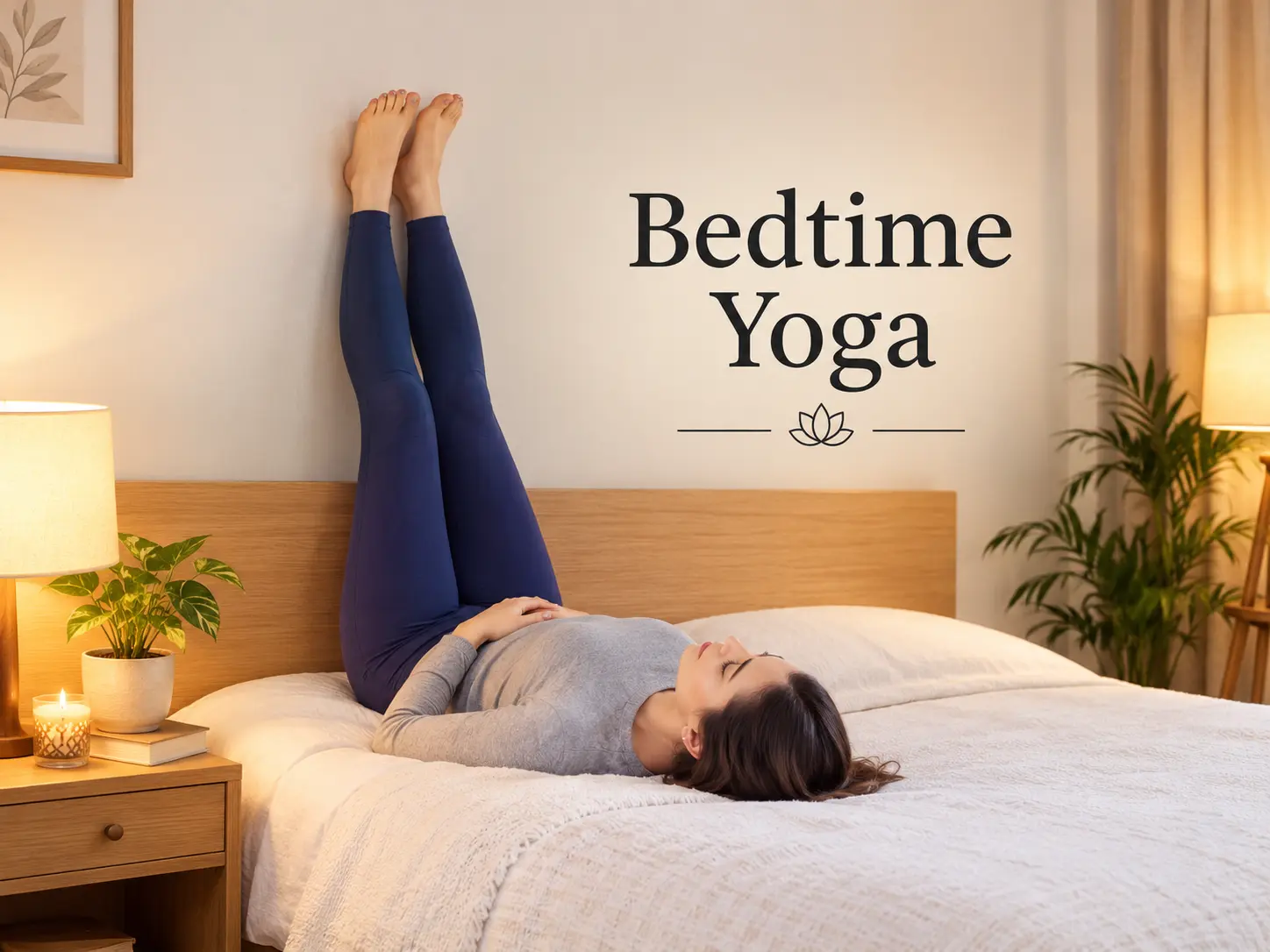
Bedtime Yoga: Routine for Deeper Sleep
Bedtime yoga is one of the easiest ways to slow a racing mind and loosen a tense body before you turn off the light. You don't need special equipment, a studio, or any experience. A few minutes of slow movement and steady breathing can mark the end of your day and tell your body it's safe to rest.
Key Takeaways
- Slow, gentle styles like restorative, yin, and easy hatha work best before sleep.
- Ten to twenty minutes is enough to notice a calmer, more settled evening.
- Skip intense flows, deep backbends, and inversions close to bedtime.
Why Bedtime Yoga Works
Most of us take our days into nights: tight shoulders from our computer screens, clenched jaws that we never knew we had, and brains full of tasks for tomorrow. Bedtime yoga addresses both parts of that equation.
Slow, deep breathing shifts our bodies’ nervous systems into their "rest and digest" state, lowering our heart rates and reducing muscle tension. Slowly holding poses provides something for our brains to focus on other than our anxieties. After enough repetitions, following the same routine also acts as a signal, much like brushing our teeth, that reminds our brain of sleep time.
Yoga Nidra for Sleep
Yoga nidra is a relaxation process done lying on your back that typically involves following a guided voice through a body scan. You simply listen to the instructions and gradually bring your attention through different parts of the body, helping you settle into a deeply relaxed state.
It requires no yoga experience or special equipment and can be practised by complete beginners. This makes Yoga Nidra a useful alternative for people who prefer not to perform physical yoga poses before bedtime.
A 10-Minute Bedtime Yoga Sequence
Dim the lights, silence your phone, and keep a blanket or pillow nearby. Move slowly and let each breath be longer than feels natural. Slow, controlled breathing is an important part of the relaxation practice; for example, gently inhale for 4 counts and exhale for 6 counts without forcing the breath.
1. Child's Pose (Balasana): 1–2 minutes. Drop to a kneeling position, fold your hips into your heels, and place your forehead on the floor or a folded blanket. With each inhalation, open your back.
2. Cat-Cow (Marjaryasana-Bitilasana): 1 minute. Hands and knees are on the floor; the spine curves and uncurls with your breath. Helps relieve stiffness in the back resulting from prolonged sitting.
3. Reclined Butterfly (Supta Baddha Konasana): 2 minutes. Lie down on your back, press your feet together, and relax your knees outwards. If your hips are tight, place pillows under your knees.
4. Supine Twist (Supta Matsyendrasana): 1 minute per side. Bring both knees to one side, while keeping your shoulder blades on the ground.
5. Legs-Up-the-Wall (Viparita Karani): 3 minutes. Rest your calves against a wall or the headboard. It's a restful shape that many people find soothing after a day on their feet.
6. Corpse Pose (Savasana): 2+ minutes. Lie flat, arms relaxed, eyes closed. Scan from your toes to your forehead and release anything you're still holding.
What If Yoga Doesn't Make Me Sleepy?
Some people may still feel alert after gentle yoga poses, and this does not mean anything is wrong. You can stop the physical practice, try fewer poses, or combine your routine with a guided meditation instead.
Bed Yoga: Stretches You Can Do Without Leaving Your Mattress
Some examples of things to try:
- Knees-to-chest hug: Pull both knees in and rock slightly side to side.
- Reclined butterfly: Same as above, using your pillows for support.
- Happy baby: Hold your feet and let your hips open, rocking gently.
- Final relaxation: Lie on your back and count ten slow breaths.
If your mattress is very soft, keep movements small and avoid deep stretches that could strain your joints.
Benefits of Bedtime Yoga
- Helps you relax and decrease stress levels
- Reduces muscle pain and tightness
- Assists in sleeping faster
- Improves the quality of your sleep
- Creates a relaxing bedtime ritual
Tips to Get the Most From Your Routine
- Make sure that you time it properly. You should end at least thirty to sixty minutes before you actually intend to fall asleep, as you will need some time to unwind. Short sessions can also be done right before bedtime.
- Create a calm atmosphere. This means low lighting, a comfortable temperature, and perhaps some quiet or soothing music.
- Include a breathing session. Breathe in for four counts and breathe out for six.
- Listen to your body. Stretching should feel mild, never painful. If you have an injury, are pregnant, or manage a medical condition, check with a healthcare professional first.
Final Thoughts
You don't need a perfect routine to benefit from bedtime yoga. Start with three or four poses, breathe slowly, and give your body a few quiet minutes before sleep. Try bed yoga for two weeks and see how your evenings and mornings feel.
Frequently Asked Questions
1. What is the best yoga to do before bed?
Slow, supportive styles are the best fit, including restorative, yin, and gentle hatha yoga. They help your body wind down and promote good sleep.
2. What yoga poses should you avoid before bed?
Stay away from energizing shapes such as wheel pose, handstands, and other strong inversions or deep backbends. Fast, sweaty flows can also leave you feeling wired when you want to feel sleepy.
3. How long before bed should you do yoga?
Many teachers suggest finishing about an hour or two before bedtime, using ten to twenty minutes of calm movement. A very short, gentle sequence can also be done right before you lie down.
4. Is it better to do yoga before bed or in the morning?
Morning practice can feel energizing and help you focus, while bedtime yoga at night tends to feel calming and may support sleep. Choose the time you'll stick with, or enjoy both.
Also Read: Stress Reduce Yoga
By Umesh Kumar Khiri


Discussion (0)
No comments yet. Be the first to comment!
Leave a Comment
You need to login to post a comment.