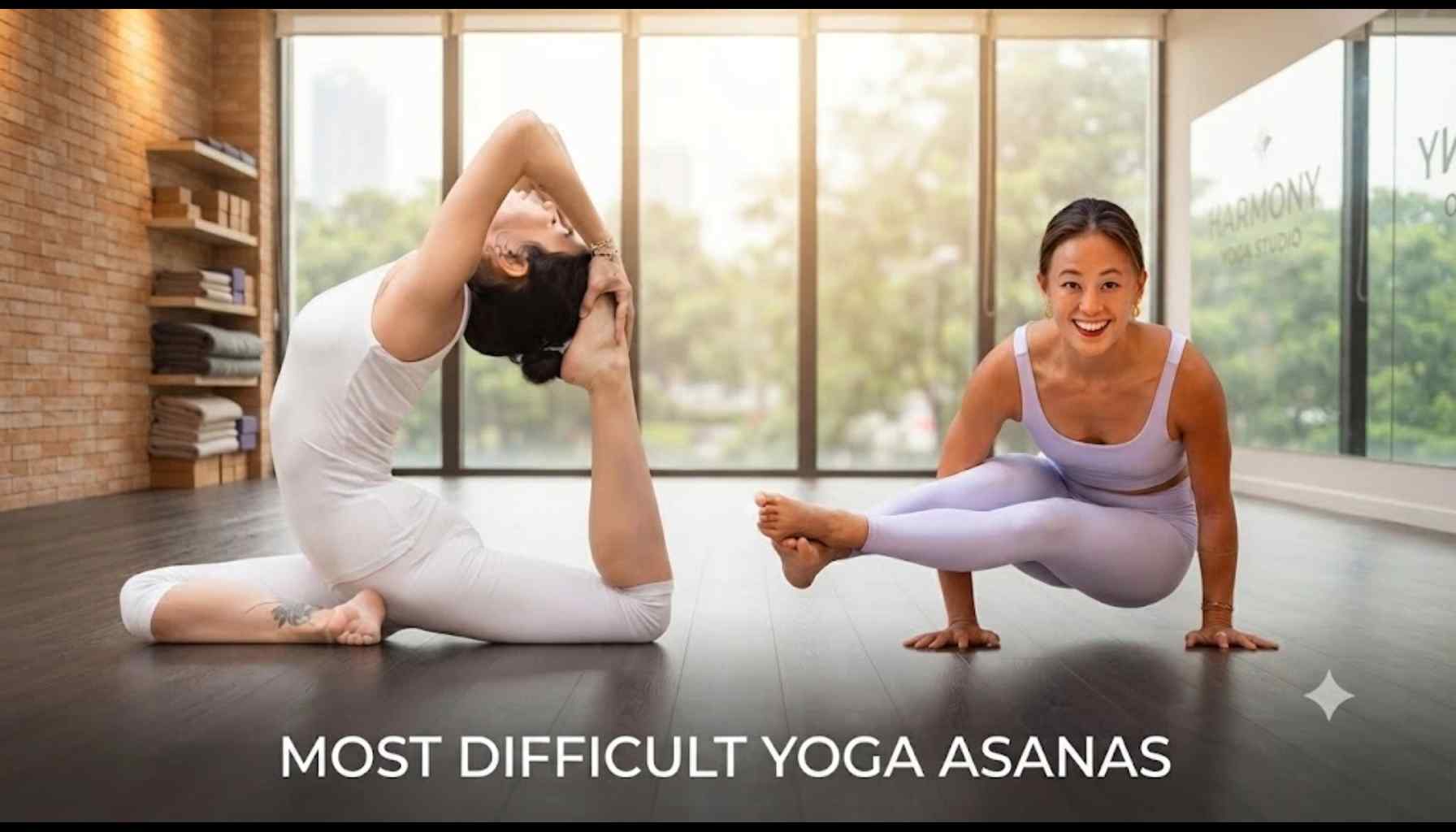
The 10 Most Difficult Yoga Asanas
Most difficult yoga asanas often test the absolute limits of a practitioner's balance, strength, and flexibility.
Every yoga practice eventually hits a wall: a pose that looks impossible today. Difficult poses are not really about acrobatics. They combine strength, flexibility, balance and focus in ways that expose exactly where your body needs work. This guide covers ten of the toughest, and how to approach them without hurting yourself.
Key Takeaways
- "Difficult" depends on your body. Some poses need strength, others need deep flexibility, and many need both.
- Progress comes from simpler prep poses, not from forcing the final shape.
- Warm up well, use props and learn tricky poses with a qualified teacher.
The Mindset Behind the Most Difficult Yoga Asanas
The final pose is seldom the goal. Striving for an advanced pose allows one to learn discipline, humility and concentration. Some never get to the "perfect" pose and this is totally alright. The value lies in the process, in a stronger body and a calmer mind along the way. Most difficult yoga asanas teach us that the true value lies in the process, building a stronger body and a calmer mind along the way.
What Makes a Yoga Pose Difficult?
The three factors that usually make a posture advanced:
- Strength: Arm balances and inversions ask your wrists, shoulders and core to carry your whole weight.
- Flexibility: Deep backbends, splits and hip openers demand a wide range of motion.
- Balance and control: The more elements a pose combines, the less room there is for error.
The hardest postures blend all three, which is why they take patience.
Most Difficult Yoga Poses
1. Scorpion Pose (Vrischikasana)
It involves balancing on the forearms, adding a deep back bend to create an arch of feet towards your head. It requires shoulder strength, spinal flexibility and good nerve control. You should practice forearm stand, wheel, and cobra variations before this pose. Most difficult yoga poses like this one require immense upper body control and focus.
2. Peacock Pose (Mayurasana)
The body is horizontal, balancing on your elbows pressing your belly. It involves wrist, forearm and core strength. It would be good to practice plank, crow, and slow forward bends before.
3. Firefly Pose (Tittibhasana)
The legs are wrapped around your upper arm while extending it. The hands support your body while balancing on it. The pose requires core tightness and openness of the hamstring muscles. The poses such as crow, forward bends and squats are helpful.
4. Eight Angle Pose (Astavakrasana)
One of the legs is bent over the shoulder while other extended to the sides. The pose looks weird, but it will develop your wrist strength and abdominal control. Side plank and low plank holds are beneficial before.
5. King Pigeon (Rajakapotasana)
Deep backbend pose involving the bending of your foot to your head while reaching back by your hands. It requires a flexible spine, shoulders, and hip flexors.
A balancing position that includes a bind, hip opening and leg extension. Stand on one leg and bind your foot. Use extended side angle and bound side angle as foundations.
7. Lord of the Dance Pose (Natarajasana)
The basic dancer pose is relatively easy, but the full version where you bind both arms overhead is a difficult backbend on one leg. Flexibility of shoulders, quads and concentration are required. A strap is an ideal progression.
8. Visvamitra’s Pose (Visvamitrasana)
An arm balancing position with an extended leg across your body. This pose works your hamstrings, hips and obliques. Side plank and low lunge positions are great preparations.
9. Full Lotus (Padmasana)
Even though it looks peaceful, it requires very flexible hips and healthy knees. Forceful practice of this pose may damage your knees. Butterfly, garland and figure four stretches are ideal preparations. If your knees protest, do not continue.
10. Full Splits (Hanumanasana)
A good measure of hamstring and hip flexor flexibility. Gradually build the pose with lunges, half splits and blocks underneath your hands. Rushing into the pose can stretch your muscles.
Benefits of Practising Difficult Yoga Asanas
- Builds muscular strength and improves overall body stability.
- Enhances flexibility, joint mobility and body coordination.
- Improves balance, concentration and body awareness.
- Develops patience, mental resilience and better control over breathing.
How to Approach Hard Poses Safely
Most difficult yoga poses remind us that progress is deeply individual and non-linear.
- Warm up adequately. Pay attention to your wrists, shoulders, hips and spine.
- Deconstruct the pose. Get to grips with the strength element of the pose separately from the flexibility element.
- Do the pose at the beginning of a class. Advanced poses done when tired are dangerous.
- Employ aids. Blocks, straps and walls allow you to form the pose while maintaining good alignment.
- Be consistent. It is better to do regular short practice than to attempt heroic feats infrequently.
- Listen to your body. Tension is acceptable, but pain is a clear sign to stop.
Final Thoughts
Most difficult yoga asanas are not a race. Treat them as long-term projects, build strength and flexibility patiently, and celebrate every small step. The journey builds more than the destination.
Frequently Asked Questions
1. What are the 10 most difficult yoga poses?
Commonly cited examples include Scorpion, Peacock, Firefly, Eight-Angle, King Pigeon, Bird of Paradise, Lord of the Dance Pose, Visvamitrasana, Full Lotus and Full Splits.
2. Which asana is queen of yoga?
Shoulder Stand (Sarvangasana) is traditionally called the queen of asanas, while Headstand is called the king.
3. What is the most intense yoga?
Ashtanga, hot yoga and power vinyasa are usually considered the most physically intense styles.
4. What yoga asanas are inspired by Lord Shiva?
Natarajasana (Dancer Pose), the Warrior poses (Virabhadrasana) and meditative seats like Padmasana are the ones most often linked with Shiva.
Also Read: Dhyana Yoga
By Umesh Kumar Khiri


Discussion (0)
No comments yet. Be the first to comment!
Leave a Comment
You need to login to post a comment.