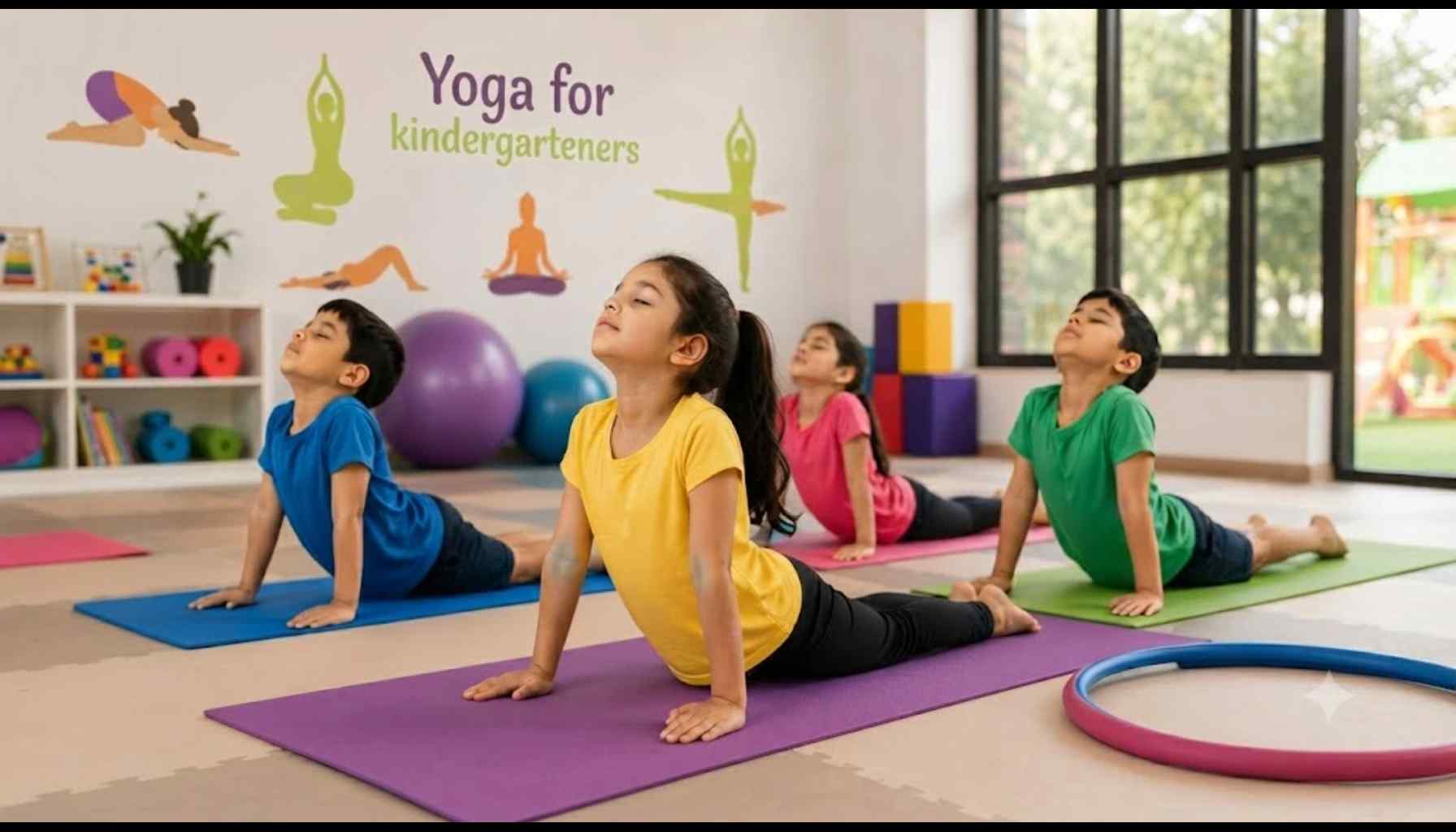
Yoga for Kindergarteners: Fun Poses
Yoga for kindergarteners turns movement into play, helping five- and six-year-olds stretch their bodies, practice calm breathing, and learn to focus without feeling like they're sitting through a lesson. Children are curious, wiggly, and full of big feelings, so the best sessions are short, silly, and story-driven. Here's how to bring yoga sessions to the kindergarten classroom.
Key Takeaways
- Playful lessons lasting about 10 to 15 minutes work best for kindergarteners.
- Yoga can be taught by introducing animal postures, stories, and games.
- The teacher should supervise at all times, demonstrating the postures, without forcing any stretch.
Why Yoga for Kindergarteners Works
At a young age, kids are still developing the skill to label their emotions, to share the space, and to calm down their bodies. Yoga provides kids with easy means to do so.
- Attention: According to one randomized trial, 12-week intervention of yoga in 45 five-year-old kids increased visual attention and decreased inattentive and hyperactive behavior compared with the other groups. This study is not big, but it can be seen as positive.
- Emotional skills: Deep breaths and quietness make children aware of their emotions and help them stop before doing something without thinking.
- Body awareness and coordination: Balancing, stretching, and making shapes develop physical skills and improve coordination.
- Social skills: Partner poses develop the ability to cooperate.
- Calm transitions: A minute of yoga practice helps children become calm after recess and after an active afternoon at home.
Yoga for Kindergarteners: Easy Poses
Try to keep poses easy to do, quick, and leave room for children to make poses their own. Remember, there is no right or wrong way to do things – just trying!
1. Mountain Pose (Tadasana): Stand tall and straight with feet together and hands by your side. Imagine yourself to be a huge mountain, impossible to overthrow.
2. Tree Pose (Vrksasana): Place one foot on the opposite calf or ankle and join hands. Being wobbly is all part of the pose, and a friend’s hand or a wall may support you.
3. Cat-Cow (Marjaryasana-Bitilasana): From a hands-and-knees position, stretch your back as a cat would and then round it. Make meowing and mooing sounds.
4. Cobra Pose (Bhujangasana): Lie flat on your stomach and raise your chest up, making sure to keep hands near your shoulders. Make hissing sounds of snakes.
5. Butterfly Pose (Baddha Konasana): With feet soles together, flap your knees like butterfly wings.
6. Child’s Pose (Balasana): Kneel and lower yourself onto the floor resting your forehead on the floor. This is the ideal "calm-down" cozy shape.
A Simple 10-Minute Kindergarten Yoga Lesson
Short periods work well with short attention spans. One recommendation is 10 to 15 minutes per small group, while numerous suggestions for teaching yoga to children include limiting periods to about 20 minutes.
- Introduction circle (1-2 minutes): Welcome participants and give one clear rule, e.g., "gentle bodies, kind hands."
- Breathing exercise (1-2 minutes): Have children inhale an imaginary flower and exhale an imaginary candle.
- Go through three or four postures (4-5 minutes): Combine them into a little story, for example, walking in a forest.
- Pair or group activity (1 minute): Conduct mirror postures or form a circle of trees.
- Relaxation (2 minutes): Take rest lying down, for example, having some soft toy rise and fall on the stomach.
Make It Fun: Activity Ideas
- Story yoga: Use a picture book and assign a posture whenever there is an animal.
- Animal adventure: Frogs hop, cats stretch, and elephants stomp during postures.
- Number games: Roll a die and hold a posture for a particular number of counts.
- Emotions game: Get the children to demonstrate their happy, sleepy, and angry faces.
- Posture art: Have them draw their most liked posture after class.
Safety and Teaching Tips
- Avoid full stomachs: Practice at least an hour or so after a big meal.
- Warm up first: A few wiggles and stretches prepare small bodies.
- Never force: Gentle stretching only. Stop if a child says something hurts.
- Demonstrate, don't just explain: Show the pose and let kids copy you.
- Skip comparisons: Praise effort, not perfection.
- Supervise closely: Adults should guide balance poses and keep floor space clear.
- Check with a doctor: If a child has a medical condition or injury, ask first.
Final Thoughts
Yoga for kindergarteners doesn't need to be perfect or quiet. A few playful poses, a deep breath, and a good story are enough to help children move, focus, and settle. Start with one short session this week, follow their lead, and let the laughter guide their way.
Frequently Asked Questions
1. Is yoga good for a 5 year old?
Yes, gentle, playful yoga is generally considered safe and beneficial for five-year-olds. It can support focus, balance, and emotional regulation when sessions are short, fun, and supervised.
2. How to explain yoga to children?
Describe it as a game of stretching, moving, and breathing that helps your body feel strong and your mind feel calm. Use animal shapes and stories to demonstrate yoga poses.
3. How long should a kindergarten yoga session be?
Aim for about 10 to 15 minutes, and keep it under 20. Short, frequent sessions work better than one long class.
4. What are the easiest yoga poses for kindergarteners?
Mountain, Tree, Cat-Cow, Cobra, Butterfly, and Child's Pose are great starters. They're simple and connect to animals and nature.
Also read: Children’s Yoga Poses
By Umesh Kumar Khiri


Discussion (0)
No comments yet. Be the first to comment!
Leave a Comment
You need to login to post a comment.