Surrender is the last step in the seeking game. When the seeker reaches this hallowed spot, he can put down the burden of self and hand it over to God.
His job is done. The rest is God's. More>>
Homeopathy,
arguably the safest alternative medicine is making a strong global comeback,
despite having lost the first round to allopathy
Life had gone into a tizzy the day 32-year-old Michael S. (name changed
to protect identity) joined Burson-Marsteller Roger Pereiraone of
India's top PR agenciesas a copywriter. With deadlines piling up
faster than one could spell the word, there were days when staffers didn't
know whether they were coming or going. Every night as he headed home,
Mike felt totally zonked.
Three years
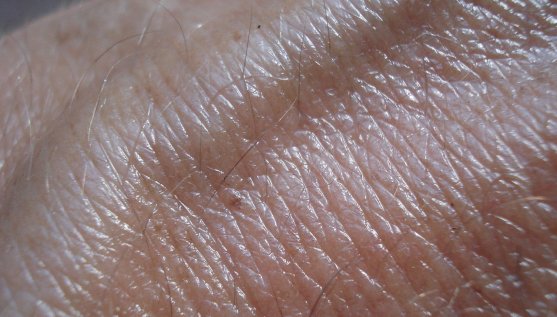
into the job and, in 1993, Mike developed vitiligoa form of leucoderma
that turns the skin white in patches. The cumulative stress had taken
its toll. Frantic, Mike visited a skin specialist. There was an even
chance of a cure, the doctor assured him. But the cost for the full
course of therapy was prohibitive.
Dejection,
however, gave way to hope when Mike met a renowned Mumbai homeopath
who was treating him for a sinus problem. The homeopath rated his chances
of a cure at 60 per cent. Besides, the treatment would cost him nothing
extra, as Mike had joined the clinic's one-year package earlier.
By May 1996,
the white patch below his right deltoid had faded and the white strands
of hair had turned black. Homeopathy had saved Michael from a colorless
futureat a fraction of what allopathy against alternative medicine
would have cost.
THE
ROOTS
Semantically, homeopathy traces its origins to two Greek words, Homois
meaning similar and pathos for suffering. Historically, the story
begins with the ancient Greek physician Hippocratesthe founder of
western medicinewho first mooted the idea of curing 'like with like'
over 2,500 years ago. Aristotle is also said to have practiced this system
and Paracelsus described it in the Middle Ages. The Chinese, Indians,
Greeks, Mayans
and Native American Indians also used the law of similars.
Today the
king of alternative remedies worldwide, it was only in the 19th century
that homeopathy developed scientifically. The credit for this goes to
the German physician, Dr
Samuel Hahnemann (1755-1843), a practitioner of conventional medicine.
In the
18th century, medicines contained toxic amounts of arsenic, lead and
mercury. Prevailing medical practices included purging, blistering and
bloodlettingeven the use of leechesto drain the body of
poisons that supposedly caused disease. Hahnemann believed that these
practices did more harm than good.
Distressed,
he gave up medical practice and kept the home fires burning by translating
medical, scientific and botanical treatises.
HAHNEMANN'S
SYSTEM
While translating William Cullen's Materia Medica in 1790, he
stumbled upon the law of similars. Intrigued, he experimented by testing
certain potions on himself (referred to as provings). To begin with,
he took cinchona barkwhich contains quinine and is used to treat
malariaand discovered that it produced exactly the same symptoms
as malaria. From these observations, he concluded that minuscule doses
of a medicinal substance cured symptoms similar to those that they produced.
Besides, every substance not only affected the body, but also the mind
and emotions.
Hahnemann
re-tested his theory by giving malaria sufferers concoctions of cinchona
bark. They improved dramatically! He spent the next six years experimenting
on himself, his family and a group of followers. He and his colleagues
catalogued over 200 medicines or remedies, primarily of plant, mineral
and animal origin. Each remedy was proved, that is, taken by healthy volunteers
who kept detailed records of their physical, mental and emotional reactions.
The most frequently reported symptoms were compiled in a Materia Medica
that provided detailed information about the working of the remedies.
These 'provings'
later crystallized into homeopathya term coined by Hahnemann in
1826. He subsequently began treating patients following the principle
of Simila Similibus Curenturlet likes be treated by likes.
How does the principle of similars work? For instance, to induce vomiting
in a healthy individual a large dose of Ipecac is given. Yet, a person
suffering from nausea and vomiting improves with a homeopathic dose
of Ipecac.
Or take
Allium cepa derived from onions. Contact with raw onions causes lacrimation,
stinging and irritation around the eyes and nose. Allium cepa is therefore
prescribed to patients with hay fever.
Around
this time, Edward Jenner discovered the technique of injecting small
doses of cowpox into healthy people to immunize them against smallpox.
Although Jenner's treatmentalso based on the law of similarswas
accepted by orthodox medicine, Hahnemann's work wasn't!
RISING
POPULARITY Thanks to the then barbaric methods of allopathy, homeopathy
caught on like wildfire in Europe and America. Besides royal patronage in European
countries, it had renowned proponents like Dickens, Disraeli, Yeats, Thackeray,
Goethe and Pope Pius X.
The discipline received a tremendous boost in
the 1830s when a cholera epidemic swept Europe. While conventional doctors had
a death rate of 50 per cent, homeopaths cured 80 per cent of their patients. Homeopaths
also enjoyed tremendous success in treating cases of yellow fever, typhoid and
scarlet fever.
The
new system began taking rapid strides in the New World after Hans Gram, a Dutch
homeopath, emigrated to the USA in 1825. In 1844, the American Institute of Homeopathy
was formed, America's first national medical society.
Alarmed,
conventional doctors formed the American Medical Association (AMA) in 1846. Their
primary agenda seemed to halt homeopathy in its tracks.
Yet,
by 1900, 22 homeopathic colleges, a hundred hospitals, over 1,000 homeopathic
pharmacies and 29 different journals devoted to homeopathy had sprung up in the
USA. And nearly 20 per cent of doctors were practicing homeopaths. Between 1829
to 1869, the number of homeopaths in New York doubled every five years.
Besides
effectively treating infectious diseases, homeopaths provided care for many acute
and chronic diseases. Since patients under homeopathic care lived longer, some
life insurance companies even offered a 10 per cent discount to homeopathic patients!
Mark
Twain was all praise for the alternative remedy in an 1890 issue of Harpers
magazine: "The introduction of homeopathy forced the old school doctor to
stir around and learn something of a rational nature about his business."
The other advocates included William James, H.W. Longfellow, Nathanial Hawthorne
and Daniel Webster.
MODERN
MEDICINE HITS BACK Before long, conventional doctors began a concerted
campaign through the AMA, deriding homeopathy as "quackery", "unscientific"
and "cultish", since nobody was sure how exactly the system worked.
Pharmaceutical companies also joined the fray to pre-empt erosion in their market
shares. Worse, they targeted homeopaths through medical journals. A line from
the Journal of the American Medical Association says it all: "The
medical press is profoundly under the influence of proprietary interests (drug
companies)."
There
were other pinpricks too that grounded the rising star of homeopathy.
In 1910, the Carnegie Foundation issued the infamous Flexner Reportan
evaluation of American medical schools chaired by Abraham Flexner, in
cooperation with key members of the AMAsanctioning allopathic medical
schools, while simultaneously condemning homeopathic ones. Fate dealt
another cruel blow when John D. Rockefellera strong supporter of
homeopathy who called it "a progressive and aggressive step in medicine"instructed
Frederick Gates, his financial advisor, to issue major grants to homeopathic
institutions. An advocate of conventional medicine, Gates ignored his
boss's orders and $350 million in donations went to orthodox medicine
and hospitals.
The
discipline gradually buckled under the pressure. In 1923, there were just two
homeopathic colleges left. By 1950, none. And perhaps just a hundred practicing
homeopaths still survived, most over 50 years old.
There
were other causes for the premature decline in America and elsewhere. Homeopathic
practice requires individualization of each treatment, demanding more time than
allopathy. This meant that there was more money to be made through allopathyanother
blow in the solar plexus for the complementary remedy.
Moreover,
apothecaries disliked Hahnemann because he recommended the use of only one medicine
at a timein limited doses! Which also meant that pharmacists couldn't charge
much for them. Besides, each medicine required careful preparation, something
that apothecaries did not always do. Hahnemann soon began dispensing his own medicines.
THE
INDIAN SCENE Homeopathy first entered India in 1810 when German missionaries
began distributing the medicines. It received a fillip in 1839 when Dr John Hoenigberger
was called to treat Maharaja Ranjit Singh for paralysis of vocal cords and edema.
Hoenigberger later shifted to Kolkata, India, and practiced for quite some time.
Official
recognition began with the passing of the first resolution by the government in
1937, followed by another in 1948. But it was only in 1952 that homeopathy began
gaining recognition in the states. In 1973, a Central Act was passed, recognizing
this system of medicine. Since its constitution in 1973, the Central Council of
Homoeopathy has set minimum standards of education related to graduate and postgraduate
courses and only approved colleges can provide education in homeopathy. Correspondence
courses are not recognized and any practice on this basis is illegal. Today, it
is part of the national network of health services, provided through hospitals,
dispensaries and private practitioners.
"In
1991, there were just 84 colleges. Today there are 162 degree colleges. India
has the largest pool of homeopaths in the world-2,40,000 doctors, of which 50
per cent are non-practicing lady doctors," reveals Dr Satinder Bakshi, President
of the Central Council of Homoeopathy.
Among
the country's prestigious institutions is the Nehru Homoeopathic Medical College
and Hospital. It became operational in 1967 when its founder-director Dr Jugal
Kishore was at the helm of affairs. One of Delhi's senior homeopaths, he reminisces
about the early years: "I began practice in June 1945 at a time when there
were very few homeopaths, many of them lay ones who learnt from books. During
this period, an outbreak of typhoid took place and there was no proper treatment
for it. I made my name by successfully treating these patients."
"The Governments
of India and the states are doing a lot to promote homeopathy," asserts 53-year-old
Dr Vipin Khanna, principal of the Nehru Homoeopathic Medical College. "Even
today, we charge students annual fees of Rs 300 only. The facilities are free
for patients. Admission for students is strictly on merit and there is no question
of donations. The treatment to patients is free."
With nearly 1,50,000
practitioners, India has the world's largest pool of homeopaths. Commenting on
the success story in India, an article in the WHO's journal, World Health Forum,
says: "Homeopathic treatment seems well suited for use in rural areas where
the infrastructure, equipment and drugs needed for conventional medicine cannot
be provided. In the Indian subcontinent the legal position of the practitioners
of homeopathy has been elevated to a professional level similar to that of a medical
practitioner."
THE
CORE Three basic principles summarized Hahnemann's experiences:
A remedy in large doses that causes the symptoms of a disease will, in
small doses, cure that disease. Extreme dilution enhances a remedy's
therapeutic properties while eliminating toxic side effects. Homeopathic
remedies are prescribed only after a proper study of an individual.
Homeopathy
essentially is a natural therapy that stimulates the body's own immune system
to fight illness and allow the symptoms of a disease to dissipate. Unlike an invasive
system like allopathya word coined by Hahnemannwhich cures by killing
invading organisms, replacing hormones or interfering with a disease process.
All homeopathic formulations are of plant, animal or mineral origin. Some common
homeopathic medicines are derived from plants such as belladonna, arnica, and
chamomile; minerals such as mercury and sulfur; animal products like sepia (squid
ink) and lachesis (snake venom); and, rarely, biochemical substances such as histamine
or human growth factor.
"Almost
90 per cent of homeopathic medicines are derived from the vegetable kingdom, minerals
and salts. All the medicines use rectified spirit as a base, since it is the best
natural preservative," says Dr Satinder (Sunny) Bakshi from Delhi, who specializes
in allergies.
Homeopathic
remedies are administered in a single, simple, unadulterated form. The substances
used for dilutions are very pure: 70 per cent alcohol and distilled water for
liquids and lactose for tablets. The formulations are prepared in a special way
called drug dynamization or potentization. Drug dynamization involves trituration
(grinding) for solids and succussion (vigorous shaking) for liquids. Drugs prepared
in this way retain maximum medicinal power without producing any toxic effects
and the more the dilutions and succussion, the greater the potency or effectiveness
of the remedy.
TWO
PRESCRIPTIVE SCHOOLS
Strangely, homeopathy's USP is that it does not treat
disease per se. A homeopath does not concentrate his therapy on, say arthritis,
bronchitis or cancer. Rather, all mental, emotional and physical aspects of the
patient are considered. Each patient is regarded as a unique individualsix
persons with hepatitis might each get a different remedy aimed at the person's
totality of symptoms rather than the liver alone. The physician is concerned with
not only alleviating the patient's present symptoms but also in his long-term
well being.
"Homeopathic
remedies are not based on an individual, but on the constitution of a person.
For instance, a person may have a headache. But headaches have hundred different
causes. So the cure for each individual may differ. That's why homeopathy has
a repertory, used by every homeopath, which lists everything disease-wise and
alphabetically. Each disease is called a rubric. And every rubric has a list of
remedies," elaborates Kuldeep Jain, director of B. Jain and Companythe
world's largest publishers of homeopathic books. "Materia Medica has a list
of drugs with remedies based on the constitution of a patient. New homeopaths
have to do a thorough study of the Materia Medica, unlike allopaths. That's why
when homeopaths meet a new patient, they ask so many questions."
During
the first consultation that could last up to an hour, a homeopath may enquire
about a person's lifestyle, state of mind, likes and dislikes, eating habits,
medical historyincluding the family's medical historyand then look
for symptoms. The primary purpose of the history sheet is to build up a 'symptom
picture' of the patient, which is then compared with a 'drug picture' in the Materia
Medica. Based on this, one or more remedies are prescribed, usually in pill form.
Sometimes, treatment begins with one or two doses only. Usually, a regular daily
dose is in order.
There
are two schools of thought in prescription. The first is 'classical homeopathy',
where practitioners identify a single medicine that suits a patient's individual
constitutiona complex process that incorporates current illness, medical
history, personality, behavior and hereditary ailments.
The
second is 'complex homeopathy', where the doctors prescribe a combination of medicines
or prescribe purely on the basis of conventional diagnosis.
Whichever
approach is used, two patients with identical ailments may receive different medications
with varying potencies.
Homeopathic
remedies are mostly administered in the form of pills with a generous topping
of advice on diet and lifestyle. Pills are usually kept under the tongue and sucked
till they dissipate. The other forms of medication are tablets, powders, tinctures,
creams, ointments or solutions. Some homeopaths no longer prescribe do's and don'ts
in diet, except to stipulate that no food or liquid (except water) be consumed
half an hour before or after ingesting the medicine. A few recommend you avoid
strong-smelling substances, tea and coffee. Qualified homeopaths, however, do
not recommend a patient discontinue prescribed allopathic medication.
THE
CURE PALETTE
Homeopaths treat a veritable array of problems. These include allergies,
anorectal disorders, asthma, arthritis, back pain and neuralgia, colic,
coughs and colds, cystitis, depression,
eczema, gynecological problems, hair loss, heartburn, hyperpigmentation,
insect bites, insomnia, irritable bowel syndrome, leg cramp, menopausal
problems, migraines, morning sickness, nausea, obesity, phobias,
pre-menstrual syndrome, sexual disorders, stress,
teething pains, tumors and warts.
Most
homeopaths regularly treat chronic or recurrent conditions such as eczema, rheumatoid
arthritis, fatigue disorders, asthma, migraine, dysmenorrhoea, irritable bowel
syndrome, recurrent upper respiratory or urinary tract infections and mood disorders.
Patients with ill-defined illness that defy conventional diagnosis are also treated.
Significantly, homeopaths treat children more often than other complementary practitioners.
Experienced
homeopaths aver that few conditions are truly outside their ambit. Case histories
include treatment of complaints as diverse as tuberous sclerosis, infertility,
myasthenia gravis, fear of flying and cystic fibrosis.
Even incurable
diseases like cancer and AIDS are purportedly handled by homeopaths. In
the words of Dr
Issac Mathai, who runs the Indian Holistic Medical Centre in Bangalore:
"Homeopathy can be very effective in the initial stages of cancer.
And it is a good supportive therapy at a later stage. Homeopathy also
offers relief without the side effects of chemotherapy and radium therapy.
AIDS cases are also being treated by homeopathy. One of my first cases
of AIDSa 15-year-oldis doing well without developing any symptoms.
The reason is that homeopathy looks at the symptoms at large rather than
the diagnosis and, also, it has a great role in building up natural immunity
in patients."
Homeopathic
physician since 1994 to the President of India, K.R. Narayanan, Dr A.U. Ramakrishnan
from Chennai says: "I have had very encouraging results in cancer and, after
a decade of research, published a book on cancerA Homoeopathic Approach
to Cancerin Boston, USA which has been well received. In stages 1 and
2 (pre-cancerous), the success rate is as much as 80 per cent. In stages 3 and
4 (cancer), the goal is prolonging life, with good quality of life." An allopath-turned-homeopath,
Dr Ramakrishnan has clinics in New York, Boston, San Francisco, Toronto, London,
Dublin, Singapore and Chennai, India.
Two
homeopaths from Kolkata, India, DR Pradip Banerji and his father, DR Prasanta
Banerji, are said to have treated over 1,200 cancer patients with a success rate
of 43 per cent. The duo claim that tumorsof the lung, brain, esophagus,
stomach, liver and breastcan be treated by homeopathic remedies instead
of surgery. "We do much better than the (conventional doctors) because our
remedies have no side effects. My medicine can't kill you; theirs can," DR
Pradip Banerji told a foreign medical website.
Banerji
says that he and his father have devised specific homeopathic remedies for certain
cancers. For example, lung tumors are treated with potassium carbonate and iron
phosphate. "What we have done basically is just use simple homeopathic drugs
purchased from anywhere in the world," claimed Banerji.
SANS
SIDE EFFECTS? In
many instances, although remedies may lead to a brief flare-up of the
disease, serious, unexpected adverse effects are rare. 'Aggravation reactions',
where symptoms become acutely but transiently worse after starting homeopathic
treatment, do occur and are considered a good prognostic factor. They
may cause concern, however, if patients are not adequately forewarned.
"Homeopathic
medicines are prepared in a very diluted potentized form. So there are no side
effects. But in rare instances if the prescription is exact there can be mild
aggravation of symptoms which is considered positive as it is the body's way of
letting the response cure the condition," says Dr. Mathai.
"Homeopathy
works when there is similarity of energy between the medicine and the person.
When it is dissimilar, it won't act. Hence there is no room for side effects,"
opines Dr. Ramakrishnan.
Significantly,
Dr. Mukesh Batra, head of the Positive Health Clinic, refutes the no-side-effects
view; "It is a myth. I would rephrase that. Homeopathy is no toxic
because it doesn't deal with chemicals and, therefore, doesn't cause
toxic reactions unlike other chemical medicines. For instance, you don't
get kidney failure due to the medicines. Even in ayurveda,
you sometimes take heavy metals that can lead to kidney failure.
"Yet,
one must realize that homeopathic medicines act in totality, on the mind and body.
There are two kinds of medicines: an acute kind which is short acting and the
other, a chronic, constitutional medicine, which is deep acting, the effects of
which can stay for months, even years. Certain deep-acting drugs can actually
alter human constitution. These drugs, if used wrongly or by an untrained person,
can cause some side effects. There can be severe skin reactions that are difficult
to control even by us. For instance, you could develop eczema that spreads all
over the body.
"The
second point is that being a holistic treatment there are certain reactions which
even the patient might not attribute to the medicine. If any allopathic drug is
taken, one knows the reactions. With homeopathy, one does not know how it might
act on a particular person. Take a simple medicine like pulsadellaa natural
remedy prepared from a flower which has no side effects and is normally given
to women for dysmenorrhoea and painful menstruation. However, many women are very
sensitive and begin proving the medicinethey develop emotional side effects
that one wouldn't attribute to the medicine. They feel depressed, more sensitive
and cry at the drop of a hat. So the mental aspect of certain homeopathic medicinesbecause
they are so deep-acting and affect your psycheis something that's overlooked
by everybody, including homeopaths."
CURRENT
SCENARIO Homeopathy is quite popular in Europeover 10,000 German
and French doctors practice it. Almost all French pharmacies dispense homeopathic
remedies and the discipline is covered by state social security. More than 30
per cent of French people use the treatment. Worldwide, homeopathic remedies enjoy
OTC (over the counter) status.
In
Asia too, the treatment is very popularespecially in India, Pakistan and
Sri Lanka. Homeopathy benefited enormously through Mahatma Gandhi's statement:
"Homeopathy is the latest, most refined method of treating patients economically
and nonviolently. Government must encourage and patronize it in our country."
Homeopathy
is most popular in the UK, where the Royal Family has had homeopathic physicians
since the 1830s. In England, as many as 45 per cent of conventional MDs refer
patients to homeopaths and the treatment is part of the National Health Scheme
(NHS).
Reveals
DR Mukesh Batra: "The Queen Mother is now 100 years old, but wherever she
goes, she takes here homeopathic kit. And she still walks upright although she
has arthritis. Prince Charles told the British Medical Association that they were
losing track of human beings and must be more humane in their treatment. So he's
also for alternative medicine. In the past few years, homeopathy has become part
of the NHS, which means that a patient can visit a homeopath and the government
pays for the treatment. That hasn't happened even in India."
Reflecting
its global resurgence, besides conventional drugs, homeopathic remedies are the
only other system of official, regulated medicine in the USA.
POPULAR
ACCEPTANCE DR Khanna brushes away the notion that homeopathy is a placebo-cure
system: "I could give you a particular medicine and tell you exactly what
symptoms you will experiencewhich you will! So how can it be a placebo cure?
In fact, many allopaths are themselves resorting to homeopathy!"
A
chat with DR S. Mahindra, a 74-year-old ENT consultant with a clinic at Bungalow
Road, New Delhi, confirms DR Khanna's claim: "In 1990, I had a food allergy
which I myself couldn't diagnose. Every day I felt I was sinking. One night after
having dinner I suffered terrible distension for the whole night. It was so severe
I thought I would pass away. Suddenly, I realized my problem could be due to some
food as I was allergic to 32 food items. The problem arose after I began using
refined peanut oil. Then I thought of homeopathywhich I had used in 1962,
when I was treated for an acute allergy somewhat like asthma. I went to DR Khanna
who gave me some medicines. Now I'm only allergic to five or six food items."
Says
Monika Anand, a 27-year-old Delhi beautician: "I had severe stomach pains
which flared up during menstruation. Recently, I tried homeopathy and felt fine
within a fortnight. Besides being much cheaper than allopathic drugswhich
I avoid, since I develop adverse reactionsthe pills were easy to ingest."
Susheel
Sawhney, a 69-year-old housewife, also speaks positively about the therapy: "I
used homeopathy ten years ago for depression and it helped me recover. It is good
and has no side effects, but must be taken over a long duration to be effective.
Besides, you should have faith in the treatment for it to work. Incidentally,
although my brother DR R.K. Anand is a top Mumbai pediatrician, his son has become
a homeopathic physician!"
FAIR
SEX DOMINANCE From the early years itself, homeopathy has been disproportionately
popular among women, as patients as well as practitioners. The world's first women's
medical college was the homeopathic Boston Female Medical College, founded in
1848.
DR
Mukesh Batra concurs: "Generally there are 90 per cent female students in
homeopathic colleges. In our clinics, roughly 75 per cent of the doctors are women.
There are two reasons for this. It's now more competitive. In college, women are
far more serious than men and achieve better results. Unfortunately, in the long
run many get married and stop practice. Secondly, this is a preferred profession
for women, their parents and their husbands, since it's a fixed-hours job, there
are no emergencies, nor is it too stressful. This is good for homeopathy too,
since this is a humane system and women are generally far more humane than men."
NEW
TRENDS The
Internet Age has ushered dramatic changes. Computerized repertories
(lists of symptoms and the remedies which produce them) and Materia
Medicas (comprehensive lists of remedies) are making remedy selection
faster and easier for practitioners. Admits DR Jugal Kishore: "When
I began practice in 1945, medicines were selected manually. Later, I
was the first homeopath to utilize the IBM punch card system, a special
software, and there were over 10,000 case studies on record."
Materia
Medicas once compiled in book form are today available on CD-ROMs. Says Kuldeep
Jain: "We are marketing a homeopathic software called RADAR. This is a great
tool for homeopaths to find the right remedies. All the Materia Medicasthere
are over 70!were used in compiling this software. What was once done manually
is now instantly calculated by this software, which gives a list of the best remedies
for every symptom in a sequence of preference. This makes it easy for a doctor
to find out five of the best remedies from a thousand. A job that once took hours
is now done in five minutes. RADAR is available in CD form (Rs 25,000) and as
a book (RS 1,250) also."
Incidentally,
in over three decades, B. Jain has published 1,200 book titles, most of which
are still in print. "We have published books in English, Spanish, Portuguese,
and other Indian languages such as, Urdu, Bengali, Hindi, Telegu, Malayalam, Kannada,
Oriya, Gujarati and Marathi," beams Jain.
Another
excellent software in the market is the HOMPATH Classic, a CD-ROM brought out
by DR Jawahar Shah from Mumbai. HOMPATH includes numerous classical repertories
such as Kent, Boenninghausen, Boericke, Boger, Roberts, Lippe, Clarke, Phatak
et al. It also has a comprehensive Materia Medica.
The
man behind the world's first homeopathic cyber clinic, DR Batra says: "Basically,
we use a group of software, most of which is designed ourselves. We started recording
case histories of patients on computers in 1982. Positive Health Clinic is perhaps
the only one in India, perhaps the world, where the doctor automatically keeps
punching in the complaint as he talks to you. You never have to carry any case
papersthey're history! But your history is always with us." Reflecting
a sign of the times, Positive Health Clinic's doctors can be consulted at any
time throughout the year at their cyber clinic.
Homeopathy's
rising fortunes are illustrated by the fact that in 1996 Greek homeopathic physician
George Vithoulkas was one of the three recipients of the Right Livelihood Awardknown
as Sweden's 'alternative Nobel Prize' and carrying a cash award of $2,50,000for
his outstanding contribution to the revival of classical homeopathy.
Vithoulkas'
words mirrored the rising trend of allopaths embracing homeopathy: "It is
a truly satisfying experience for me to see that, 2,500 years after Hippocrates,
medical doctors are coming back to a Greek island to be taught what I am convinced
to be today the most advanced form of therapy."
The
same goes for lay people. In trying to buck the steep costs and obnoxious side
effects of modern medicine, in the past two decades people have turned in droves
to alternative therapies in general and homeopathy in particular. The treatment
is also gaining acceptance amongst veterinarians.
"Homeopathy
is popular amongst vets in the UK and USA. It is also popular in India and I have
been treating some animals at my clinic," says DR Issac Mathai.
DR Mukesh Batra voices similar sentiments: "DR Bharatethe vet at the
Sanjay Gandhi National Park in Borivili, Mumbai, Indiauses homeopathy to
treat animals and gets good results. We sometimes treat pets free of charge."
Homeopathy
is here to stay. And the reason is succinctly summed up in the words of renowned
violinist Yehudi Menuhin: "Homeopathy is one of the few medical specialties
which carries no penaltiesonly benefits."
AVOGADRO'S
NUMBER AND PLACEBO CURE
Homeopathic
substances (if liquid) are diluted in alcohol and/or water and shaken
vigorously. If solid, the formulation is finely ground and mixed with
powdered lactose. This diluted formulation is then further diluted. The
process continues till the required dilution is reached. By which time
not even a single molecule of the original substance may remain.
Dilutions
of such a high degree militate against a principle called Avogadro's number. Chemicals
consist of molecules and atoms. Since there are far too many molecules to count
individually, and they are too small, the moles are counted instead. One mole
= Avogadro's number of an object, which is 6.022 x 10²³. This means one mole of
a substance contains 6.022 x 10²³ atoms. When a substance is repeatedly diluted,
even the mole of the original substance no longer exists.
Now,
scientists muse, how can the original substance cure when it no longer exists?
In
1988, French scientist Jacques Benveniste claimed that although the original substance
might not be present in a remedy, its 'memory' exists in the water where it was
first dissolved and this 'memory' effects the cure. Benveniste's findings were
published in Nature magazine.
Most
scientists are still not convinced.
Research
Evidence A study, published in the Lancet, examined over 100 randomized,
placebo controlled trials and found an odds ratio of 2.45 in favor of homeopathy.
The authors concluded that ''the results of our meta-analysis are not compatible
with the hypothesis that the clinical effects of homeopathy are completely due
to placebo.'' Clinical trials in Europe have suggested a positive effect on conditions
like allergic rhinitis (Reilly et al., 1986), fibrositis (Fisher et al., 1989),
and influenza (Ferley et al., 1989).
''It
is certainly not a placebo. I will give two instances for the critics to ponder.
(1) How can a remedy produce a placebo effect in a one-month-old child with
diarrhea? (2)
How does homeopathy work in veterinary practice?'' asserts DR A.U. Ramakrishnan
from Chennai, India.
DR
Mukesh Batra too pooh-poohs the placebo cure theory, mentions Jacques Benveniste's
findings and adds: ''I could give you a hundred cases of diabetics whose reports
show that their blood sugar levels decreased after taking homeopathic treatment.
If you say that's automatic regression due to lifestyle changes, yes, it's possible.
But the fact remains that I've been pumping them with sugar and in spite of that
their sugar comes down! There's got to be something medicinal to get those results.
Moreover, scores of double-blind trials have been conducted that conclusively
prove the efficacy of homeopathic medicines.''
Jacques
Benveniste's case may hold a conclusive answer. In the 1990s, some scientific
journals ran stories debunking Benveniste's research. French scientists Charpak
and Jacob and American magician James Randi claimed Benveniste was a "fraud".
When the French monthly, Science et Vie, splashed the allegations, Benveniste
sued.
In
September 1998 a Paris court convicted the French publisher for libeling DR Benveniste,
ruling that Science et Vie produced no evidence to corroborate its charge.
James Randi subsequently denied making any allegation of fraud.
Therein
lies a tale in itself.
SPIN-OFF
SYSTEMS
Within
a century and a half of its development, homeopathy spawned Bach
flower
remedies and Biochemic tissue salts.
Biochemic
Tissue Salts The Biochemic system owes its origins to DR Wilhelm Heinrich
Schuessler, a German doctor of medicine who was also a biochemist, physicist and
homeopath. Between 1872 and 1898, he discovered that inorganic matter essential
to health comprised 12 mineral tissue salts: Calc Fluor, Calc Phos, Calc Sulph,
Ferr Phos, Kali Mur, Kali Phos, Kali Sulph, Mag Phos, Nat Mur, Nat Phos, Nat Sulph
and Silica. A deficiency in any of these led to weakened cell structure and ill
health. When the deficiency was corrected, the cells again functioned normally
and health was restored.
Biochemic
tissue saltsalso called cell saltsare minerals in an energy form.
The first signs of tissue salt deficiencies are visible in the face, much before
physical symptoms occur. By reading the face signs and supplementing with the
appropriate tissue salts, one can achieve a balanced correction at the cellular
level, which enables the body to heal itself.
Thanks
to DR Schuessler's findings, tissue salts are today used to treat acute and chronic
conditions of viral, bacterial or fungal origin as they boost the body's own defence
mechanism to counteract an infection and heal itself. Except for very rare cases
of lactose intolerance, these salts are safe and gentle remedies that have no
toxic or side effects. They can be safely used to treat young and old alike, including
pets and plants.
DR
Schuessler's therapy finds confirmation through the statement of Noble Prize winner
DR Linus Pauling: ''You can trace every sickness, every disease and every ailment
to a mineral deficiency.''
Bach
Flower Remedies
The system was founded by DR Edward Bach, a London consultant, bacteriologist
and homeopath. DR Bach gave up a lucrative practice in 1930 to find
remedies in the plant world that would restore vitality to the sick
so that they could overcome negative states of mind and heal themselves.
The remedies treat mental disorders in a natural way by flooding out
negative feelings and emotions. The system uses essences made from flowers.
DR
Bach discovered 38 flowers that between them cure all known negative states of
mind that afflict mankind. He listed these under seven headings: Anxiety
and apprehension Uncertainty and indecision Loneliness
Insufficient interest in present circumstances Over-sensitiveness
to ideas and influences Despondency and despair Over-care
for the welfare of others.
Dispensed
in liquid and preserved in brandy, these remedies are benign in action, making
them suitable for anyone. They attack problems at the root not by tackling physical
complaints, but by changing negative states of the mind, which cause sickness
and hinder recovery. A worried fearful mind saps an individuals vitality and makes
the body lose its natural resistance. If peace, harmony and contentment return,
the body begins its own natural healing process.
Contact:
Dr Sunny Bakshi,
New Delhi, India. Tel: 91-011-4623717/ 4617049
Fax: 91-011-4635072 Email: bakson@del2.vsnl.net.in
Dr Mukesh
Batra,
Mumbai, India. Tel: 91-022-3622757/ 71 Fax: 91-022-3634600
Email: drbatra@bom2.vsnl.net.in
Kuldeep
Jain, Delhi, India. Tel: 91-011-3683200/ 3670572
Dr Jugal
Kishore,
New Delhi, India. Tel: 91-011-4631816/ 7 Email: jugalkishore@usa.net
Dr Vipin Khanna,
New Delhi, India. Tel: 91-011-4616765/ 75 Fax:
91-011-4623803
Dr Issac
Mathai,
Bangalore, India. Tel: 91-080-2214625/ 2279698 Fax:
91-080-2218252
Dr A.U.
Ramakrishnan,
Chennai, India. Tel: 91-044-6412400/ 2533 Fax:
91-044-6411787